Autumn changes more than Hanoi’s weather. This guide introduces five must-try Hanoi autumn foods, with clear notes on seasonality, flavour, prices, ordering and reliable places to start. Some are available for only a few weeks; others can be found year-round but are closely associated with cooler weather. Read on to decide what to try, where to go and which dishes fit naturally into your Hanoi itinerary.
Table of Contents
Five must-try foods during Hanoi’s most beautiful season
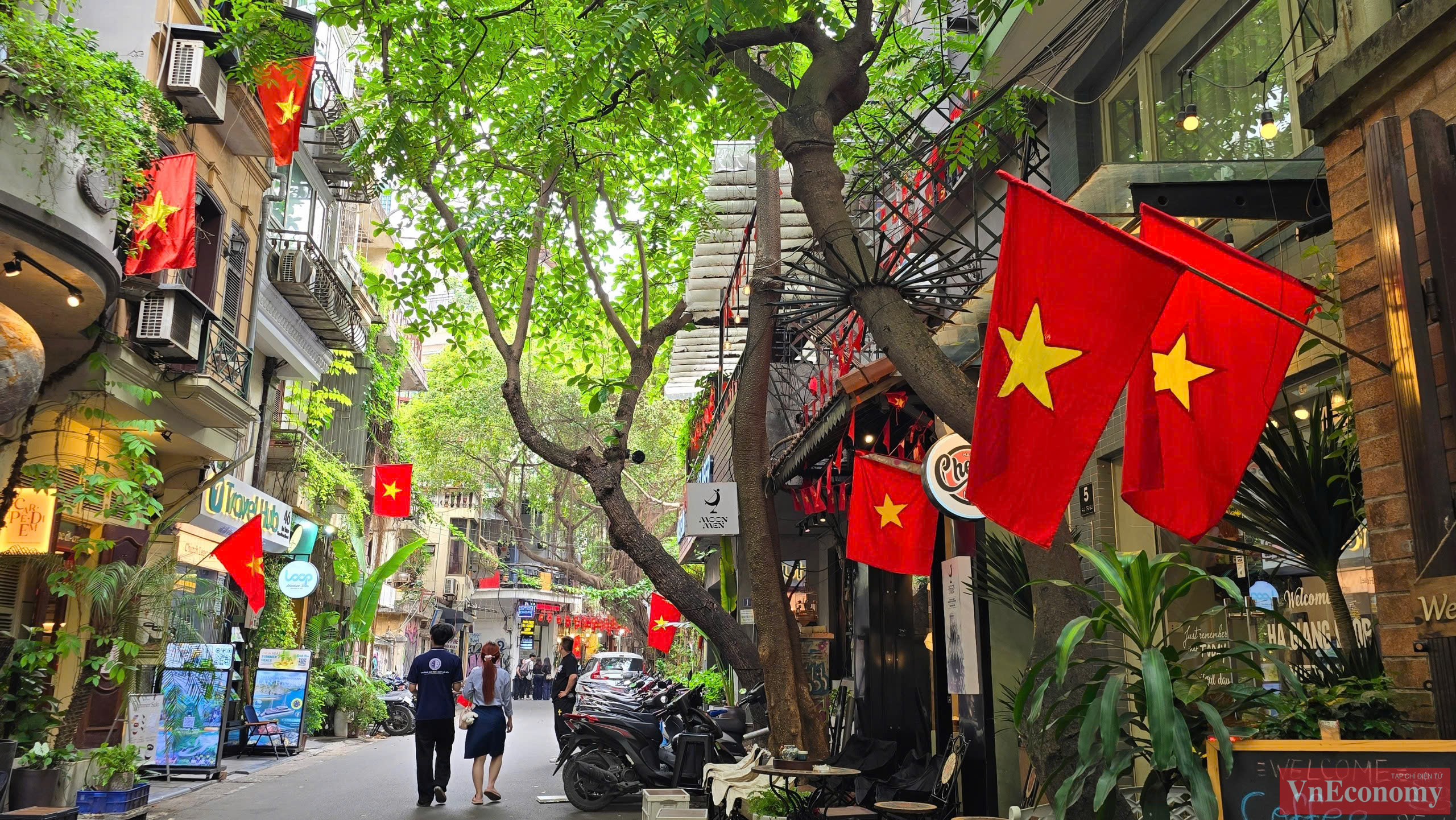
Autumn is widely considered the most beautiful time to visit Hanoi. From September to November, cooler air, softer sunlight and tree-lined streets make exploring the city particularly pleasant. The season also brings flavours that feel inseparable from this brief change in weather.
Fresh cốm, Hanoi’s young green rice
Fresh cốm is one of Hanoi’s clearest signs of autumn. Made from young glutinous rice, it is gently roasted, repeatedly pounded and sifted until the kernels become thin and tender. Good cốm has a muted green colour, a soft, slightly chewy texture and a delicate grassy sweetness. It is traditionally wrapped in leaves to retain moisture and add a subtle vegetal fragrance.
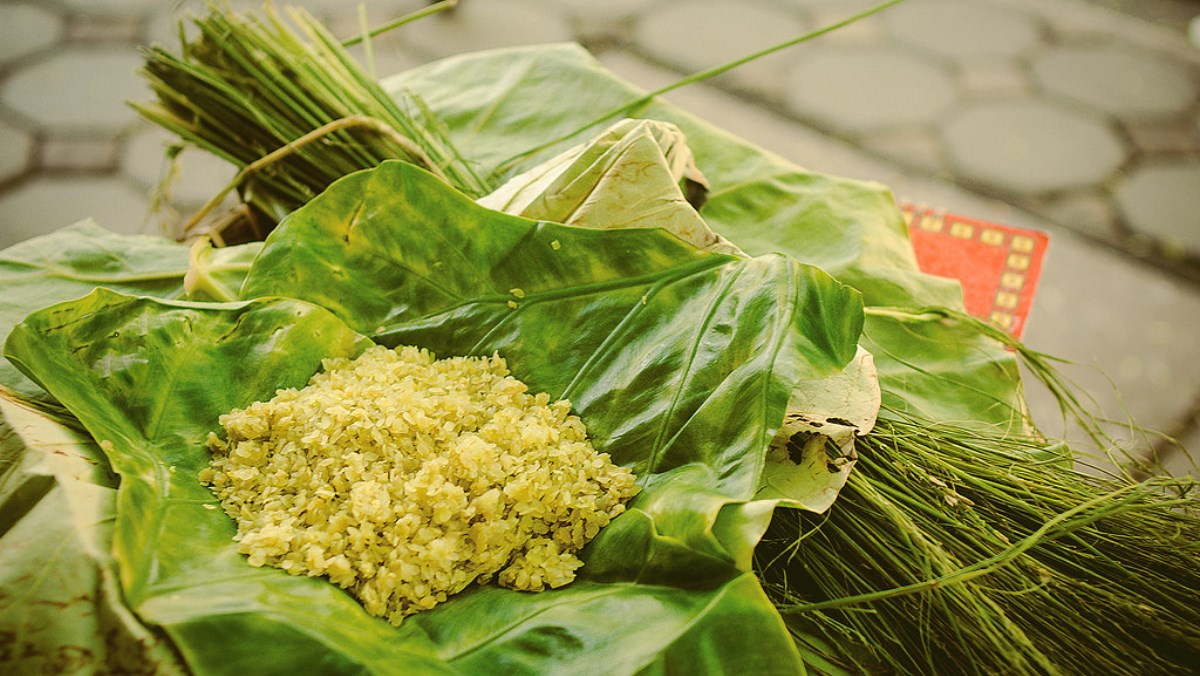
Enjoy cốm in small pinches, either plain or with ripe banana or persimmon, so its gentle aroma is not overwhelmed. To try an established version, visit Cốm Làng Vòng Bà Cận, located in the area historically associated with this Hanoi autumn speciality.
- Address: 19 Ngõ 85 Xuân Thủy, Cầu Giấy, Hanoi
- Listed opening hours: 06:00–23:00
- What to buy: Fresh cốm, dried cốm, bánh cốm and other rice products
- Suggested quantity: 100–200 grams for two people
- Reference budget: Approximately VND 30,000–60,000 for a small tasting quantity; confirm the day’s price
Egg coffee, a warming Hanoi classic
Egg coffee is available throughout the year, but its warmth and richness make it particularly enjoyable during Hanoi’s cooler autumn days. The drink originated in the capital in 1946, when Nguyễn Văn Giảng used whipped egg yolk as an alternative to scarce fresh milk. A traditional cup combines strong Vietnamese coffee with a smooth topping made from egg yolk, sugar and condensed milk. The coffee provides bitterness beneath a sweet, custard-like foam. When prepared well, it tastes creamy and caramel-like rather than noticeably eggy.
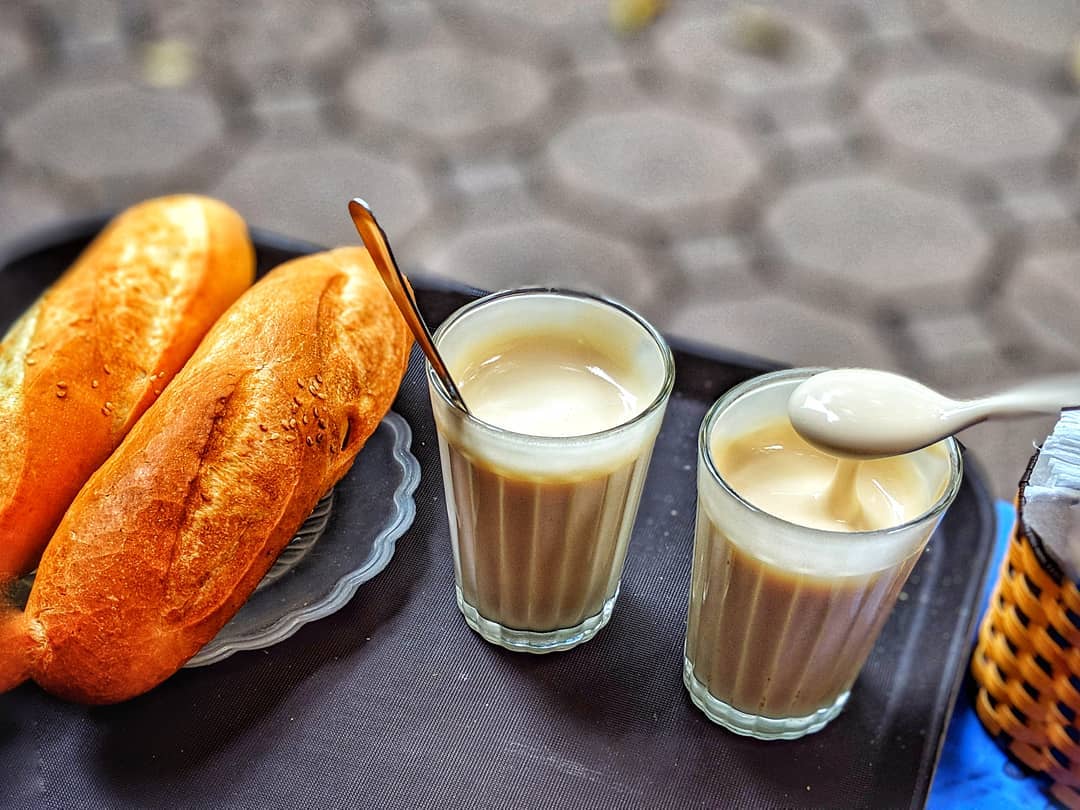
Taste the foam first, then stir gently to combine it with the coffee below. A hot version is the best choice for autumn, although iced egg coffee is also widely available. As the drink contains egg, dairy and caffeine, travellers with allergies or dietary restrictions should check the ingredients before ordering.
For a first experience, visit Café Giảng, the historic café closely associated with the creation of egg coffee. Its original Old Quarter location is hidden behind a narrow entrance on Nguyễn Hữu Huân Street.
- Address: 39 Nguyễn Hữu Huân, Hoàn Kiếm, Hanoi
- Opening hours: 07:00–22:00 daily
- Reference price: Approximately VND 35,000–50,000 per cup
- What to order: Hot egg coffee
A warm cup of egg coffee offers a natural pause between Old Quarter stops and a distinctly Hanoi addition to an autumn food itinerary. Café Giảng’s official website currently confirms the Nguyễn Hữu Huân address and daily opening hours.
Sấu, the brief taste of early autumn
Green sấu, usually translated as dracontomelon, is used throughout Hanoi’s summer in sour soups and sweet drinks. At the end of the season, the fruit changes colour and character. Its skin turns yellow, the flesh softens and its acidity becomes less severe.
This ripe stage lasts only a short time. Vendors peel and score the fruit before mixing it with sugar, salt and chilli. The seasoning enters the cuts while the fruit remains attached to its hard central seed.
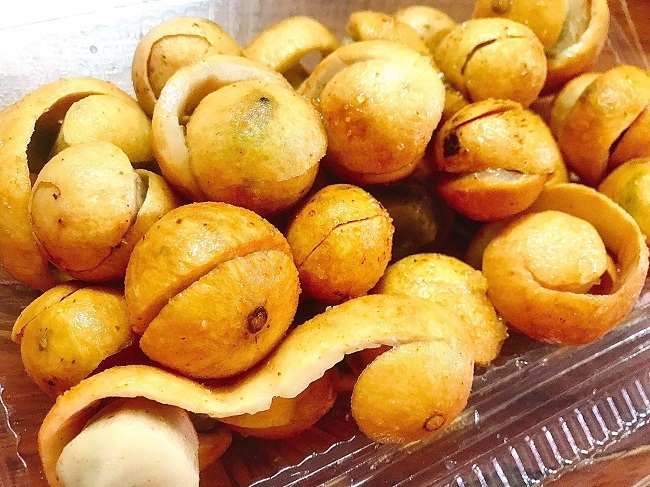
The result is sour, salty, sweet and spicy at once. Compared with green sấu, the ripe fruit is softer, more fragrant and less sharply acidic. Bite carefully because the seed is large and hard. A useful starting point is:
- Place: Chợ Hôm
- Location: Corner of Phố Huế and Trần Xuân Soạn, Hai Bà Trưng, Hanoi
- General opening hours: Approximately 08:00–18:00
- Best time to visit: Morning or early afternoon
- Where to look: Ground-floor fruit stalls and vendors around the market entrances
Ốc luộc (Steamed snails), steamed snails for a cool Hanoi evening
Ốc luộc is not limited to autumn, but it makes far more sense once Hanoi’s evenings become cooler. Snails arrive steaming in a bowl or plate scented with lemongrass and citrus leaves. Diners remove the meat with small metal picks and dip it into a sauce built around fish sauce, ginger, lime or kumquat, chilli and sugar.
Begin with one plate of small boiled snails. They are usually easier to handle than larger varieties and allow you to understand the dipping sauce before ordering more.
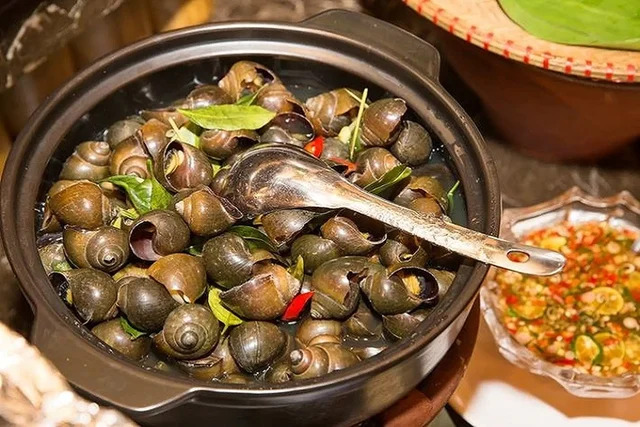
Snails are molluscs, and the sauce normally contains fish sauce. The dish is unsuitable for people with shellfish or mollusc allergies and is not vegetarian.
Ốc Nóng Hà Trang is a convenient option for visitors staying near Hoàn Kiếm Lake.
- Address: 1A Đinh Liệt, Hoàn Kiếm, Hanoi
- Listed hours: Approximately 16:00–22:00 daily
- Reference price: Around VND 50,000–110,000 per plate
- Best arrival time: 16:00–18:00
- Payment: Carry cash as a backup
Bánh đúc nóng (hot rice cake), Hanoi’s savoury rice pudding
The English translation “hot rice cake” can be misleading. Bánh đúc nóng is not a firm cake and it is not a dessert. It is a soft, spoonable mixture made primarily from rice flour, served with minced pork, wood-ear mushrooms, fried shallots, herbs and a warm savoury sauce or broth.
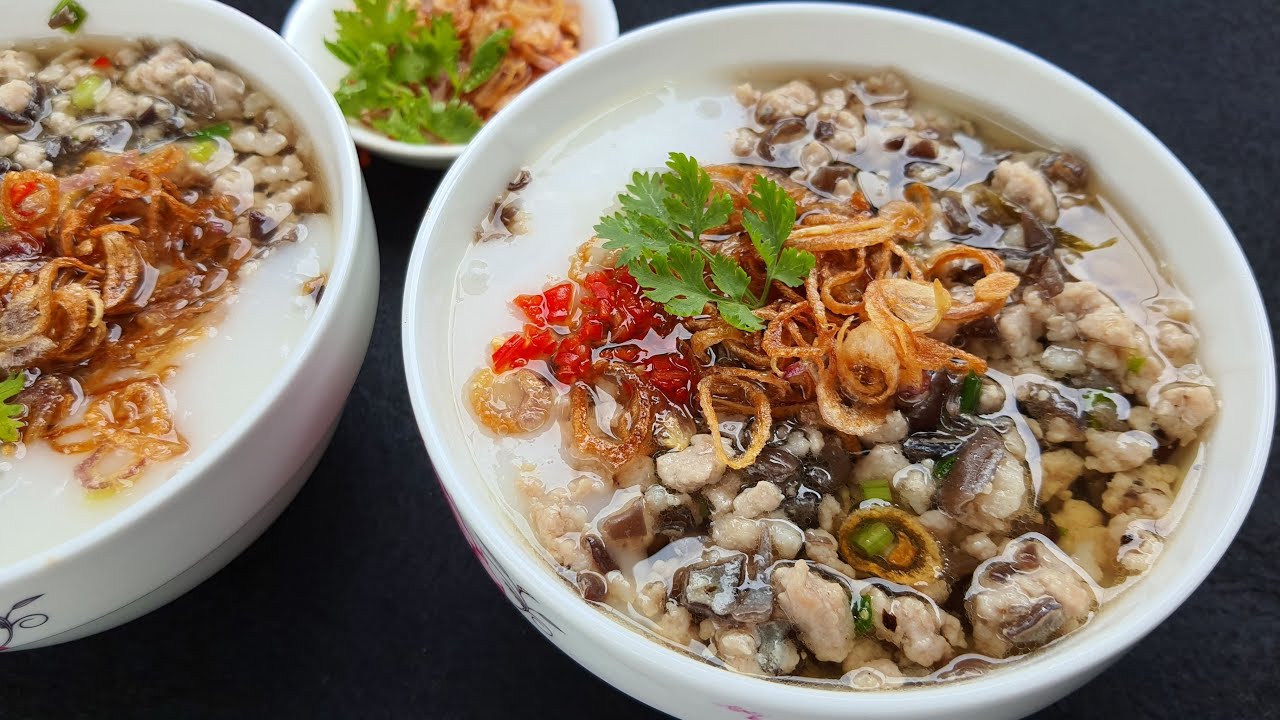
The texture sits somewhere between a thick porridge and a delicate rice pudding. What makes the dish satisfying is the contrast: smooth rice mixture, chewy mushrooms, crisp shallots and seasoned pork in the same spoonful.
The standard version normally contains pork and fish sauce. Do not assume it is vegetarian simply because rice flour forms the base.
A long-running address can be found inside the narrow lane off Lê Ngọc Hân Street.
- Address: Ngõ 8 Lê Ngọc Hân, commonly listed as 8B, Hai Bà Trưng, Hanoi
- Opening hours: Approximately 10:00–21:00; Sunday may begin at 09:00
- Reference price: Around VND 25,000–40,000 per bowl
Practical tips for ordering seasonal food in Hanoi
Finding the best seasonal food in Hanoi often requires a little flexibility. Harvest-dependent ingredients may not arrive on a fixed date, while small vendors can sell out earlier than expected. Keep these practical tips in mind before setting out:
- Confirm seasonal availability in advance. Fresh cốm, ripe dracontomelon and fresh rươi depend on weather and harvest conditions.
- Carry small Vietnamese banknotes. Market stalls and traditional food shops may not accept international cards. Notes of VND 20,000, 50,000 and 100,000 are especially useful.
- Confirm the price before ordering. When buying fruit or fresh cốm, ask whether the quoted amount is for one portion, 100 grams or one kilogram.
- Explain your preferred spice level. Say “ít cay” for less chilli or “không cay” for no chilli. Some sauces may already contain chilli, so ask before they are added.
- Check the ingredients if you are vegetarian. Rice-based does not necessarily mean meat-free. Bánh đúc nóng usually contains pork and fish sauce, while chả rươi includes pork and egg.
- Recheck opening hours on the day. Small vendors may change their schedule or close early once a seasonal ingredient has sold out.
A little preparation will make your search for Hanoi autumn food easier, especially when the dishes are available for only a few weeks. Treat changing availability as part of the season and keep one alternative stop saved in case your first choice has sold out.
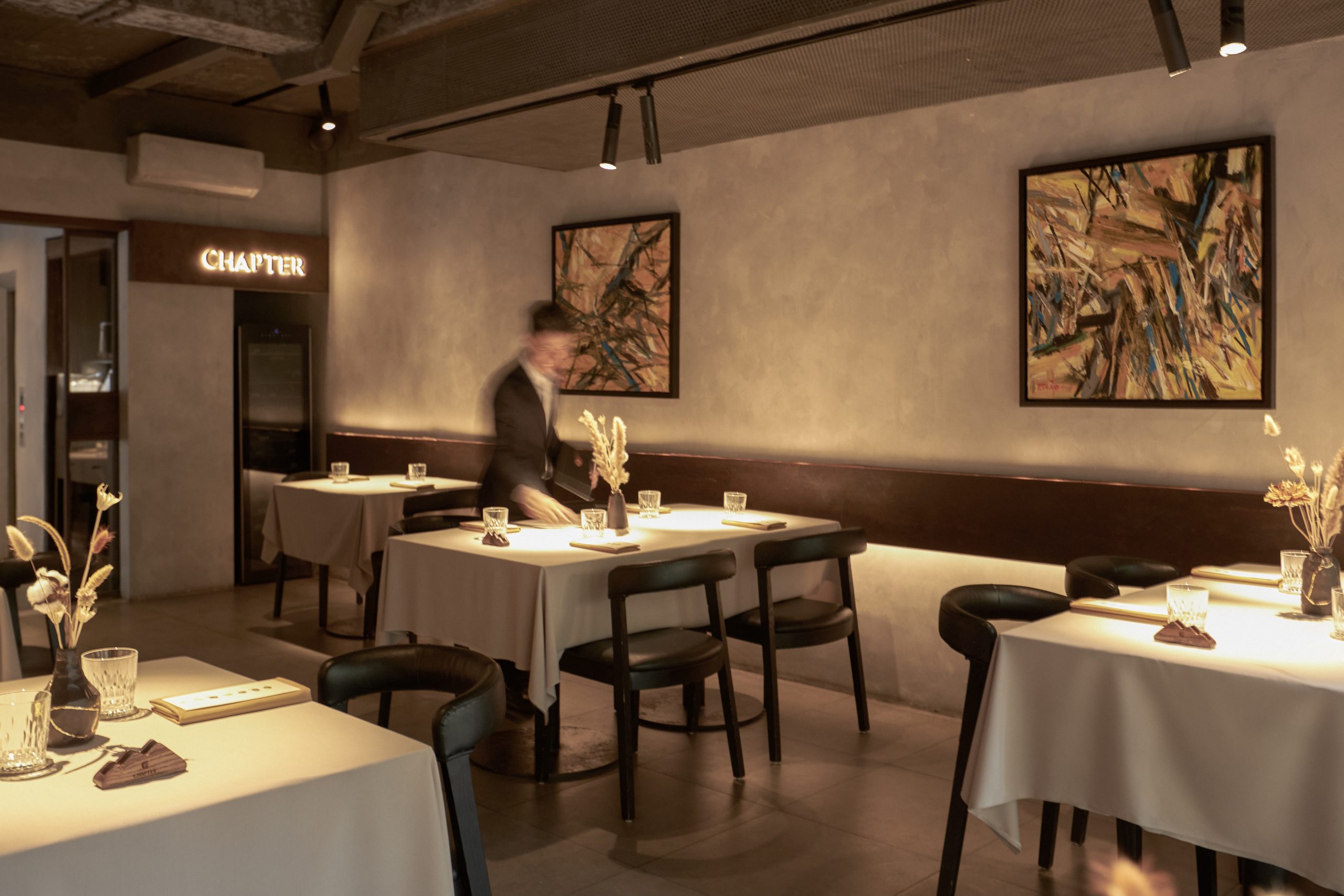
Finish the day with a contemporary view of Northern Vietnamese cuisine
Markets and street stalls reveal Hanoi’s autumn through direct, familiar forms: young rice wrapped in leaves, fruit mixed to order and hot snacks eaten on low stools. A seasonal tasting menu offers a different perspective, one that examines how northern ingredients can be expressed through careful pacing, contemporary technique and precise temperature.
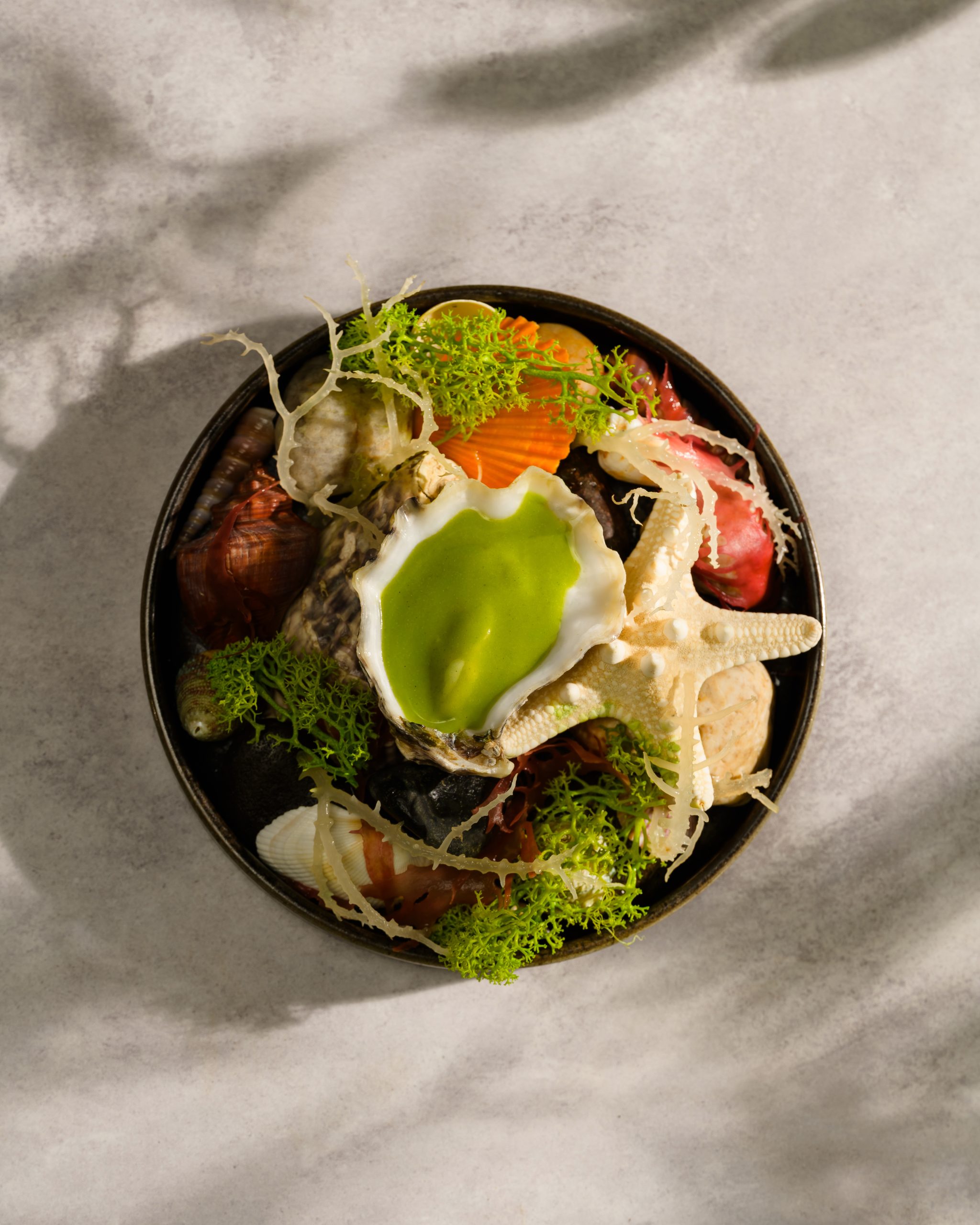
At Chapter Dining, the menu evolves with the season rather than remaining fixed throughout the year. The experience does not attempt to reproduce every traditional autumn dish. Instead, it explores Vietnamese produce, regional food memories and cooking practices through a modern fine dining format.
After exploring everyday Hanoi autumn food, reserve an evening at Chapter to experience how the season can be interpreted beyond the market and street. Reserve a table at Chapter Dining and allow Hanoi’s autumn ingredients to conclude the day in a more considered form.
_________
Chapter Dining
12C Chan Cam, Hoan Kiem, Hanoi
Mon – Sat from 18:00 – 23:00
Tel: +84 333 201 221 – Reserve a table
Email: reservation@chapter.vn