In the exploration of contemporary gastronomy in Hanoi, transmuting rustic flavor memories into edible art is a captivating challenge. At Chapter, Scallop Coconut stands as a testament to this philosophy, where the charm of street food converges with masterful culinary technique. Rather than a literal translation of the original dish, Chef Quang Dung has redefined the tasting experience through an ethereal, cloud-like scallop mousse, preserving the ocean’s sweetness within an entirely new form. The following analysis delves into how this pairing of scallop and coconut not only awakens the palate but also narrates a nostalgic story of the “Ốc Xào Dừa” culture.
Table of Contents
A Nostalgic Inspiration: From “Ốc Xào Dừa” to Fine Dining
To understand Scallop Coconut at Chapter, one must look beyond the dining room to Hanoi’s quán ốc, the snail eateries where the dish’s cultural origins reside. The inspiration comes from “Ốc Xào Dừa”, a classic expression of leisure-focused eating in Vietnamese food culture, where dining centers on pleasure, social connection, and sensory engagement rather than sustenance.
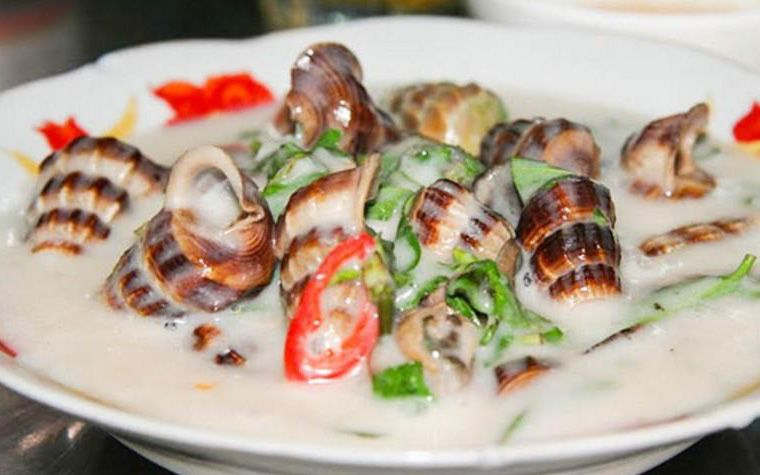
Traditionally, snails are stir-fried over high heat with coconut cream, lemongrass, chili, and fresh herbs, creating a rich, aromatic sauce that coats the shells. The act of eating is tactile and communal. Diners use their hands, savor the sauce, and extract the meat, experiencing the interplay of coconut richness, chili heat, and the snail’s chewy, briny texture.
Such a dish cannot be served directly in a Michelin-recognized fine-dining setting. The physical effort required to eat snails and their distinctly chewy texture conflict with the seamless and elegant service expected in haute cuisine, particularly for international guests. Chef Quang Dung addresses this challenge through scallop mousse. The scallop shares the natural sweetness of a mollusk yet allows transformation into a smooth, cloud-like texture, preserving the marine flavor while refining its form.
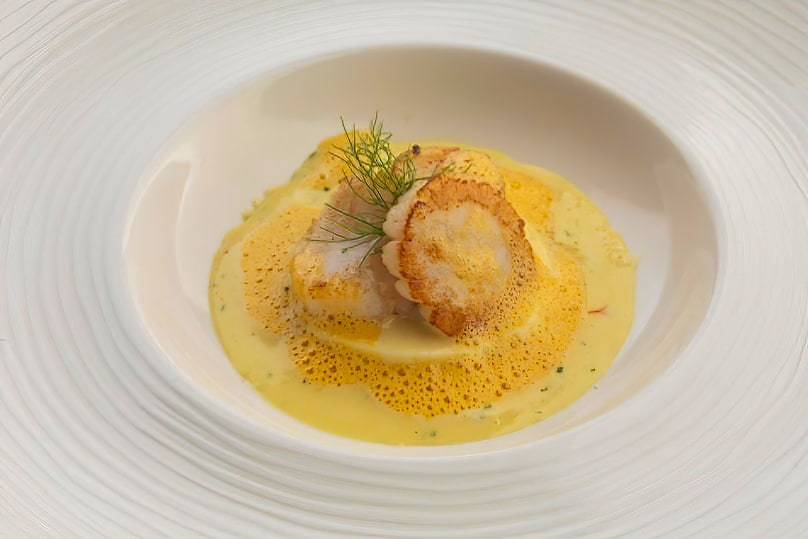
Within Chapter’s narrative-driven menus, often framed as journeys, Scallop Coconut represents the coastal or delta chapter of Northern Vietnam. Through verbal explanation or a story card, the dish is explicitly linked to “Ốc Xào Dừa”. This storytelling creates a cognitive bridge. It evokes nostalgia and validation for Vietnamese diners, while offering cultural context to international guests. What appears as a refined scallop dish is thus revealed as a deliberate reinterpretation of Hanoi street food, elevated without losing its essence.
Why Scallop and Coconut Work as a Fine Dining Pairing
The success of Scallop Coconut at Chapter is grounded not only in cultural memory but also in culinary science. Scallop and coconut form a balanced pairing of sweetness, fat, and aroma that performs especially well in a mousse.
Scallops, sustainably harvested from the cool waters of Quang Ninh, provide a clean, oceanic sweetness derived from free amino acids such as glycine and alanine. Meanwhile, coconut sourced from the lush groves of Ben Tre contributes a rounder sweetness, shaped by its renowned high fat content.
Coconut fat also plays a structural role. Its melting point, close to body temperature, enhances the mousse’s silky, melting texture and helps set the emulsion differently from dairy cream alone. This results in a smooth mouthfeel rather than the chewiness often associated with shellfish.
Equally important, scallop and coconut act as neutral carriers for aromatics. The high fat content of the mousse captures and slowly releases volatile compounds, making it an ideal base for giant water bug essence – a rare ingredient hand-extracted from traditional farms in Tuyen Quang.
Finally, the pairing reflects Chapter’s values around sustainability and local ingredients. While premium scallops are sourced for texture, coconut remains a deeply rooted Vietnamese staple. By elevating coconut to an equal partner in a fine-dining context, the dish reinforces the value of local produce while aligning with the restaurant’s broader approach to thoughtful ingredient use.
Crafting the Scallop and Coconut Preparation
The Scallop Coconut dish represents a distinct shift in the Chapter kitchen’s rhythm. It moves away from the intensity of open-fire cooking to focus on the quiet exactitude of careful emulsification and strict temperature control.
Selecting pristine scallops to preserve natural sweetness
The quality of the mousse depends entirely on the raw ingredients. We begin with exceptionally fresh, untreated “dry” scallops – specifically chosen because they are free from water-retaining additives. This strict selection is crucial; it preserves the scallop’s natural sweetness and ensures the protein integrity required for a stable emulsion, preventing any graininess or rubbery texture in the final dish.
Building a smooth scallop base through controlled emulsification
Texture is paramount in this preparation. Throughout the process, the temperature is kept near freezing to avoid premature protein denaturation.
- The Structure: The scallops are first blended with salt to extract myosin, which forms the structural base of the mousse.
- The Emulsion: Cold fats, including dairy cream for stability and coconut cream for flavor, are incorporated gradually.
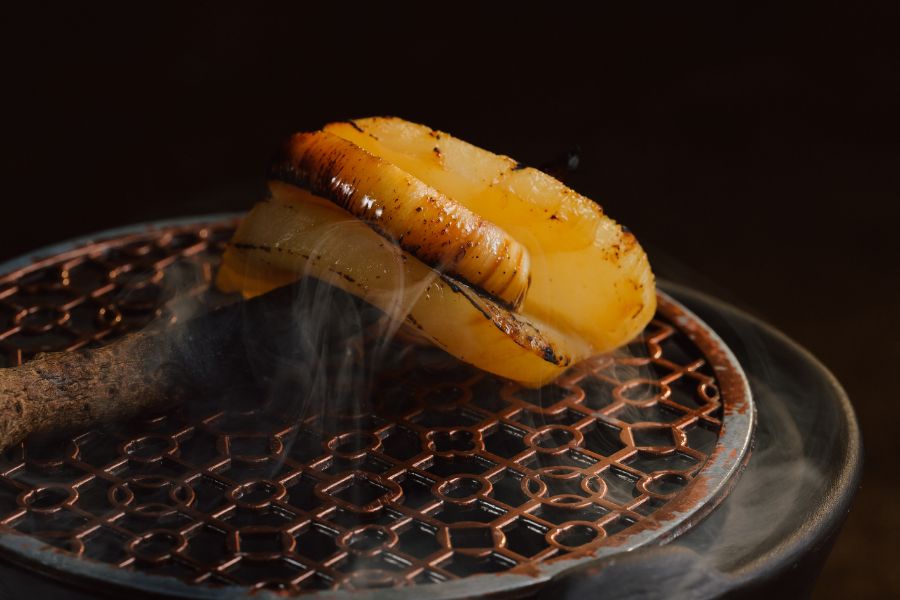
- The Finish: The mixture is finely sieved for absolute smoothness, lightly aerated, and gently cooked at a low temperature to set the proteins. A subtle smoking technique is applied at the end to echo Chapter’s signature hearth-driven identity.
Coconut and native aromatics as subtle accents, not dominant flavors
While the dish preserves the memory of Ốc Xào Dừa (Snail with Coconut), the coconut itself is used with restraint. It appears as a refined sauce or airy foam rather than a heavy element.
- The Elevation: The dish is defined by a precise application of Giant Water Bug essence (tinh dầu cà cuống). Its floral, spicy aroma cuts through the richness, adding a distinct Northern Vietnamese signature.
- The Contrast: Finally, controlled textural accents such as gong cai (tribute vegetable) or coconut ribbons replace the traditional chew of snails, providing a clean, deliberate contrast that balances refinement with nostalgia.
Savoring the “Hearth”: The Scallop Coconut Experience at Chapter
At Chapter, the Hearth menu centers on fire and tradition in every dish. The industrial-rustic dining room of iron, wood, and Corten steel sets the tone, with a light hint of charcoal from the open kitchen before the first course arrives.
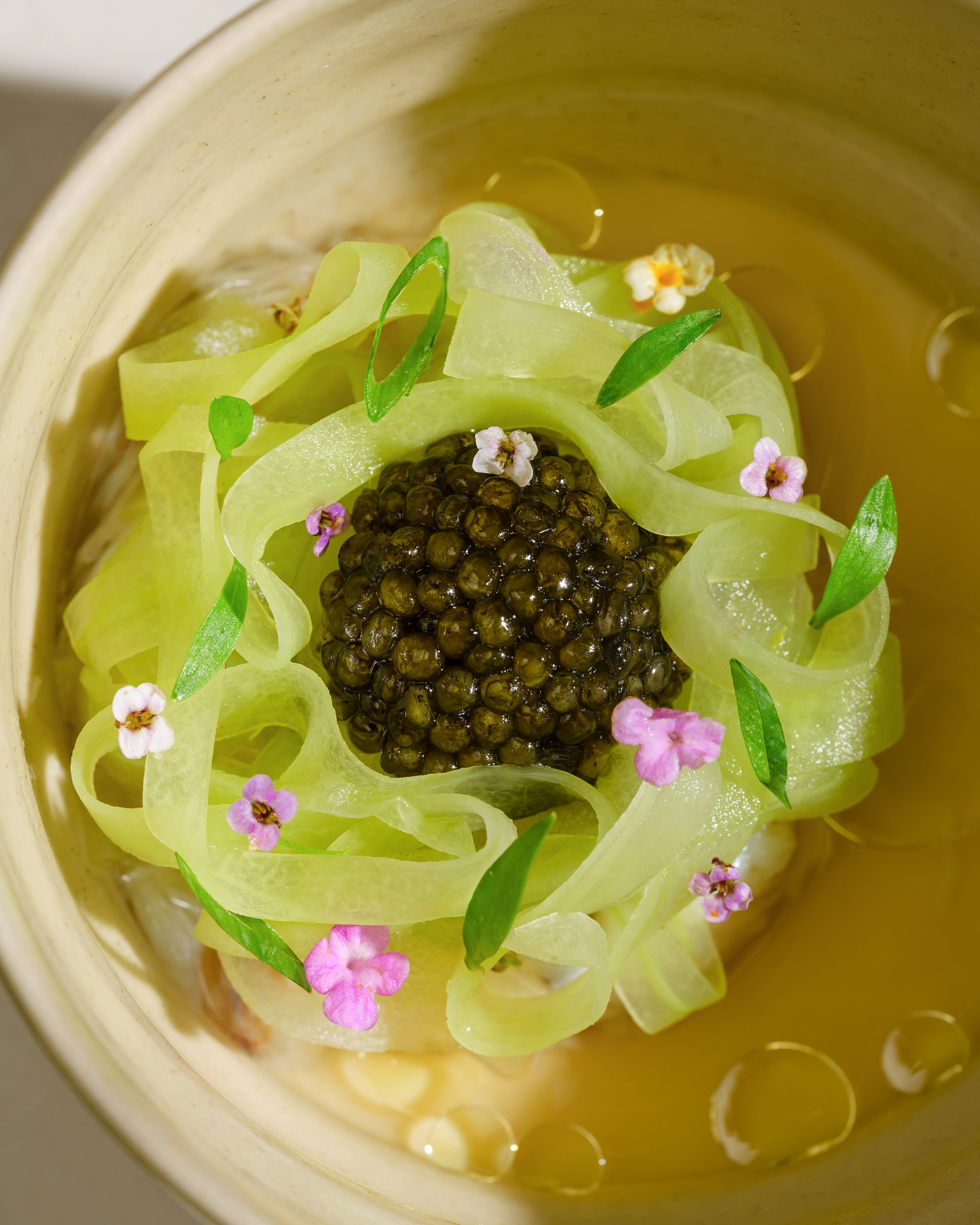
The Scallop Coconut Experience appears early in the Hearth tasting journey on earthy ceramic. A smooth white scallop mousse rests in pale coconut sauce with a sprinkle of caviar. A small card links the dish to Ốc Xào Dừa, inviting diners to connect with the chef’s memory as part of the menu’s story.
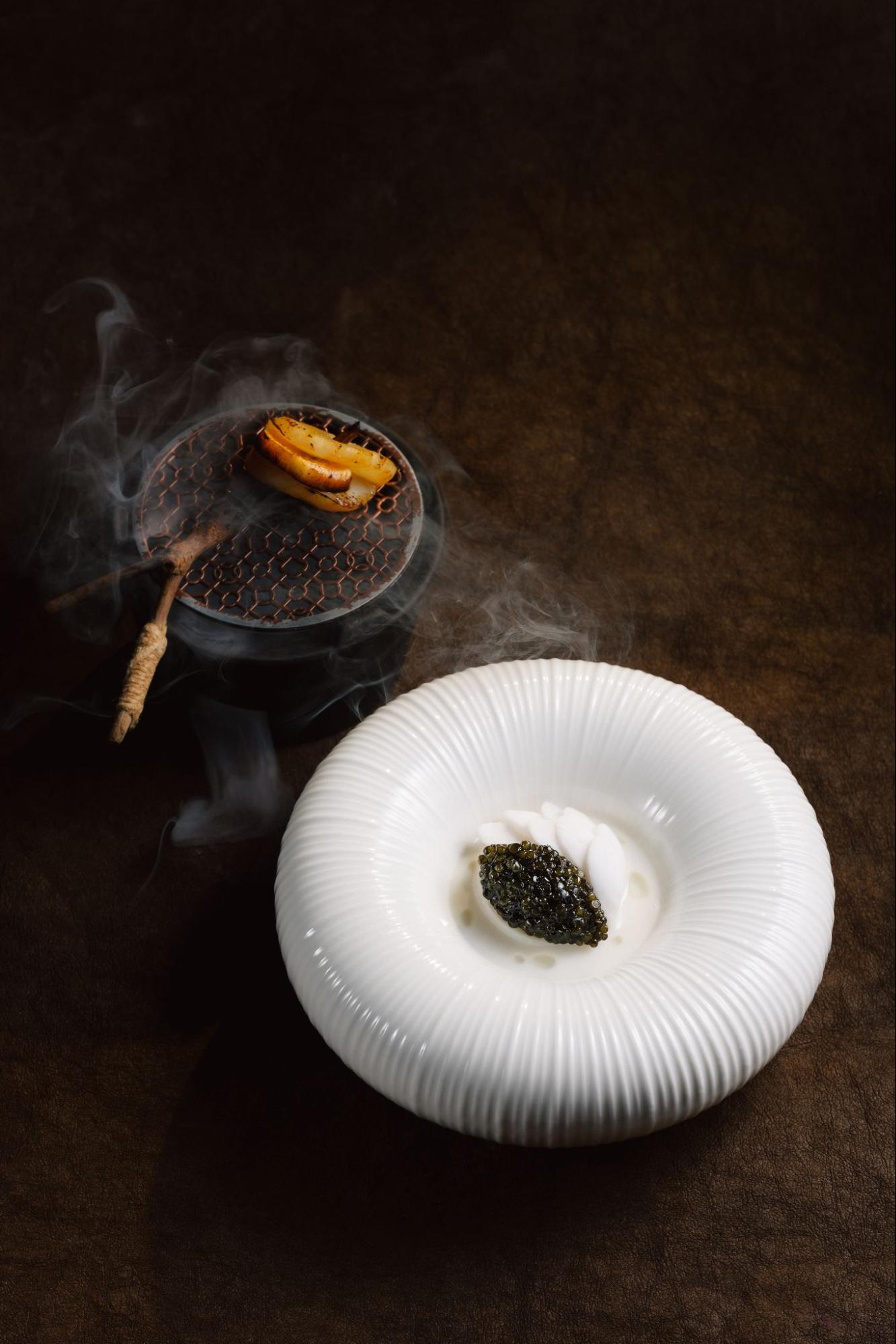
On the palate, the mousse melts gently, revealing sweet scallop and creamy coconut. The salty pop of caviar and crisp vegetables add contrast while a soft floral spice lingers through the finish.
For wine, a dry or slightly off-dry Riesling clears the richness and mirrors the floral elements, and an unoaked Chablis highlights the scallop’s marine character and the caviar’s salinity.
Conclusion
By transforming a nostalgic street food memory into an ethereal scallop mousse, the Scallop Coconut dish exemplifies Chapter’s ability to elevate local ingredients with technical precision. It captures the essence of Northern Vietnam in a single, refined bite. Yet, this is merely the opening chapter of the narrative. To fully experience the interplay of fire, tradition, and innovation, we invite you to discover the complete “Hearth” menu at Chapter, where every course tells a unique story of the flame.