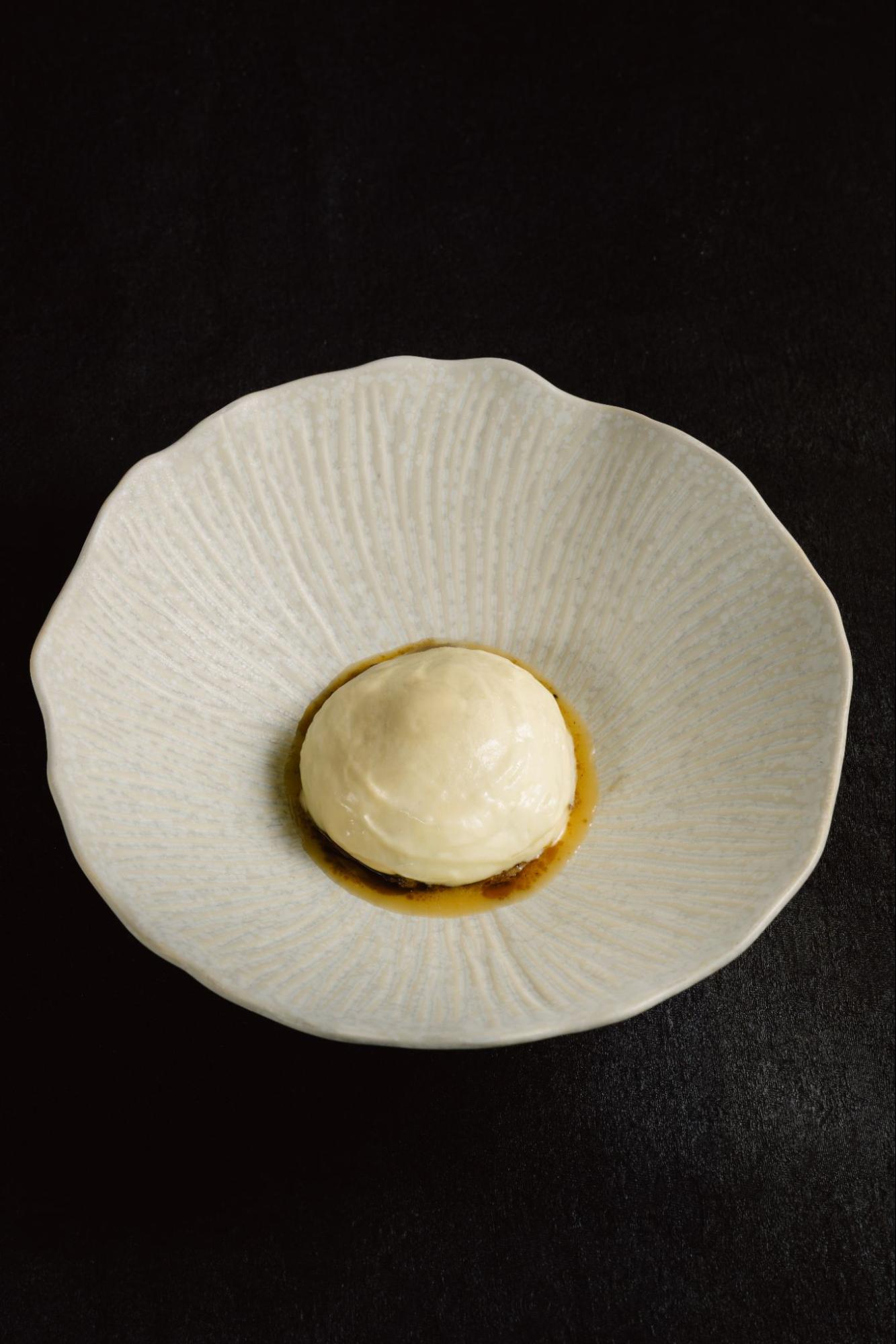
In Hanoi’s damp winter, mountain corn feels less like a dish and more like a memory brought to the table. At Chapter Hanoi, “Mountain Corn” transforms a humble highland staple into a refined winter bowl built on smoke, earth, and comfort. Silky corn purée, fire-kissed kernels, spiced sausage, Comté foam, and black truffle come together as a modern tasting-menu course that still speaks the language of the hearth.
Table of Contents
A Story Told by Fire: The Inspiration Behind Mountain Corn
In the pantheon of contemporary Vietnamese gastronomy, few establishments have articulated the narrative of the Northern Highlands with as much precision, reverence, and poetic depth as Chapter Hanoi. Located on Chân Cầm Street, in the beating heart of the capital, the restaurant does not merely serve food; it curates an anthropological journey through the topography of Vietnam. The dish known simply as “Mountain Corn” (or Ngô bung in the local vernacular) is not merely a course in a tasting menu; it is a meticulously constructed narrative, a translation of topography into texture, and a preservation of heritage through the lens of modern culinary science.

To understand the genesis of this dish, one must first understand the atmospheric and cultural conditions of Northern Vietnam during the winter months. It is a season of pervasive mist, where the damp cold seeps into the bones, and the scent of woodsmoke becomes the defining olfactory marker of the landscape. From the high peaks of Ha Giang to the valleys of Mai Chau, the hearth is the center of existence. It is here, by the fire, that life is sustained. The inspiration for Mountain Corn stems directly from this “story told by fire.” It captures the essence of a H’mong or Dao kitchen, where corn – harvested in late summer and stored in the rafters – absorbs the smoke of daily cooking, transforming from a perishable crop into a durable, life-sustaining staple.
Chef Quang Dung’s philosophy at Chapter is anchored in “authenticity and simplicity,” yet these terms belie the complexity of his execution. The choice of ngô bung – a traditional dish of stewed waxy corn – as the protagonist for a fine dining course is a bold reclamation of peasant food. Historically, ngô bung was a dish of necessity, a way to make dry, mature corn palatable by stewing it until the kernels “bloomed” like flowers. By elevating this humble preparation to the level of haute cuisine, Chapter Hanoi challenges the colonial hierarchy of ingredients that often prioritizes imported proteins over indigenous staples.
The inspiration unfolds in three layers: the cultural nostalgia of the highland hearth, the agrarian truth of the winter harvest, and a modern commitment to sustainable, ingredient-led gastronomy that preserves the region’s soul.
Why “Mountain Corn” Feels Like a Winter Memory on a Fine-Dining Plate
Eating isn’t just about taste – it also activates the brain’s emotion and memory centers. “Mountain Corn” works so well because it doesn’t feel like “fancy food”; it feels like warmth you already know. In Hanoi’s damp, gray winter, the dish arrives like a small hearth at the table – comforting both physically and emotionally.
The experience is built around four clear notes: fluffy, warm, smoky, earthy. Placed between main courses and dessert, it functions like a gentle reset – guests often describe it as a “nice warmth” that softens the transition and settles the stomach.
Aroma is the first trigger. Roasted corn instantly recalls Vietnamese street corners and charcoal braziers – like bắp nướng mỡ hành on cold nights. Chapter keeps that familiar memory but refines the smoke into something smoother and more controlled, like a well-tended fire rather than harsh charcoal.
Texture deepens the comfort. Using waxy corn, the dish brings a satisfying chewy “bounce” (similar to xôi or hearty winter stews). By combining silky purée with whole kernels, it feels both delicate and filling – rich, coating, and insulating against the cold.
Even the look supports the story: warm golden tones, darker elements, and pale foam create a winter palette, while truffle shavings suggest forest soil and fallen leaves. Overall, the dish feels “right” for the season – balanced, grounding, and designed to warm you from the inside out.
Unveiling the Layers: A Deep Dive into the Bowl
Silk on the Palate: The Golden Corn Purée
At the bottom of the bowl, the corn purée acts as the dish’s luxurious foundation – not a rustic mash, but a fine-dining reinterpretation shaped by French technique. To reach that “silk on the palate” texture, the kitchen likely blends sweet corn (brightness, natural sugar, vivid color) with waxy corn (body and stability).
Flavor is built through extraction: kernels are cut from the cob, while the cobs are simmered into a corn stock to deepen sweetness and starch. The kernels are gently softened in butter with mild aromatics, then blended and strained through a fine sieve until completely fiber-free. A final finish of cold butter (and possibly cream) creates a glossy emulsion – pure corn flavor, but with a luxurious, palate-coating mouthfeel that binds the whole dish together.
The Language of Fire: Smoky Roasted Corn, Made Elegant
Resting on the purée is the ngô bung – whole corn kernels that give the dish its structure and identity. This is the clearest bridge to the “Mountain Corn” name and its street-food memory: not just corn that’s cooked, but corn that carries the language of fire.
Traditionally, ngô bung is corn that’s stewed until it “blooms” – softened but still chewy, dense, and satisfying (very different from the snappy “pop” of sweet corn). In Chapter’s version, that tenderness is only the first step.
After stewing, the corn is finished over charcoal, adding caramelized edges, tiny blisters of char, and a clean, woody smokiness that balances the sweetness of the purée. In the mouth, it creates a deliberate rhythm: silky purée → chewy kernels → silky purée. It’s the harvest made tactile – corn in its most recognizable form, warmed by the hearth.
Savory Depth: The Heat of Smoked Spiced Sausage
To keep the corn from leaning sweet, the dish adds smoked spiced sausage – an elevated nod to lạp xưởng. It brings the essential salt, umami, and gentle heat, balancing the purée’s richness.
The flavor comes from Northwest spices: mắc khén (citrusy, lightly tingling) and hạt dổi (roasted, earthy, forest-like), which also pairs naturally with truffle. Diced and rendered, the sausage releases spiced fat that marbles into the corn, while its firm chew complements the kernels for a more satisfying bite.
Culinary Alchemy: Comté Foam Softening the Edges
A light Comté foam floats above the corn and sausage, acting as a subtle seasoning layer that balances savory and sweet.
It is likely made by melting Comté into milk or cream, stabilizing it, then charging it in a siphon to create an airy foam that holds.
Flavor-wise, Comté’s nutty, brown-butter notes echo roasted corn, while its gentle tang softens spice. It melts on contact, coating the palate without heaviness, and its pale finish reads like mountain mist.
The Final Touch of Luxury: Fresh Winter Black Truffle
A final shower of fresh winter black truffle finishes the dish. It reads as luxury, but its real role is balance, bringing a deep earthiness that anchors everything else.
Shaved over the warm corn and sausage, the truffle blooms immediately, releasing a forest-floor aroma before you even taste. That scent threads through the bowl, linking the smoky spice of the sausage to the nutty richness of Comté, while keeping the corn’s sweetness firmly on the savory side. Paper-thin slices add a subtle snap, then fade into a clean, lingering finish.

Pairing Notes: What to Drink with Smoke, Cheese, and Truffle
When pairing beverages with “Mountain Corn,” the goal is to handle the smoke and richness without drowning the purée’s delicate sweetness. Here are four directions, each with a clear logic:
- Oxidative Chardonnay (Jura) or White Burgundy: Choose a Chardonnay with hazelnut, brioche, and lightly toasted notes to echo the Comté and roasted corn. Bright acidity cuts through the cheese foam and sausage fat, while subtle oak or oxidative nuance matches the dish’s gentle smokiness without making it feel heavy.
- Cool-climate Cabernet Franc or an earthy Pinot Noir: If you want a red, keep tannins moderate so they do not clash with the tingling heat of mac khen. Cabernet Franc brings herbal and mineral lift that complements corn’s botanical character and the sausage’s spice. A more earthy Pinot Noir naturally aligns with truffle and smoke, adding depth without overpowering the bowl.
- Vintage Champagne or quality sparkling wine: Bubbles act as a palate reset. Sparkling wine clears the richness of the purée and foam between bites, keeping the dish bright and dynamic. Yeasty, brioche-like aromas in vintage Champagne also harmonize with the dish’s starch and toasted flavors.
- Aged rice spirit (ruou) or a well-made sticky rice infusion: For a Vietnamese narrative pairing, an aged rice spirit mirrors corn’s cereal sweetness and reinforces the dish’s winter warmth. The clean alcohol heat cuts through sausage fat quickly, leaving a crisp finish that prepares the palate for the next spoonful.
Final Thoughts
Mountain Corn is proof that fine dining does not need to be distant or abstract. At Chapter, it becomes a warm narrative you can taste, where technique serves memory instead of replacing it. Every layer has a purpose, but the message is simple: winter food should comfort, ground, and restore. If you want one course that captures the Northern Highlands in a single spoonful, mountain corn is the dish that lingers long after the last bite.
_________
Chapter Dining
12C Chan Cam, Hoan Kiem, Hanoi
Mon – Sat from 18:00 – 23:00
Tel: +84 333 201 221 – Reserve a table
Email: reservation@chapter.vn