Northwest Vietnam food tastes of smoke, mountain herbs, sticky rice and patient cooking over fire. Yet the region does not have a single cuisine. Thái, H’Mông, Dao, Tày, Nùng and other communities have shaped distinct food traditions across Mai Châu, Mộc Châu, Điện Biên, Sa Pa, Bắc Hà and the valleys between them. For a first visit, the difficulty is not finding something labelled “Northwest specialty”; it is knowing what deserves your time and where to try a thoughtful version. This guide recommends 12 dishes, ingredients and food gifts, with specific stops and honest notes on taste, ordering and packing. Save the addresses, check availability before travelling and follow the smoke beyond the usual tourist menu.
Table of Contents
- 1 Northwest Vietnam food at a glance
- 2 What makes Northwest Vietnamese cuisine different?
- 3 Eight Northwest Vietnam specialties to eat on the journey
- 3.1 1. Pa pỉnh tộp: folded fish perfumed with mountain spices
- 3.2 2. Cơm lam: rice carrying the scent of bamboo and fire
- 3.3 3. Thắng cố: the highland stew to approach with context
- 3.4 4. Xôi ngũ sắc: five-coloured sticky rice for market morning
- 3.5 5. Bê chao Mộc Châu: crisp-edged veal from the plateau
- 3.6 6. Sa Pa salmon or sturgeon: a mountain hotpot for cool evenings
- 3.7 7. Gà đen: a small bird with deep savoury flavour
- 3.8 8. Lợn cắp nách: mountain pork made for the grill
- 4 Four Northwest specialties worth buying as food souvenirs
- 5 How to shop wisely and eat respectfully
- 6 Cannot reach the Northwest? Begin with a Northern tasting menu in Hanoi
Northwest Vietnam food at a glance
| Specialty | Best place to seek it | Flavour and texture | Eat or buy? |
|---|---|---|---|
| Pa pỉnh tộp | Mai Châu | Smoky, aromatic, tender fish | Eat there |
| Cơm lam | Mai Châu or Sa Pa | Soft, lightly smoky, bamboo-scented rice | Eat there |
| Thắng cố | Sa Pa or Bắc Hà | Deep, herbal, rich communal stew | Eat there |
| Xôi ngũ sắc | Bắc Hà | Fragrant, gently nutty sticky rice | Eat there |
| Bê chao | Mộc Châu | Crisp-edged, juicy, savoury veal | Eat there |
| Sa Pa salmon or sturgeon | Sa Pa | Clean, firm fish in a warming hotpot | Eat there |
| Gà đen | Sa Pa | Firm, savoury meat with smoky skin | Eat there |
| Lợn cắp nách | Sa Pa | Lean, crisp-skinned mountain pork | Eat there |
| Thịt trâu gác bếp | Sa Pa | Smoky, chewy, warm with spices | Eat or buy |
| Lạp xưởng hun khói | Sa Pa or Bắc Hà | Sweet-savoury, fatty and smoky | Buy |
| Mắc khén and chẩm chéo | Regional markets | Citrusy, tingling, salty and herbal | Buy |
| Shan Tuyết tea | Suối Giàng | Mineral, full-bodied and lingering | Buy |
What makes Northwest Vietnamese cuisine different?
Altitude, cool nights and long journeys once made preservation essential. Smoking, drying, fermenting and grilling are therefore more than flavour techniques: they are practical knowledge shaped by place. Upland sticky rice gives meals their centre, while mắc khén, forest leaves, ginger, chilli and local herbs create aromas that are difficult to mistake for lowland Vietnamese cooking. The most useful rule for travellers is to resist the phrase “the authentic version”. A dish can change between provinces, communities and households. Ask which grain, fish or herbs were used and who prepared the food. The answer often tells you more than a sign promising “traditional cuisine”.
Eight Northwest Vietnam specialties to eat on the journey
1. Pa pỉnh tộp: folded fish perfumed with mountain spices
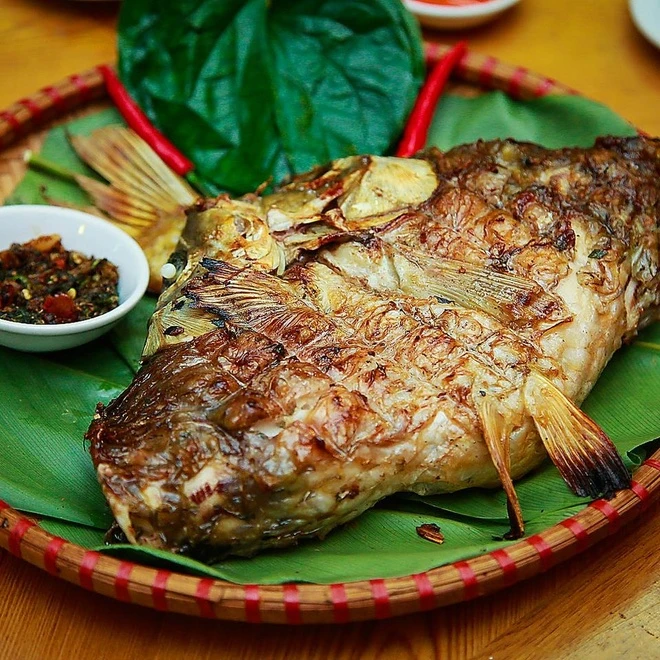
Pa pỉnh tộp is closely associated with Thái food culture. A freshwater fish is opened along the back, seasoned inside with herbs and spices such as mắc khén, folded and held over charcoal. The fold protects the aromatic filling while the skin takes on the scent of fire. The result is tender rather than heavily sauced, with spice arriving through fragrance before heat. Eat it slowly with sticky rice, cơm lam and chẩm chéo. It is especially rewarding as part of a shared meal rather than as an isolated tasting plate.
Try it at: BamBoo Restaurant at Mai Châu Hideaway Lake Resort, Suối Lốn hamlet, Sơn Thủy, Mai Châu area. The restaurant serves regional specialities in a lakeside setting; request pa pỉnh tộp when booking because local fish and menu availability may change.
Ordering tip: Ask whether the fish is grilled whole and whether the quoted price is per fish or per kilogram.
2. Cơm lam: rice carrying the scent of bamboo and fire
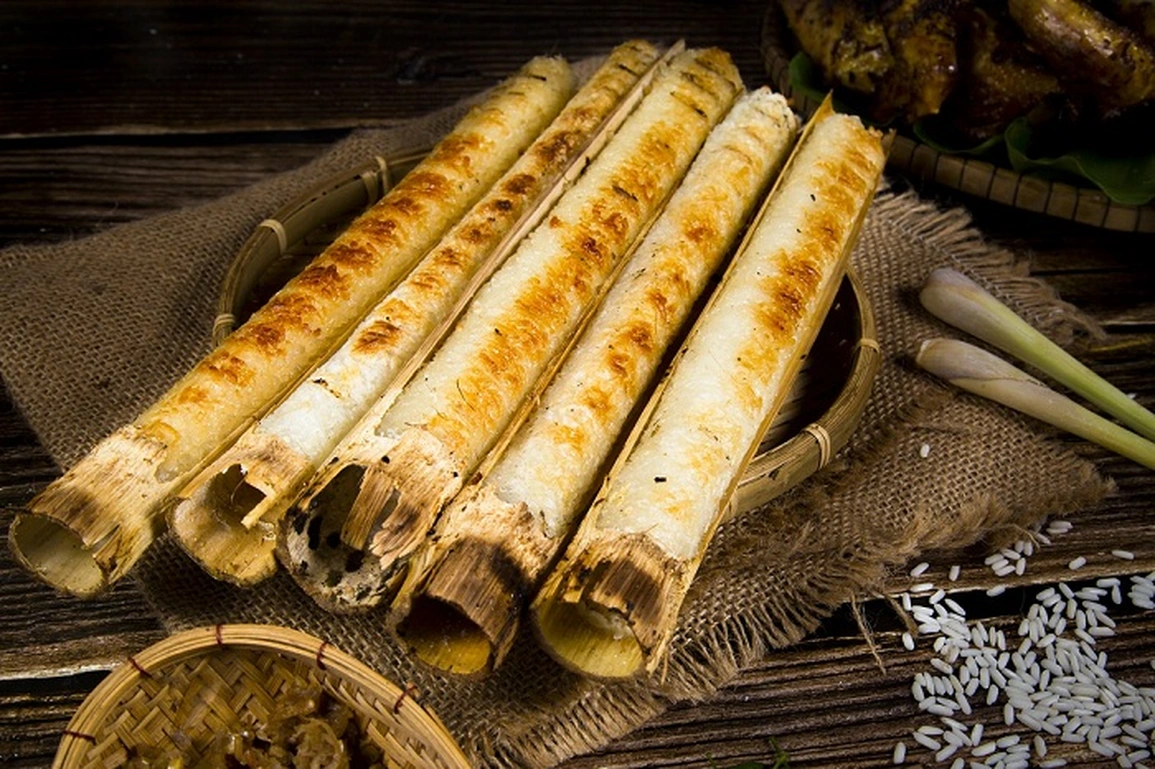
Cơm lam begins with rice and water sealed inside a bamboo tube, then turned beside the fire until the grain cooks within its natural vessel. Peel back the blackened outer bamboo and a pale cylinder appears: soft, cohesive and gently scented with smoke and fresh plant notes. It is a quiet dish, but an important one. Eat it warm with sesame salt, crushed peanuts, grilled chicken or pa pỉnh tộp. For the deeper story behind the method, read Chapter’s guide to Vietnamese bamboo rice.
Try it at: A pre-arranged homestay dinner in Lác or Pom Coọng village, Mai Châu Valley; or A Quỳnh Restaurant, 15 Thạch Sơn Street, Sa Pa.
Ordering tip: Ask whether the tubes were cooked that day. Fresh cơm lam should be tender and fragrant, not dry around the edges.
3. Thắng cố: the highland stew to approach with context
Traditionally connected with H’Mông gatherings and markets, thắng cố is a deeply savoury stew in which meat and offal are simmered with local aromatics. Horse is the best-known base, but modern versions may use buffalo, beef or pork. Its richness, herbal aroma and communal format make it unlike a casual bowl of soup. This is not a dish to order blindly. Ask what meat and organs are included, start with a small bowl and share it with the table. Those who enjoy offal and slow-cooked broths may find it one of the journey’s most memorable meals.
Try it at: A Quỳnh Restaurant, 15 Thạch Sơn Street, Sa Pa. The restaurant is long associated with thắng cố and is easy to reach from the town centre.
Ordering tip: If you avoid horse meat or offal, explain this clearly before ordering; the name alone does not reveal the recipe.
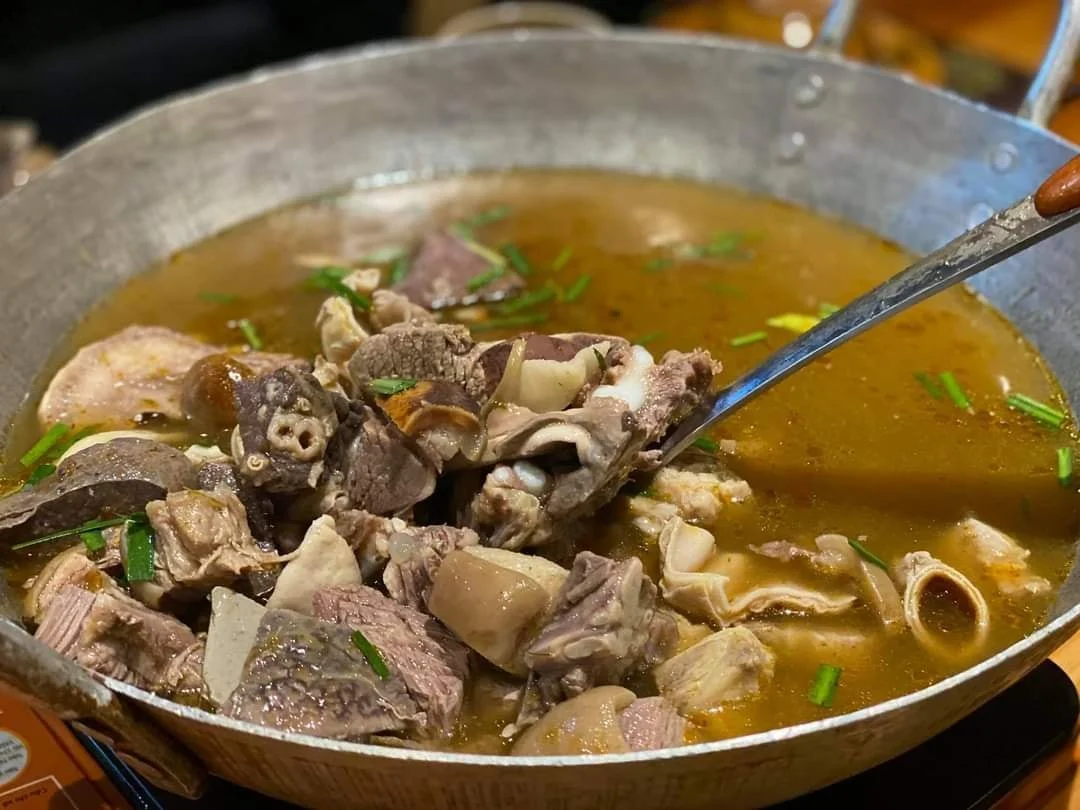
4. Xôi ngũ sắc: five-coloured sticky rice for market morning
Xôi ngũ sắc turns glutinous rice into a landscape of colour, traditionally using plant-based ingredients for different shades. Preparations vary among communities, as do the occasions on which it appears. Beyond its visual appeal, good five-coloured sticky rice should remain fragrant and supple, with separate grains rather than a wet, heavy mass. Eat it early, when market batches are still warm, with sesame-peanut salt or a savoury grilled dish.
Try it at: Bắc Hà Sunday Market, in central Bắc Hà town. One commonly listed map address is 33 Nà Hối Street. Arrive in the morning; the main market operates on Sundays and winds down around midday.
Ordering tip: Choose a busy food stall where rice is being served from a covered steamer. Market hours can shift around holidays, so confirm locally.
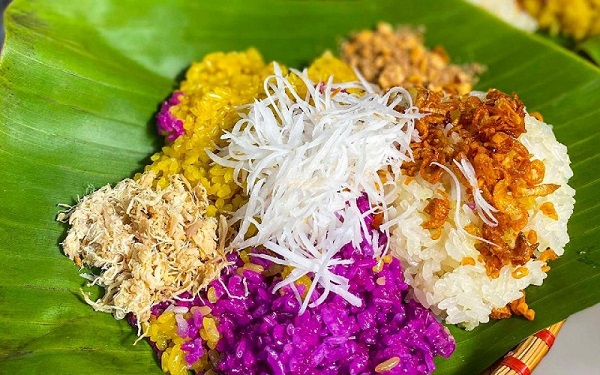
5. Bê chao Mộc Châu: crisp-edged veal from the plateau
Bê chao is one of the clearest reasons to stop for lunch in Mộc Châu. Pieces of young veal are marinated, quickly fried and served hot, often with ginger, lemongrass or local herbs. The pleasure lies in contrast: browned edges, a juicy centre and enough aromatic lift to balance the meat’s richness. Order it with local greens rather than building the whole meal around fried dishes. It is at its best immediately after leaving the pan.
Try it at: Đông Hải Restaurant, 210 Trần Huy Liệu Street, Mộc Châu. The menu also offers Mộc Châu vegetables and Thái-influenced regional dishes.
Ordering tip: Ask for a small portion first if there are only two diners; servings are often designed for sharing.

6. Sa Pa salmon or sturgeon: a mountain hotpot for cool evenings
Cold-water fish farming has made salmon and sturgeon familiar features of modern Sa Pa dining. A hotpot is the most social introduction: firm slices of fish, greens, mushrooms and a bright broth that suits the mountain air. Grilled or lightly dressed preparations reveal the fish more clearly if you prefer something less substantial. This is a newer regional speciality rather than an ancient ethnic dish. Treat it as part of Sa Pa’s evolving food landscape, not as timeless tradition.
Try it at: Moment Romantic Restaurant, 001A Thác Bạc Street, Sa Pa, or the salmon and sturgeon restaurants around the Thác Bạc tourist area. These locations are included in a current Sa Pa specialty guide.
Ordering tip: Confirm whether hotpot prices are fixed per set or calculated by fish weight.
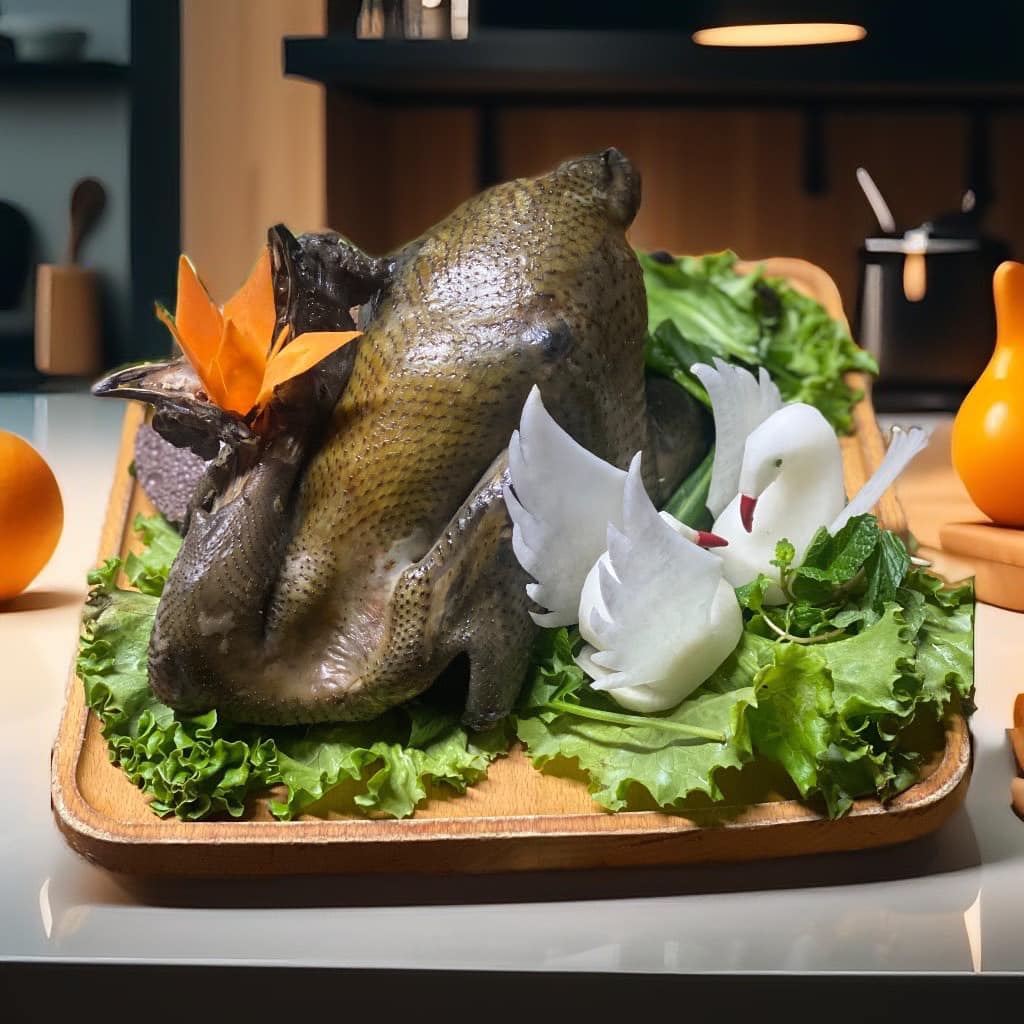
7. Gà đen: a small bird with deep savoury flavour
Sa Pa black chicken is prized for firm meat and concentrated flavour rather than sheer size. It may be roasted with honey, grilled or simmered with herbs. For first-time diners, the grilled version is the easiest way to appreciate the crisp skin, smoke and natural savouriness without covering the bird in a heavy broth. Try it at: A Phủ Restaurant, 15 Fansipan Street, Sa Pa. Order alongside greens and rice for a more balanced table.
Ordering tip: Ask the server to confirm portion size and preparation time; a whole bird is intended for sharing.
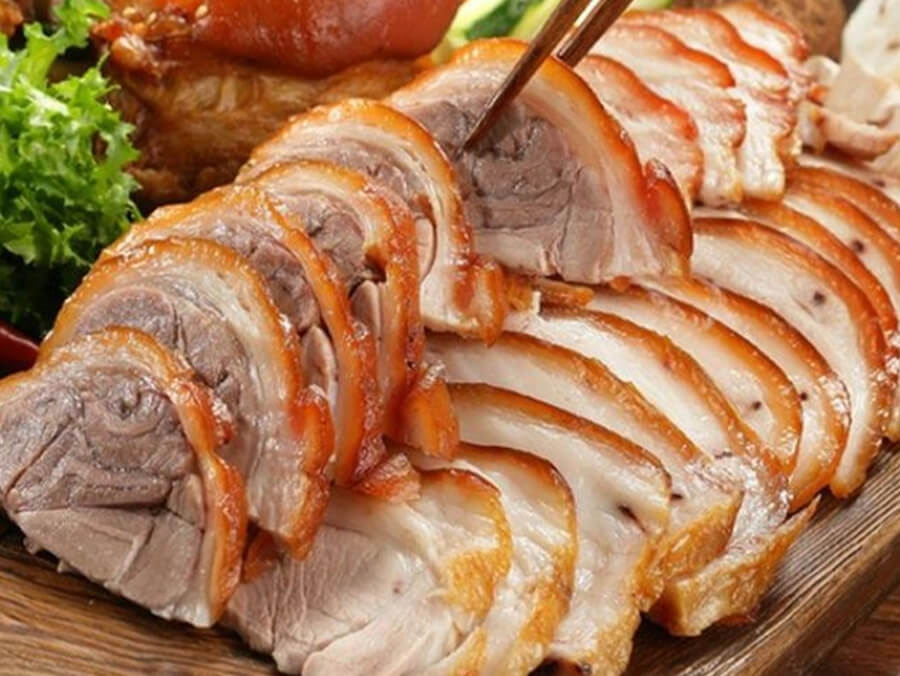
8. Lợn cắp nách: mountain pork made for the grill
The colourful name refers to small, locally raised pigs once carried under an arm to market. The meat is generally leaner and more pronounced in flavour than conventional pork. Roasting or grilling allows the skin to crisp while the meat stays juicy, especially when served with herbs and a sharp dipping salt.
Try it at: Red Dao House, 4B Thác Bạc Street, Sa Pa, or Bản Phố Restaurant, 17 Lê Văn Tám Street, Sa Pa.
Ordering tip: Whole-animal preparations need a group and may require advance notice. Smaller parties should ask for a grilled portion rather than over-ordering.
Four Northwest specialties worth buying as food souvenirs
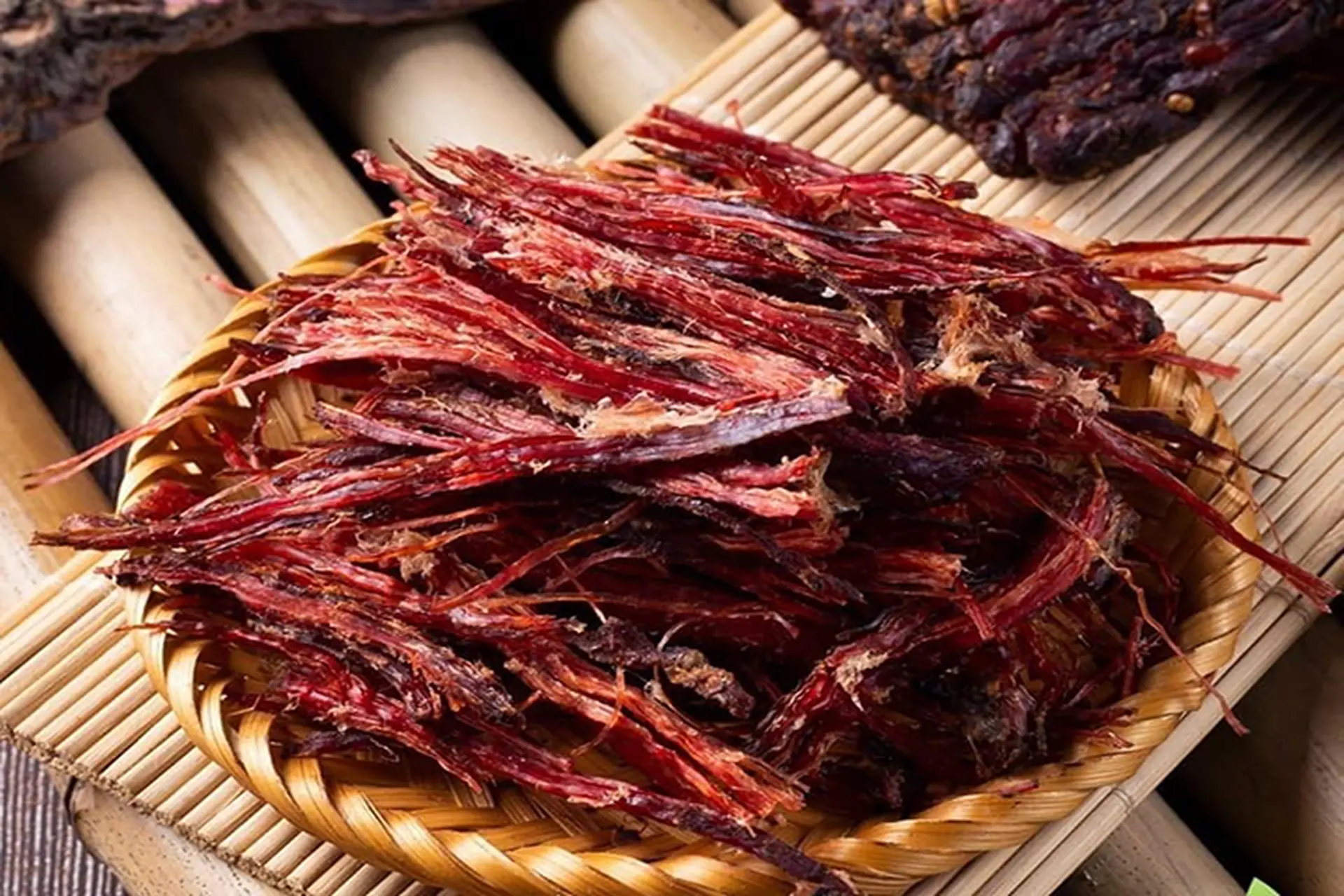
9. Thịt trâu gác bếp: smoked buffalo meat
Long strips of buffalo are seasoned, smoked above a hearth and dried until the exterior darkens while the fibres inside remain chewy. Mắc khén, ginger, chilli and smoke create a warm, lingering aroma. Reheat it gently, tear it along the grain and serve with chẩm chéo rather than slicing it into thick, cold pieces.
Buy it at: Viet’s Farm, 26 Đồng Lợi Street, Sa Pa. Smoked buffalo is also sold around Sa Pa’s markets, but a fixed shop makes it easier to check labels and request storage instructions. The location is listed by both a Sa Pa specialist guide and a regional food guide.
Quality check: Look for a sealed package with producer name, origin, ingredients, production date and storage guidance. A vacuum pack helps with transport but does not override your destination’s customs rules on meat products.
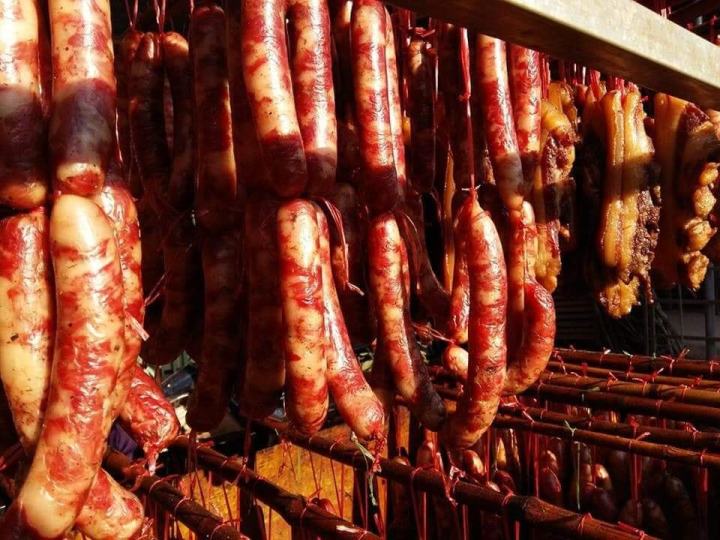
10. Lạp xưởng hun khói: smoked sausage for cooking at home
Northwestern smoked sausage combines pork, fat, seasoning and time near the hearth. Depending on the maker, it may lean salty, gently sweet or strongly smoky. Pan-warm or grill it, then serve in thin slices with rice and pickled vegetables.
Buy it at: Sa Pa Night Market in the central N1 Street area, near the bus station. Market layouts and opening days can change; weekend evenings generally offer the widest selection.
Quality check: Choose a labelled, refrigerated or properly shelf-stable product from a seller who can explain how it was made and stored. Avoid unsealed sausage if you have a long onward journey.
11. Mắc khén and chẩm chéo: the most packable taste of the Northwest
Mắc khén is often compared with pepper, but its appeal is more aromatic: citrus, wood and a gentle tingling sensation. Chẩm chéo is a family of Thái dipping mixtures rather than one fixed recipe. It may combine salt, chilli, herbs, garlic and mắc khén; fresh versions can include ingredients that make them unsuitable for long transport.
Buy it at: Bắc Hà Sunday Market, central Bắc Hà town, or a producer shop in Sa Pa. Whole or coarsely ground mắc khén travels better than a moist, freshly pounded dipping mix.
Quality check: For a flight, choose a dry, sealed blend with a clear ingredient list. If the mix contains fermented fish or other animal ingredients, check both allergy information and import restrictions. Continue with Chapter’s detailed guide to what chẩm chéo is.
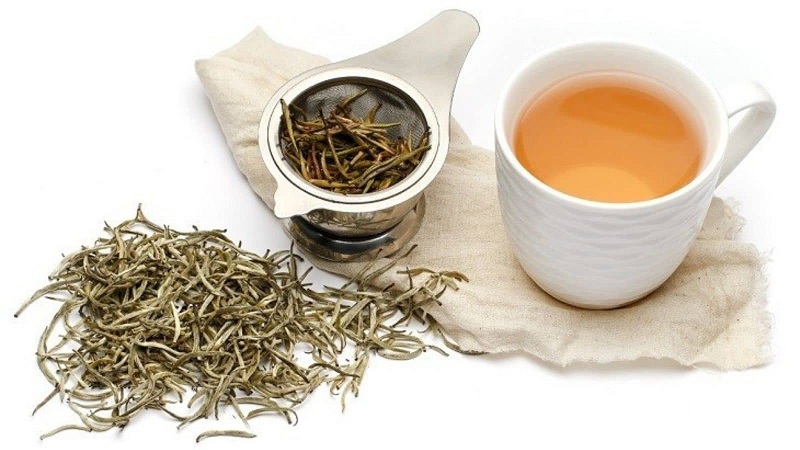
12. Shan Tuyết tea: a mountain souvenir that rewards patience
Shan Tuyết tea comes from highland tea landscapes known for old, large trees and buds covered in fine pale hairs. Styles vary from green and white tea to darker processing. Expect differences in astringency, mineral depth, sweetness and fragrance; “Shan Tuyết” is not a single flavour profile.
Buy it at: Suối Giàng Tea Cooperative and the Shan Tuyết Tea Museum in Suối Giàng Commune, Lào Cai Province. The area is recognised for its ancient tea trees; contact the cooperative or a local guide before making a dedicated journey, as visitor access and retail hours can change. Learn more in Chapter’s guide to Shan Tuyết tea.
Quality check: Ask for harvest season, processing style, origin and a small brewed tasting. Buy the tea you actually tasted, not the most expensive tin.
How to shop wisely and eat respectfully
The best Northwest Vietnam food experiences are not always the most polished. A village dinner may need to be arranged earlier in the day; a market speciality may disappear by noon; a restaurant may replace one river fish with another according to supply. A little flexibility is part of the journey.
- Confirm before making a detour. Call or message restaurants about signature dishes, opening hours and advance orders.
- Ask before photographing. Markets are workplaces, and food preparation may take place in family spaces.
- Discuss dietary restrictions clearly. Broths, dipping salts and vegetable dishes may still contain meat, offal, fish sauce or fermented fish.
- Choose traceable gifts. Prefer sealed products with origin, ingredients, dates and storage instructions.
- Check customs rules. Many countries restrict meat, fresh fruit, seeds and other agricultural products, even when vacuum-packed.
- Pay a fair price. Compare gently if needed, but do not turn a small difference into a prolonged negotiation with a producer.
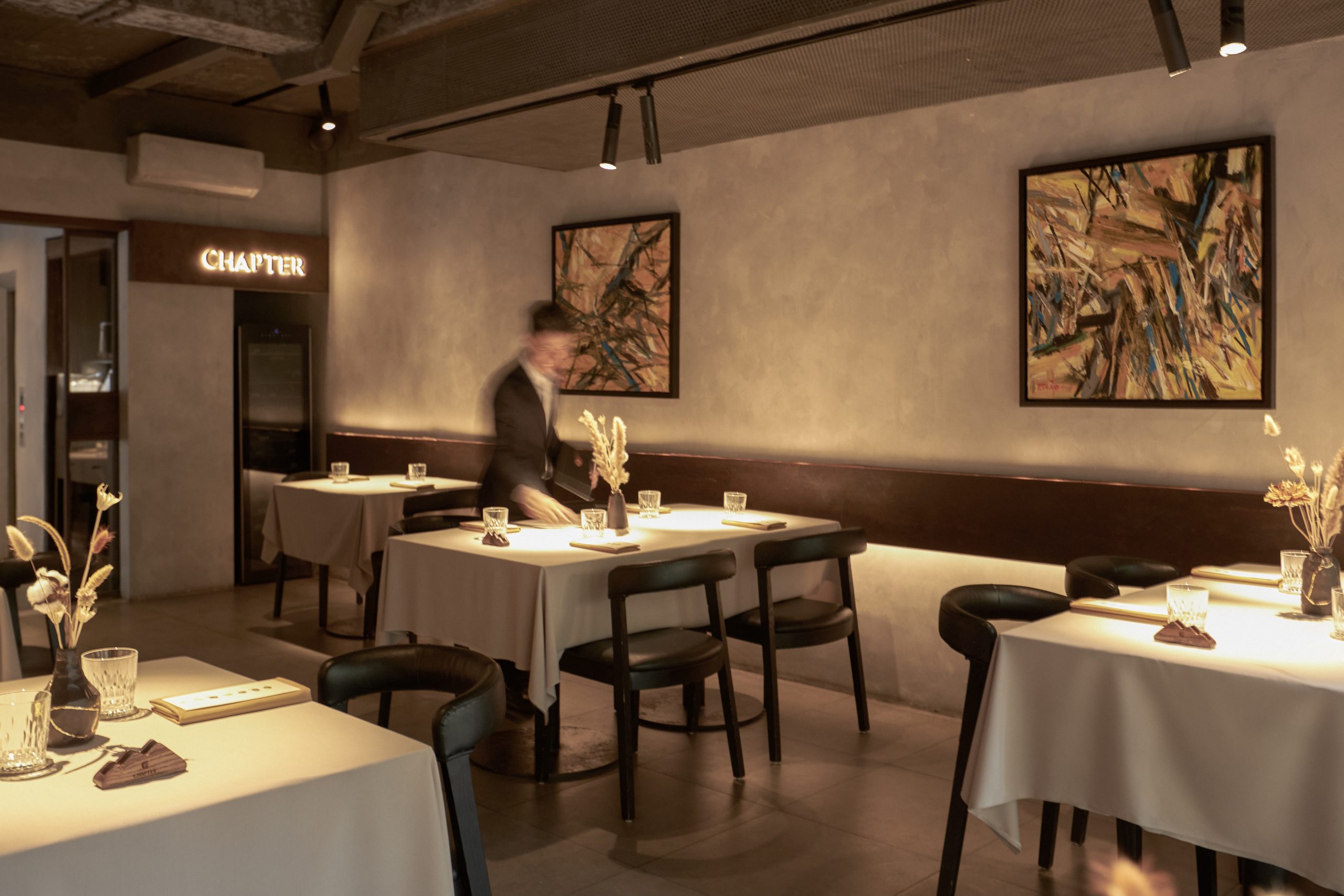
A journey through the mountains and a contemporary dinner serve different purposes. One places you close to markets, farms and home kitchens; the other can reveal how Northern ingredients and memories are interpreted through modern technique.
At Chapter Dining, the seasonal tasting menu draws on the produce, flavours and culinary stories of Northern Vietnam without pretending to reproduce a village meal. It is a considered final chapter for travellers returning to Hanoi—or an introduction for those whose itinerary cannot reach the highlands. Chapter offers a tasting menu rather than à la carte dining. The restaurant is at 12C Chân Cầm, Hoàn Kiếm, Hanoi, and currently opens Monday to Saturday, 18:00–23:00. Menus change with the season, so check the current menu before your visit.
The most memorable Northwest Vietnam food rarely comes from collecting the greatest number of dishes. It comes from eating warm rice beside the fire, understanding why a fish is folded before grilling, or tasting tea close to the trees that produced it. Use these recommendations as a route, then leave room for the cook, harvest and season to change your plans. When the journey returns you to Hanoi, continue the conversation through a contemporary Northern tasting menu. Book your table at Chapter Dining and discover how regional ingredients can carry their origins into an entirely new setting.
_________
Chapter Dining
12C Chan Cam, Hoan Kiem, Hanoi
Mon – Sat from 18:00 – 23:00
Tel: +84 333 201 221 – Reserve a table
Email: reservation@chapter.vn