Hidden inside a fire-blackened bamboo tube is Vietnamese bamboo rice, which tender sticky rice infused with the delicate aroma of fresh bamboo and smoke. Known locally as cơm lam, this traditional Vietnamese rice dish is one of Vietnam’s most distinctive highland specialities. More than bamboo sticky rice, cơm lam reflects the resourcefulness, hospitality and culinary traditions of mountain communities. Read on to discover its origins, distinctive taste and the best ways to enjoy this remarkable highland dish.
Table of Contents
- 1 What is Vietnamese bamboo rice?
- 2 From the forest path to the family table
- 3 How cơm lam is traditionally made
- 4 What does cơm lam taste like?
- 5 How to eat cơm lam like a local
- 6 Cơm lam across Vietnam: the same fire, different landscapes
- 7 Where to try authentic cơm lam near Hanoi
- 8 From a mountain cooking method to contemporary Vietnamese dining
What is Vietnamese bamboo rice?
Vietnamese bamboo rice is glutinous rice cooked inside a fresh tube of bamboo, nứa or a similar hollow plant. In its simplest form, the tube holds soaked sticky rice and water, then is sealed with leaves and turned slowly over a wood or charcoal fire. The outer tube chars while the rice steams inside.
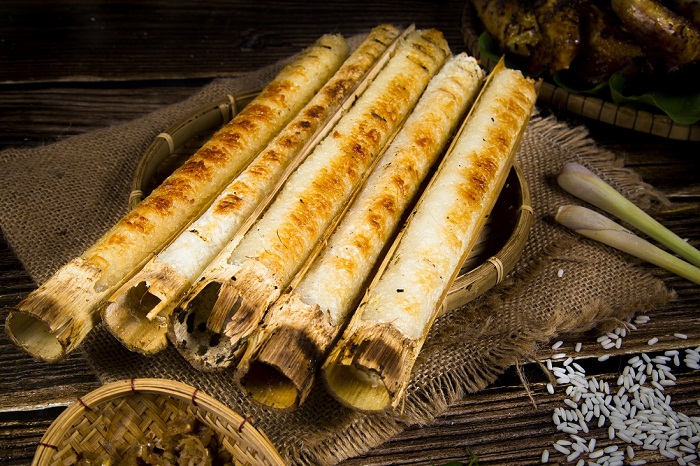
The bamboo is not decorative packaging. It is the cooking vessel, part steamer and part aromatic chamber. Moisture held in the fresh tube protects the rice, while the thin inner membrane helps form a smooth skin around it. When the hard shell is peeled away, the rice keeps a neat cylindrical shape and a faint vegetal perfume.
Cơm lam is strongly associated with the Thái people of Northwest Vietnam, but it is not exclusive to one community or one province. Tày, Nùng and Mường communities also prepare versions of rice in bamboo, and the dish appears in the Central Highlands with its own local ingredients and favourite pairings.
From the forest path to the family table
The origin story begins with movement. People travelling to distant fields or spending long hours in the forest could carry rice without carrying a heavy pot. Fresh bamboo was available around them; water and fire completed the kitchen. Rice cooked in the tube could be peeled, shared and eaten by hand.
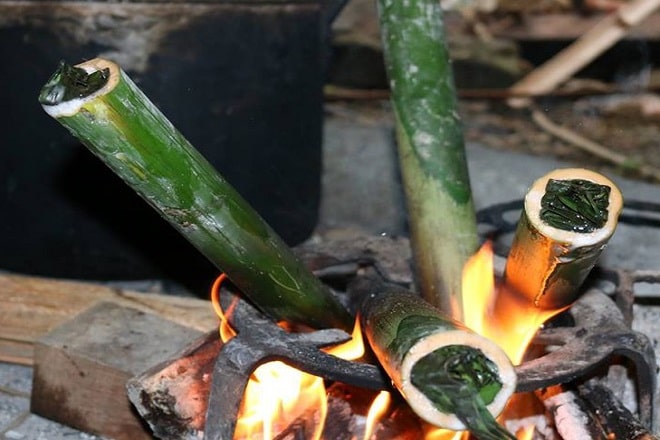
That practical solution explains why cơm lam feels inseparable from place. Its technique relies on what the mountain landscape provides, and its flavour records the process: fragrant grain, plant moisture and smoke. The dish turns a temporary forest meal into something precise enough to survive in cultural memory.
As the dish moved from working days to markets, festivals, family gatherings and meals for guests, recipes developed local signatures. Some cooks season only with a little salt. Others add ginger, coconut milk or a particularly fragrant upland rice. The tube may be bamboo, nứa or another suitable fresh cane, selected by age, thickness and aroma.
How cơm lam is traditionally made
Rice, water and the right bamboo
The ingredient list is short, so every choice matters. Cooks favour fragrant glutinous rice such as upland sticky rice or nếp cái hoa vàng. The grains are washed and soaked until hydrated, then drained before being placed in the tube. Methods and soaking times vary from household to household.
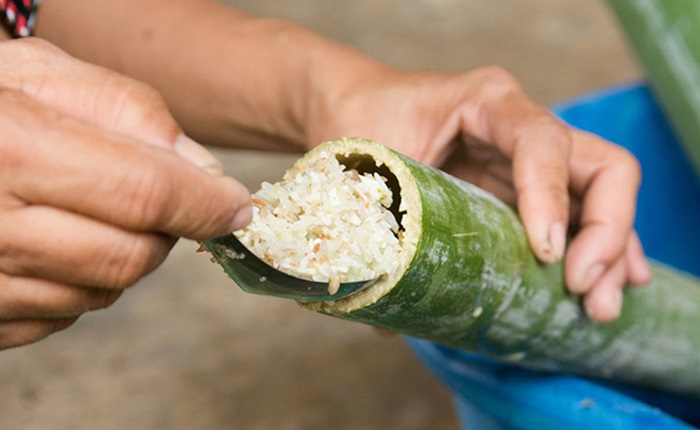
The tube must be fresh and mature enough to withstand heat without drying too quickly. One natural node forms the base; the open end is closed with banana leaf, dong leaf or another clean leaf. Rice needs room to expand. Packing it too tightly can produce a dense, uneven centre.
Fire, patience and constant turning
The sealed tubes are placed beside embers or over a measured flame. They are rotated so that no single side burns before the centre cooks. The surface darkens, the leaves dry and an aroma of warm sticky rice begins to escape. Experienced cooks read these changes rather than relying only on a timer.
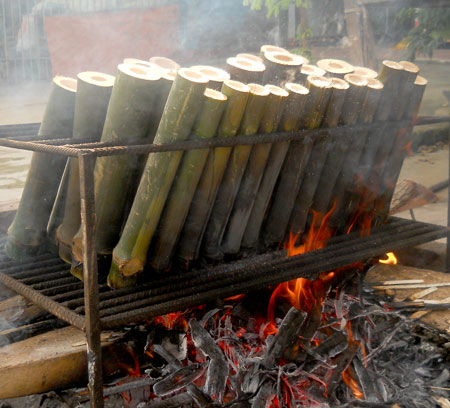
This is where a simple dish becomes craftsmanship. Too much heat scorches the tube and dries the outer rice. Too little leaves the centre undercooked. Good cơm lam is soft and cohesive without becoming wet or compact.
Peel, do not slice
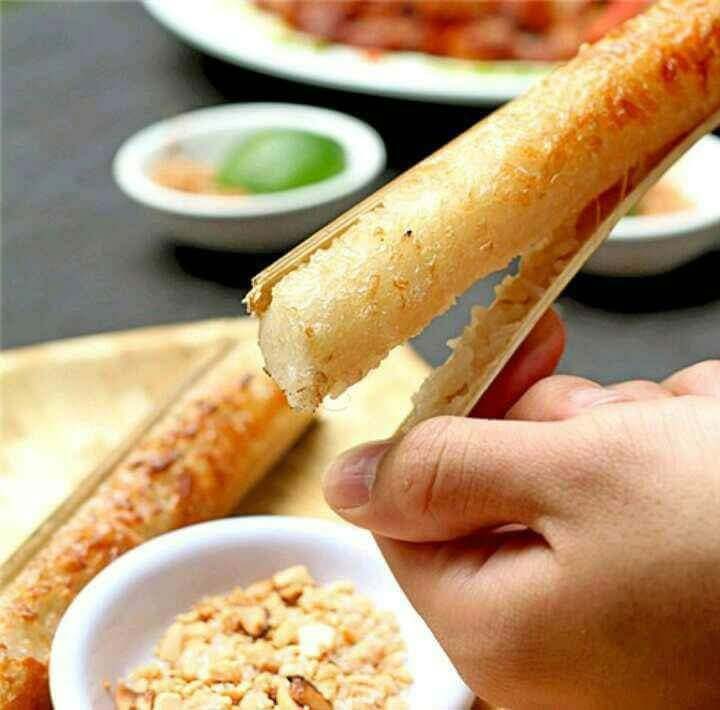
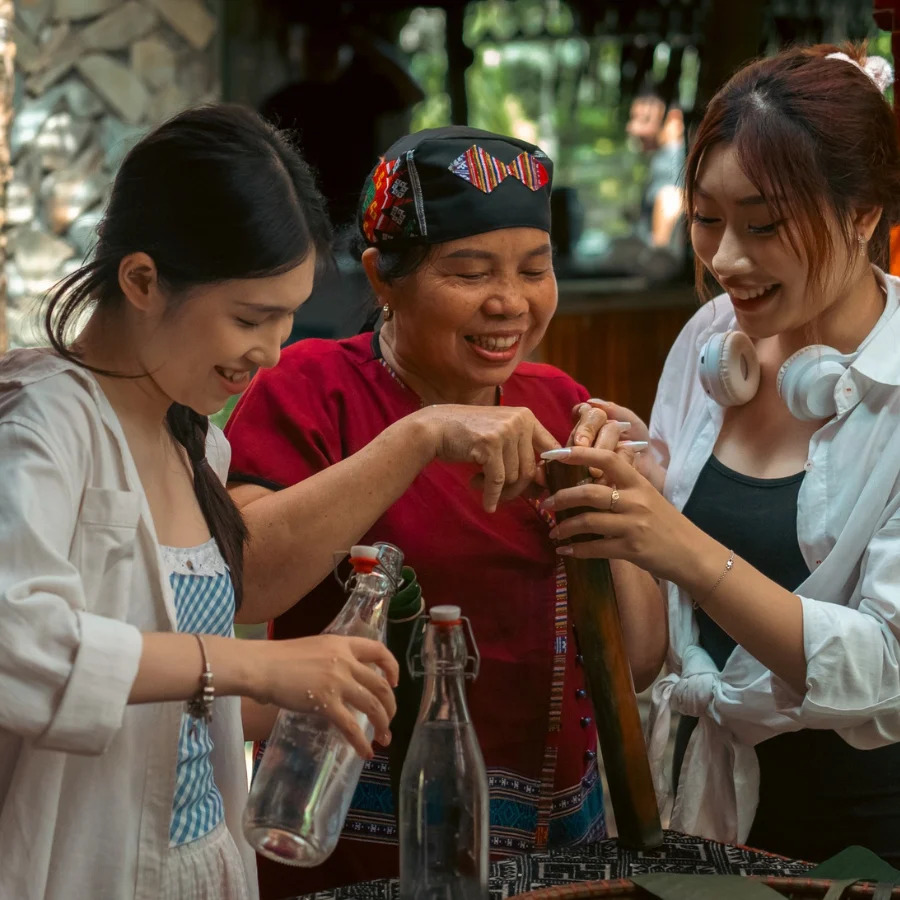
Once cool enough to handle, the charred outer bamboo is stripped away. A thin pale layer is often left around the rice to protect it and preserve the aroma. At the table, that final layer is peeled back in ribbons, revealing a smooth baton of sticky rice ready to break apart by hand.
What does cơm lam taste like?
The first impression is gentle: the milky sweetness of sticky rice, a clean vegetal fragrance and, when cooked over wood or charcoal, a restrained trace of smoke. The texture should be tender and pleasantly chewy. It is subtler than a grilled meat or a bowl of broth, which is exactly why its accompaniments matter.
Fresh bamboo does not make the rice taste woody. Instead, it adds an aroma that many diners describe as green, grassy or leaf-like. Regional versions made with coconut milk may be rounder and richer; those seasoned simply with salt keep the grain and bamboo at the centre.
How to eat cơm lam like a local
Start with sesame or crushed peanuts
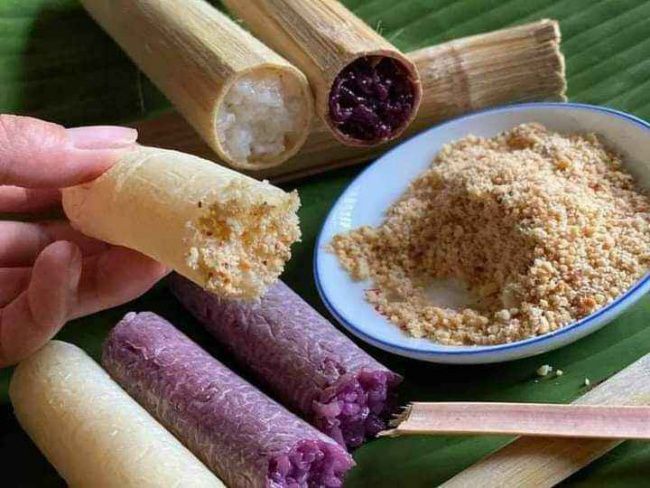
For the clearest taste, tear off a small piece and dip it in muối vừng, a mixture of salt and roasted sesame, or in crushed salted peanuts. The nutty seasoning sharpens the rice’s quiet sweetness without hiding its bamboo aroma. This is also one of the most accessible ways to enjoy cơm lam as a snack.
Pair it with grilled chicken, pork or river fish
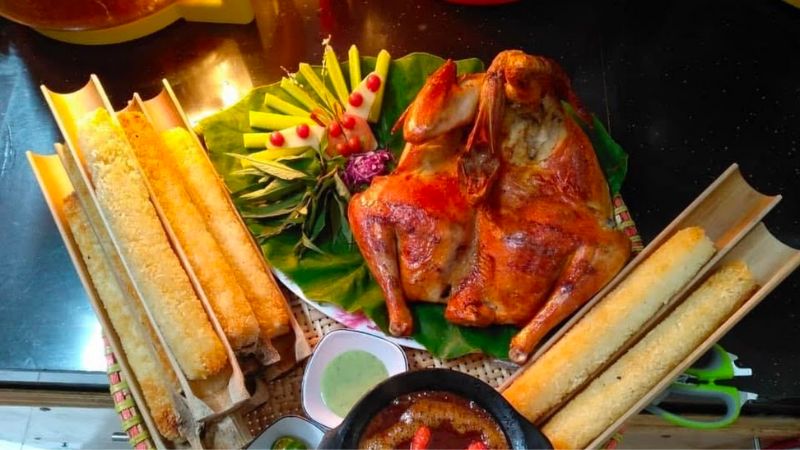
Cơm lam naturally belongs beside food cooked over the same fire. In Mai Châu, it is commonly served with grilled native chicken, pork skewers and greens. In the Central Highlands, grilled chicken and bamboo rice form a celebrated pairing: smoky skin, savoury juices and fragrant sticky rice support one another without needing a heavy sauce.
Grilled chicken is another fitting companion. The rice absorbs seasoning and juices, while its restrained flavour gives diners a pause between bites of char, spice and herbs.
Add mountain herbs, greens and chẩm chéo
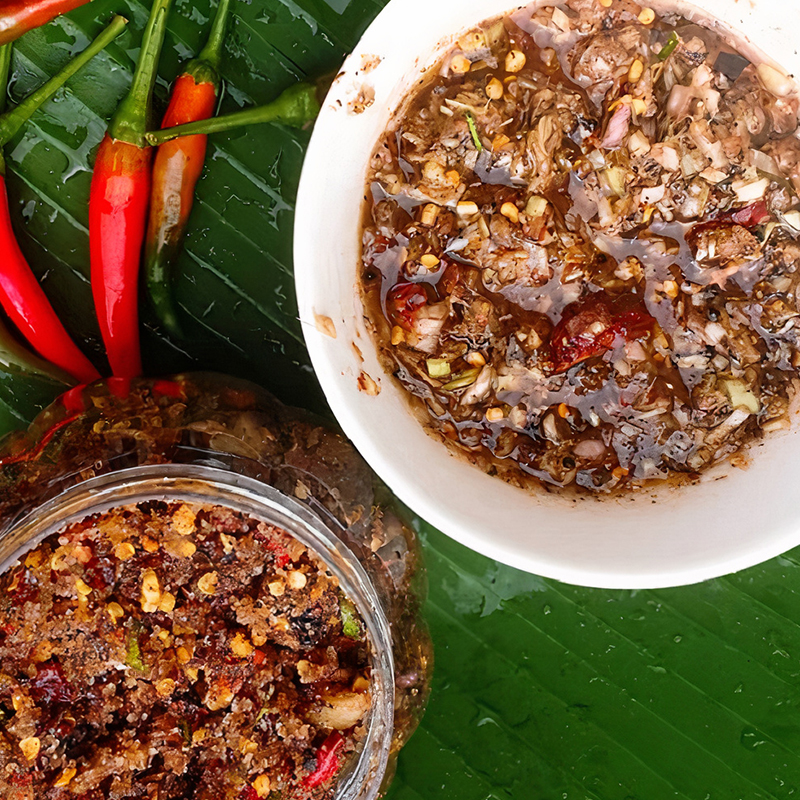
A Northwest meal gains energy from herbs, boiled or stir-fried greens, sour bamboo shoots and chẩm chéo. This Thái dipping mixture often brings chilli, garlic, salt and the citrusy warmth of mắc khén. Recipes vary, so ask what is in the bowl before tasting—especially if you avoid fish, meat or particular allergens.
A vegetarian way to enjoy it
Plain cơm lam can be plant-based when made with rice, water, salt and optional coconut milk. Pair it with sesame salt, roasted peanuts, grilled mushrooms, tofu, greens or bamboo shoots. Do not assume the whole plate is vegetarian: dipping sauces and shared grills may contain fish sauce or meat, so a clear request is useful.
Cơm lam across Vietnam: the same fire, different landscapes
Mai Châu and the Northwest
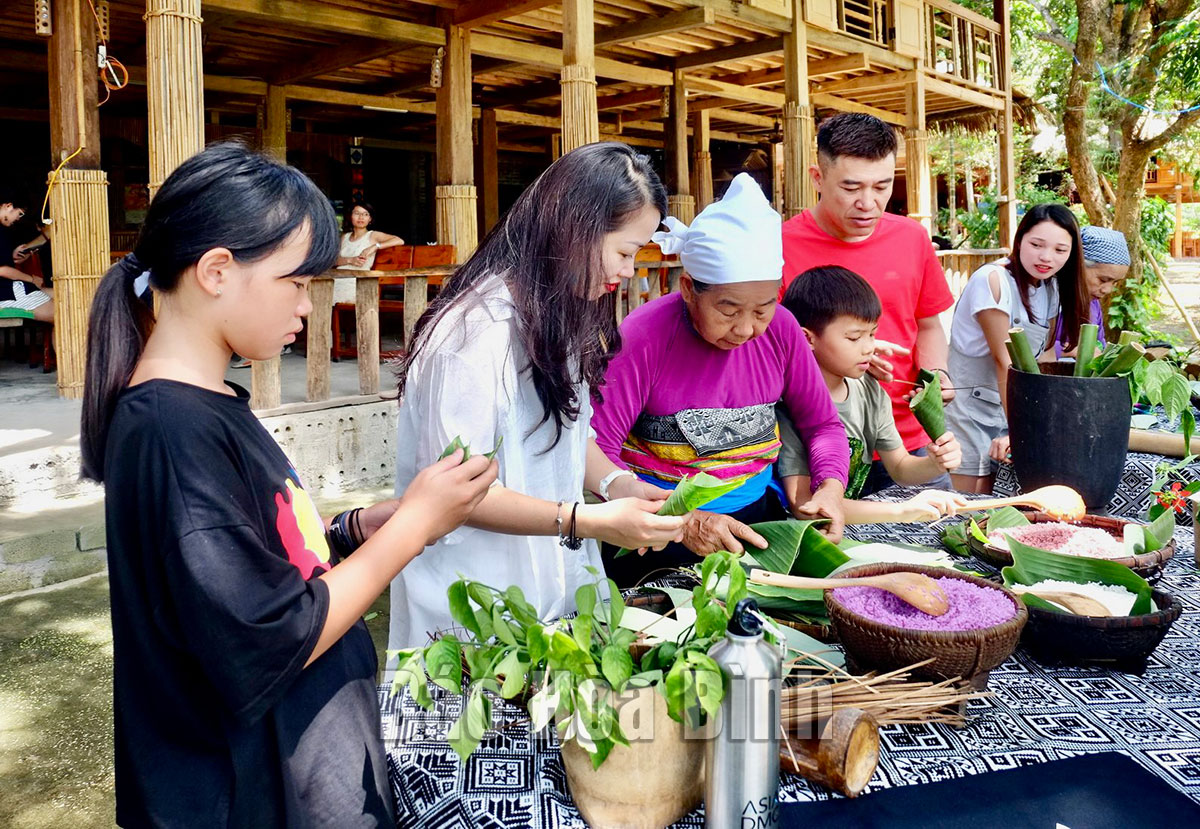
For many travellers from Hanoi, Mai Châu is the most natural introduction. White Thái families in Lác and Pom Coong villages host visitors in stilt houses and prepare home-style meals. Here, bamboo rice sits within a wider table of grilled chicken, pork, vegetables and local greens—not as a novelty, but as part of the region’s food language.
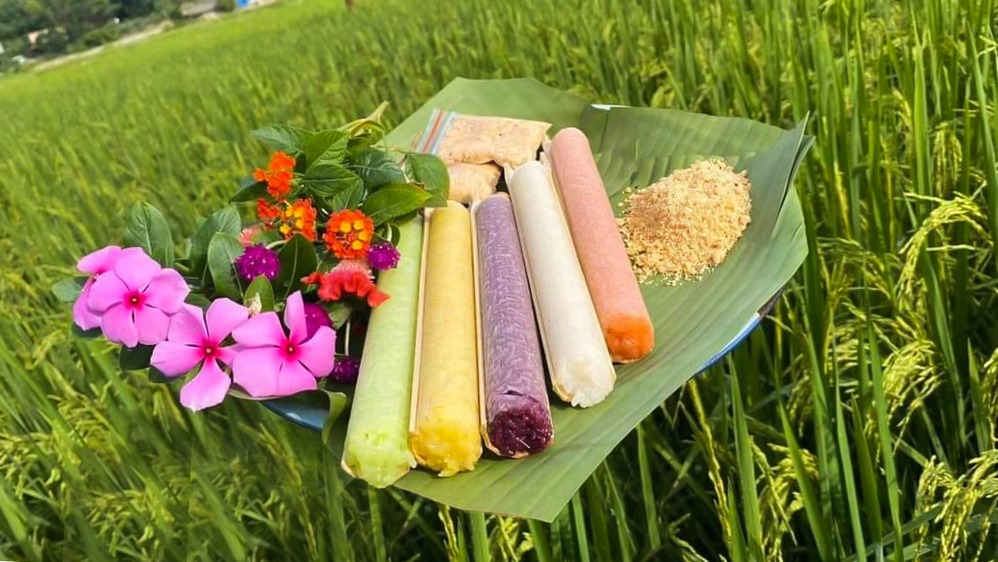
Across the Northwest, the choice of upland rice, bamboo and seasoning changes with locality and household. Those differences are worth noticing. Ask who prepared the rice, what grain was used and whether the tubes were cooked that day.
Vietnam’s Central Highlands
Farther south, cơm lam is equally at home in the Central Highlands. It is often paired with charcoal-grilled chicken marinated with lemongrass, pepper, honey, fish sauce and local leaves. The pairing feels more robust, but the logic remains the same: grain, fire and ingredients tied to the surrounding land.
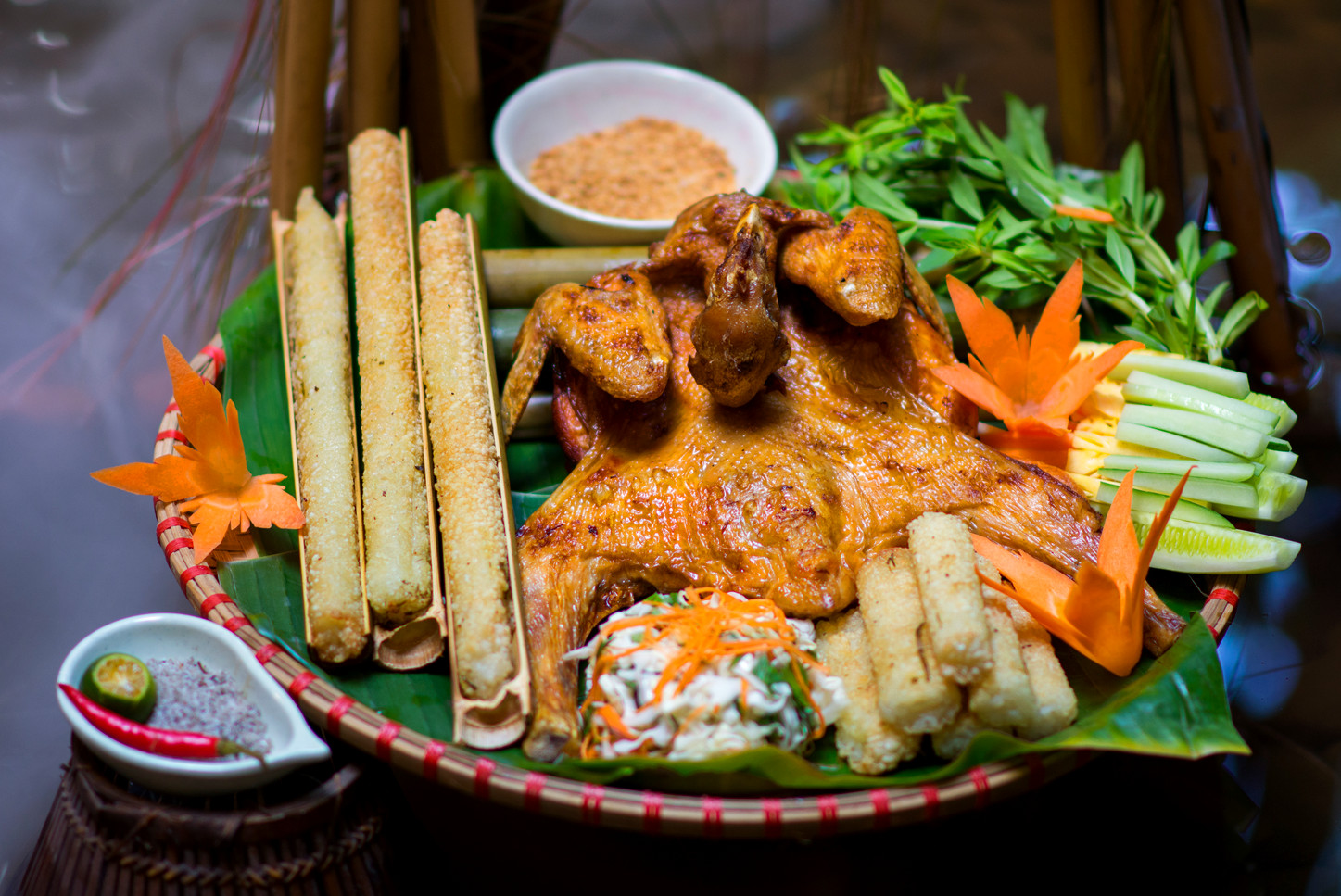
The comparison matters because it prevents one region’s version from standing in for all others. Bamboo-cooked rice is a shared technique whose identity changes as it meets different grains, forests, spices and communities.
Where to try authentic cơm lam near Hanoi
“Authentic” should describe care and context, not only distance from a city. Look for rice cooked in fresh tubes, a clear connection to the regional cuisine and staff who can explain the grain, accompaniments and preparation. Because cơm lam takes time and fresh bamboo, call ahead when it is the main reason for your visit.
Lác or Pom Coong village, Mai Châu Valley
Best for: a home-cooked White Thái meal and cultural context. The villages are about 140 kilometres west of Hanoi and are known for family-run stilt-house stays. Arrange dinner with your homestay and ask in advance for cơm lam cooked over fire, ideally with sesame or peanuts, grilled chicken and seasonal greens.
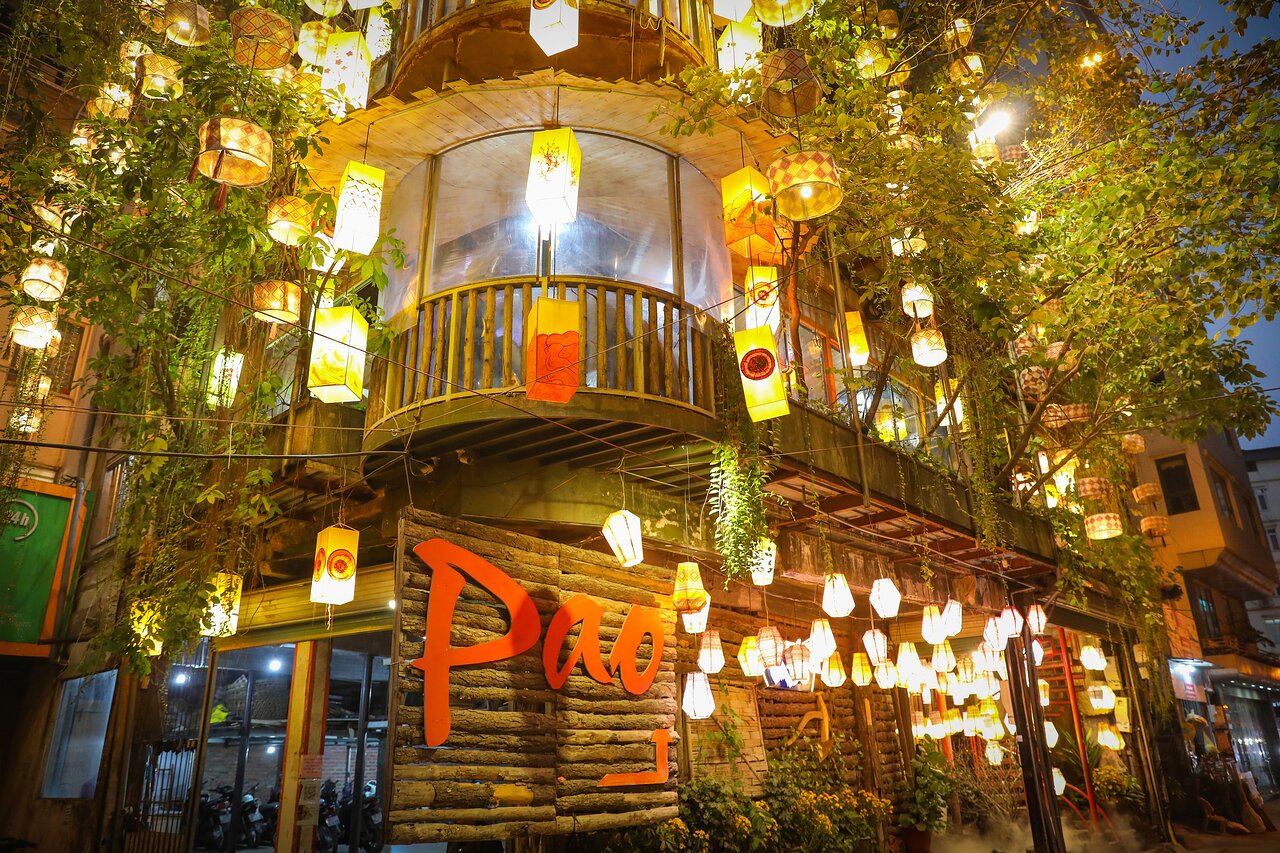
Pao Quán, Hanoi
Best for: a convenient city introduction to Northwest-style food. Pao Quán’s official menu currently lists cơm lam, and its central system includes a branch at 1 Alley 62 Trần Thái Tông, Cầu Giấy, Hanoi. Confirm availability, branch and opening hours before travelling, as menus can change.
Kho Mường or Đôn village, Pù Luông
Best for: a community meal within a Thái cultural landscape. Homestays around Pù Luông commonly serve local tables featuring bamboo rice, stream fish, grilled meats, mountain vegetables and chẩm chéo. Book the meal with your host rather than arriving unannounced; freshly prepared cơm lam is worth the planning.
From a mountain cooking method to contemporary Vietnamese dining
Cơm lam offers a useful lesson for understanding Vietnamese cuisine: technique is never separate from geography. Bamboo is a vessel because it grows nearby. Fire is both necessity and flavour. When the dish enters a restaurant, those relationships deserve to remain visible.
Contemporary Vietnamese dining can honour that logic without copying the bamboo tube literally. A chef may work with upland grain, smoke, fermentation or local herbs; the connection becomes meaningful when the source and memory of those ingredients remain part of the experience.
This is the perspective behind Chapter Dining’s seasonal approach. Its tasting menus explore Northern Vietnamese ingredients through modern technique and change according to what is available. Cơm lam does not promise as a permanent course; rather, its story helps explain the kind of relationship between land, craft and memory that Chapter seeks to bring to the table.
To continue your exploration of Northern Vietnamese food culture through a contemporary tasting menu, reserve a table at Chapter Dining and let the next story unfold course by course.
_________
Chapter Dining
12C Chan Cam, Hoan Kiem, Hanoi
Mon – Sat from 18:00 – 23:00
Tel: +84 333 201 221 – Reserve a table
Email: reservation@chapter.vn