What makes the end of a fine dining meal memorable? Sometimes, it is a flavour that brings back something familiar. Sometimes, it is a small surprise, followed by a conversation nobody feels ready to end. At Chapter Dining, Vietnamese fine dining dessert finds expression in autumn petit fours. Served with tea, these small sweets leave room for the conversation to continue. Read on to discover how familiar flavours shape a Vietnamese fine dining dessert and bring the evening to a thoughtful close.
Table of Contents
Why the last sweet bite matters in fine dining
The final course changes the pace of an evening. With the savoury dishes behind you, there is time to return to a favourite flavour, compare impressions and enjoy the company across the table.
An impressive ending does not always need a large dessert or an elaborate display. A small bite can hold your attention through its aroma, texture or an unexpected combination. Chapter’s autumn petit fours take this approach. Each offers something different to notice: floral cream inside a macaron, banana within bánh gai, and persimmon shaped by its time in wine.
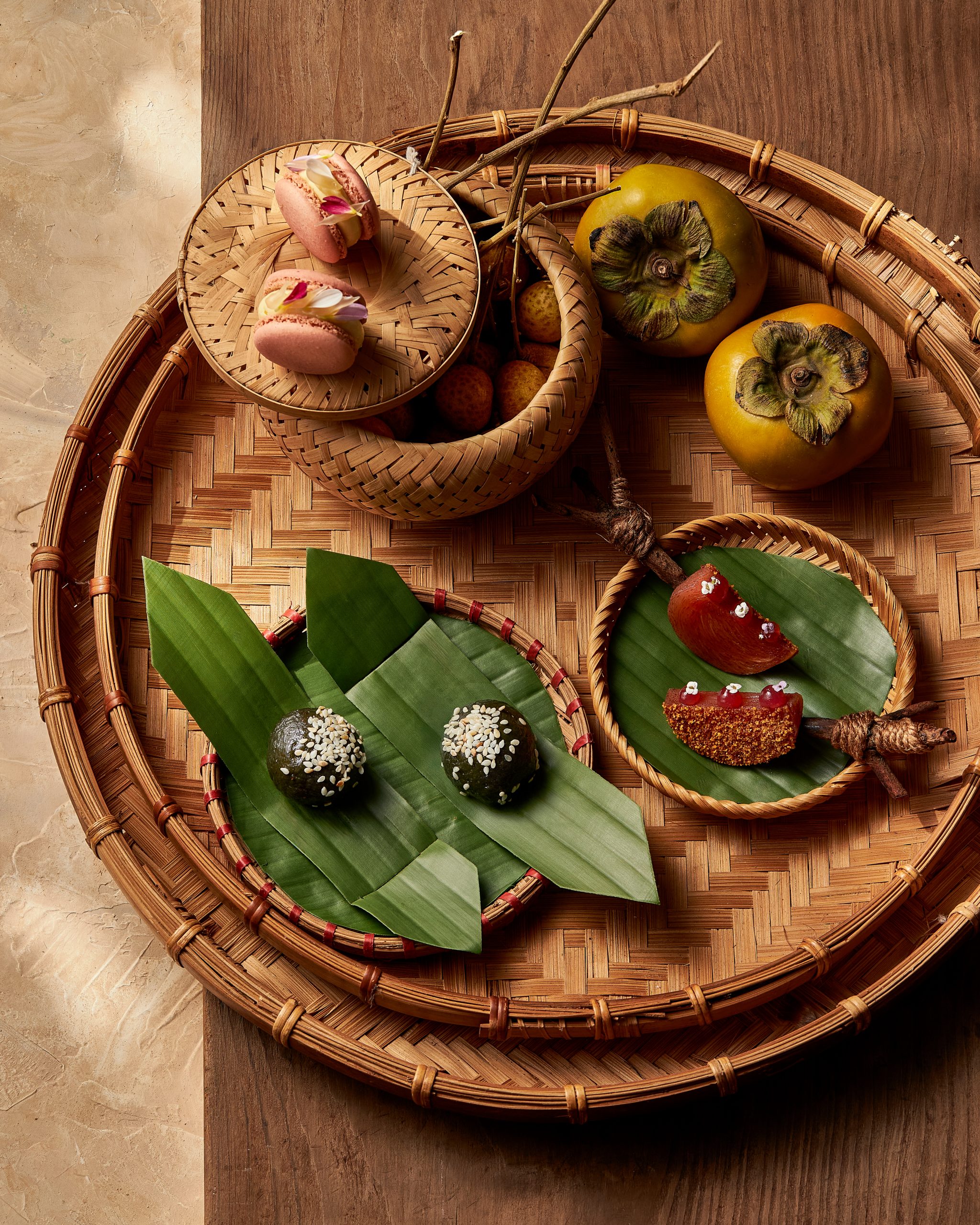
Together, they give the meal a closing sequence of their own. The experience continues as you taste, pause and reach for your cup.
Three autumn petit fours at Chapter Dining
Jasmine and pomelo macaron: a floral opening
The macaron pairs jasmine-flavoured cream with a pomelo jelly centre. Its appeal lies in the contrast between a delicate floral note and the fruit within. Take a moment with the first bite. Notice how the macaron shell gives way to the cream, then how the pomelo changes the combination. The small format allows several textures to arrive together.
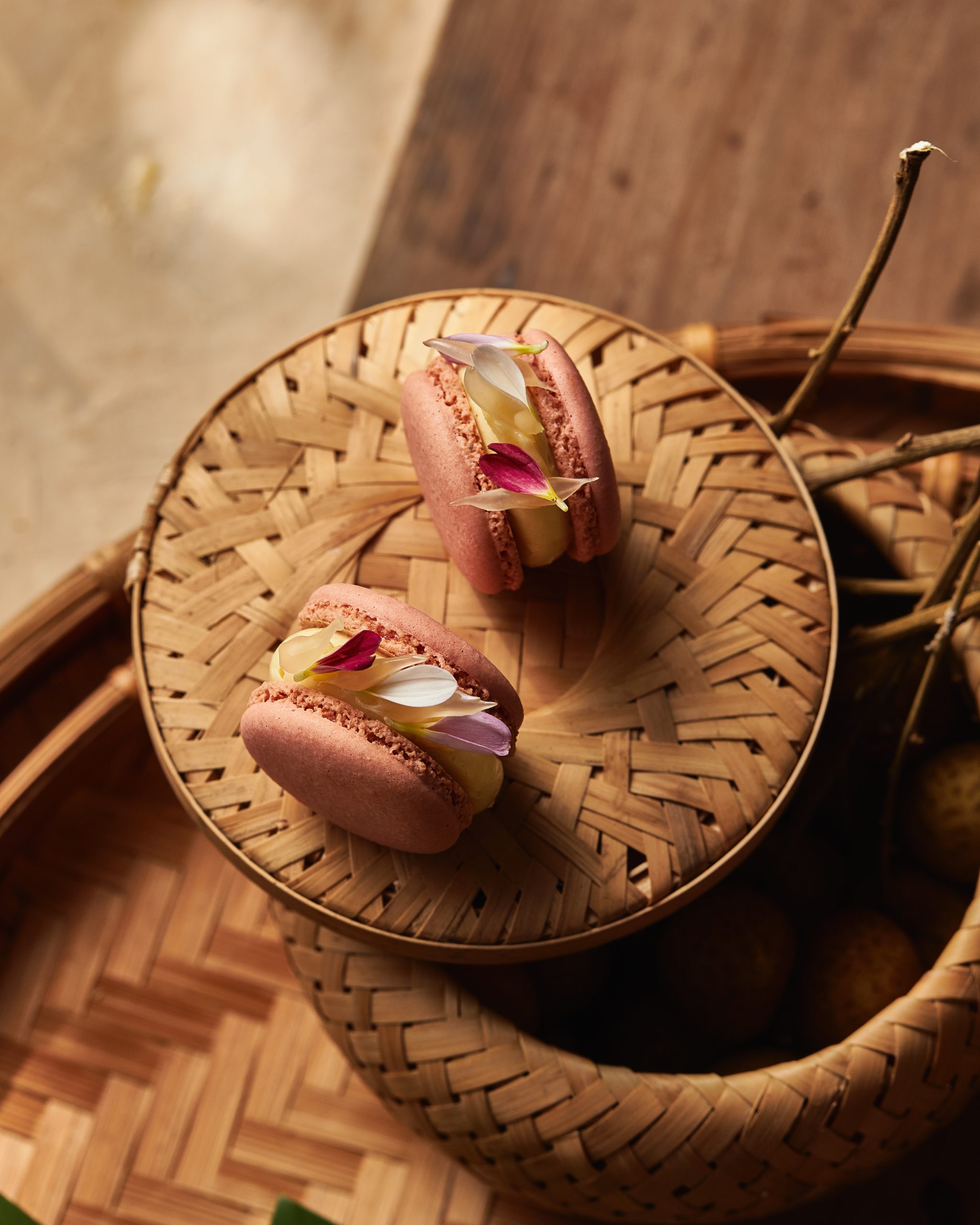
Although the macaron is French in form, jasmine and pomelo create a connection with the ingredients explored in Chapter’s menu. It is an example of how a Vietnamese-inspired dessert can draw on familiar flavours through a different pastry format. The pomelo jelly also carries over from the previous season. For returning guests, this creates a thread of continuity within the autumn selection.
Bánh gai with banana: familiarity in a small parcel
Bánh gai brings a different character to the selection. Its ramie leaf exterior surrounds a banana filling, placing a familiar Vietnamese cake alongside the macaron. Here, the interest shifts towards the relationship between the cake and its centre. The banana gives you another flavour to discover within a recognisable form.
For guests who know bánh gai, the filling offers a point of comparison with versions they have eaten before. For others, the petit four becomes an introduction to the cake through one small serving.
This sweet returns from Chapter’s Lucent season. Its presence connects the autumn menu with an earlier chapter of the restaurant’s cooking. That continuity adds meaning to the final bites. A seasonal menu can introduce new ideas while allowing selected flavours to remain part of the experience.
Wine-soaked persimmon: an autumn note to finish
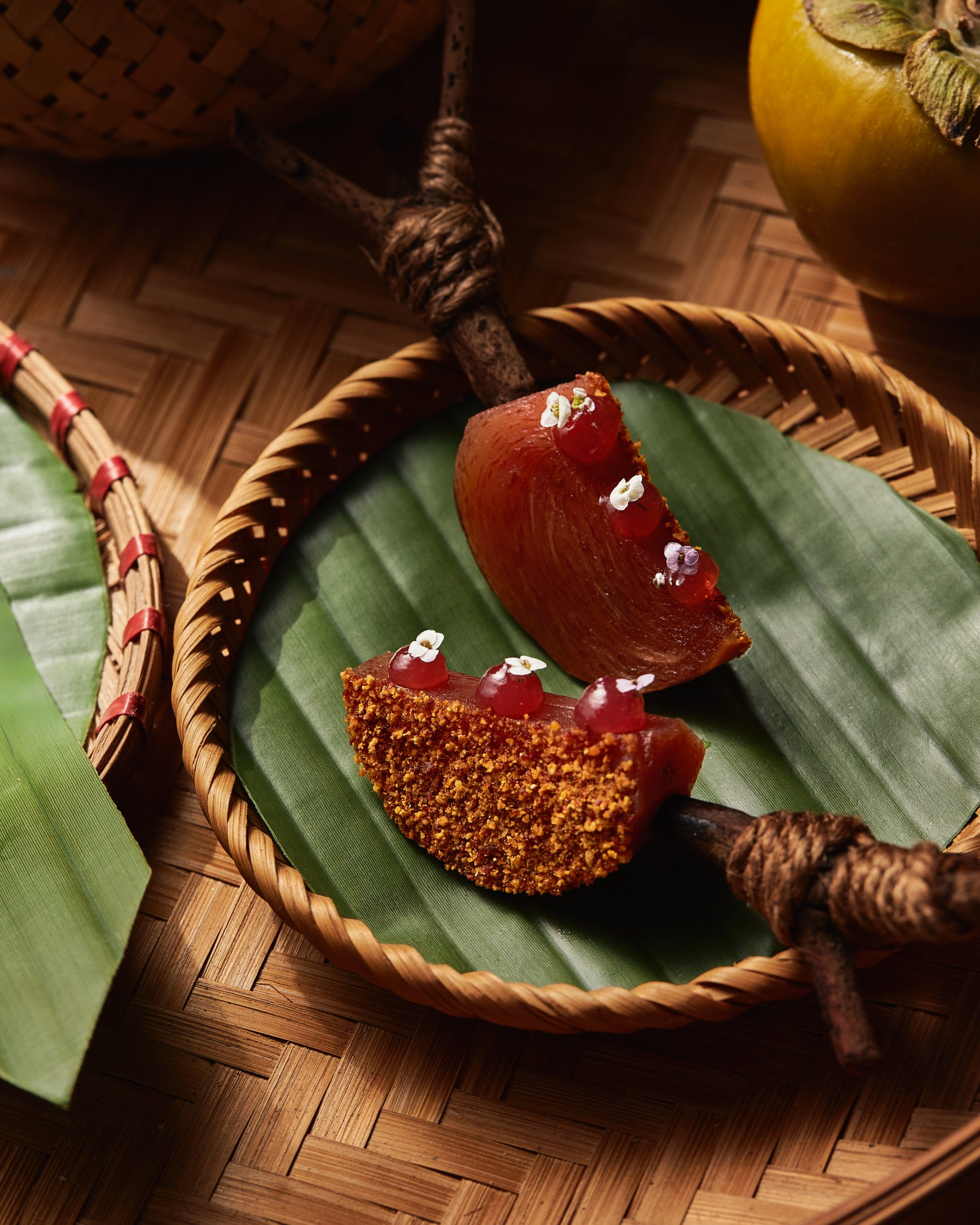
Wine-soaked persimmon completes the trio, bringing fruit into a selection that also includes pastry and cake. Persimmon gives the autumn theme a clear presence. The wine introduces another element to consider alongside the fruit’s sweetness. After the macaron and bánh gai, this final treat changes the texture and focus once more. It invites you to pay attention to the fruit itself and how the preparation has shaped its flavour.
What makes a Vietnamese fine dining dessert distinctive?
In Chapter’s autumn petit fours, that connection takes several forms. Jasmine and pomelo appear within a macaron. Bánh gai retains its familiar identity while holding banana inside. Persimmon brings a seasonal ingredient to the closing selection.
The three sweets also invite different responses. One guest may be drawn to the floral cream. Another may remember eating bánh gai and want to talk about its filling. Someone else may find the persimmon the most distinctive bite.
This is where a Vietnamese fine dining dessert becomes personal. The ingredients give guests something specific to taste, remember and discuss.
For visitors discovering Vietnamese flavours, the small portions offer an approachable introduction. For those already familiar with them, the pleasure may come from noticing how Chapter has brought them together.
Tea makes room for the conversation to continue
Offering tea is a familiar Vietnamese gesture of hospitality. At the end of the meal, that gesture gives the petit fours a setting beyond the plate. Try a bite, take a sip, and notice what stays with you. The jasmine may be the detail you return to. The bánh gai may start a conversation about a familiar food. Or the persimmon may become the flavour everyone wants to compare. There is no need for every guest to choose the same favourite. Sharing those differences can become part of the enjoyment. The sweets bring the menu towards its close, while tea allows the conversation to carry on.
A final flavour to take away from Chapter Dining
A complete fine dining evening leaves you with details you can recall afterwards. It might be a dish that surprised you, an ingredient you recognised, or a quiet moment shared across the table.
Chapter’s autumn petit fours offer three final opportunities to find that detail. Before leaving, take a moment to share what stayed with you. A favourite bite or a small observation gives the team a glimpse of your experience.
For guests curious about Vietnamese fine dining dessert, these autumn sweets offer a thoughtful reason to explore Chapter’s seasonal menu and leave a little time for tea.
________
Chapter Dining
12C Chan Cam, Hoan Kiem, Hanoi
Mon – Sat from 18:00 – 23:00
Tel: +84 333 201 221 – Reserve a table
Email: reservation@chapter.vn