What should the first taste of a fine dining menu accomplish? It should awaken curiosity without exhausting the palate, introduce the chef’s point of view and make the guest ready for what follows. At Chapter Dining, the answer for early summer arrives unexpectedly: a cool ice cream made with yogurt and just-ripened mulberries. This fine dining first course is not designed as an early dessert. Its cold temperature, delicate creaminess and bright acidity offer relief from Hanoi’s first hot days while introducing the seasonal philosophy behind Lucent, Chapter’s summer tasting menu. Read on to discover why the meal begins with ice cream, how the dish relates to Vietnamese ideas of balance and what first-time tasting-menu guests can expect from the opening spoonful.
Table of Contents
The fine dining first course is the opening movement of a carefully paced meal. Unlike a generous shared starter, it is usually small, focused and designed to create appetite rather than satisfy it. Every detail—temperature, acidity, aroma, texture and serving size—helps establish the rhythm of the courses ahead.
In an à la carte restaurant, an appetizer is normally chosen by the guest and listed as the first course. A tasting menu works differently. The kitchen determines the sequence, so the opening may take the form of a snack, a welcome drink, a chilled spoonful or a composed plate. Its purpose is less about category and more about function: to move the diner from the outside world into the logic of the menu.
Chapter’s yogurt and mulberry ice cream can be understood most clearly as a welcome bite or opening gesture. It performs the role diners associate with an amuse-bouche: small in scale, chosen by the chef and intended to introduce the experience. In simpler language, it is the first taste that welcomes guests into the menu.
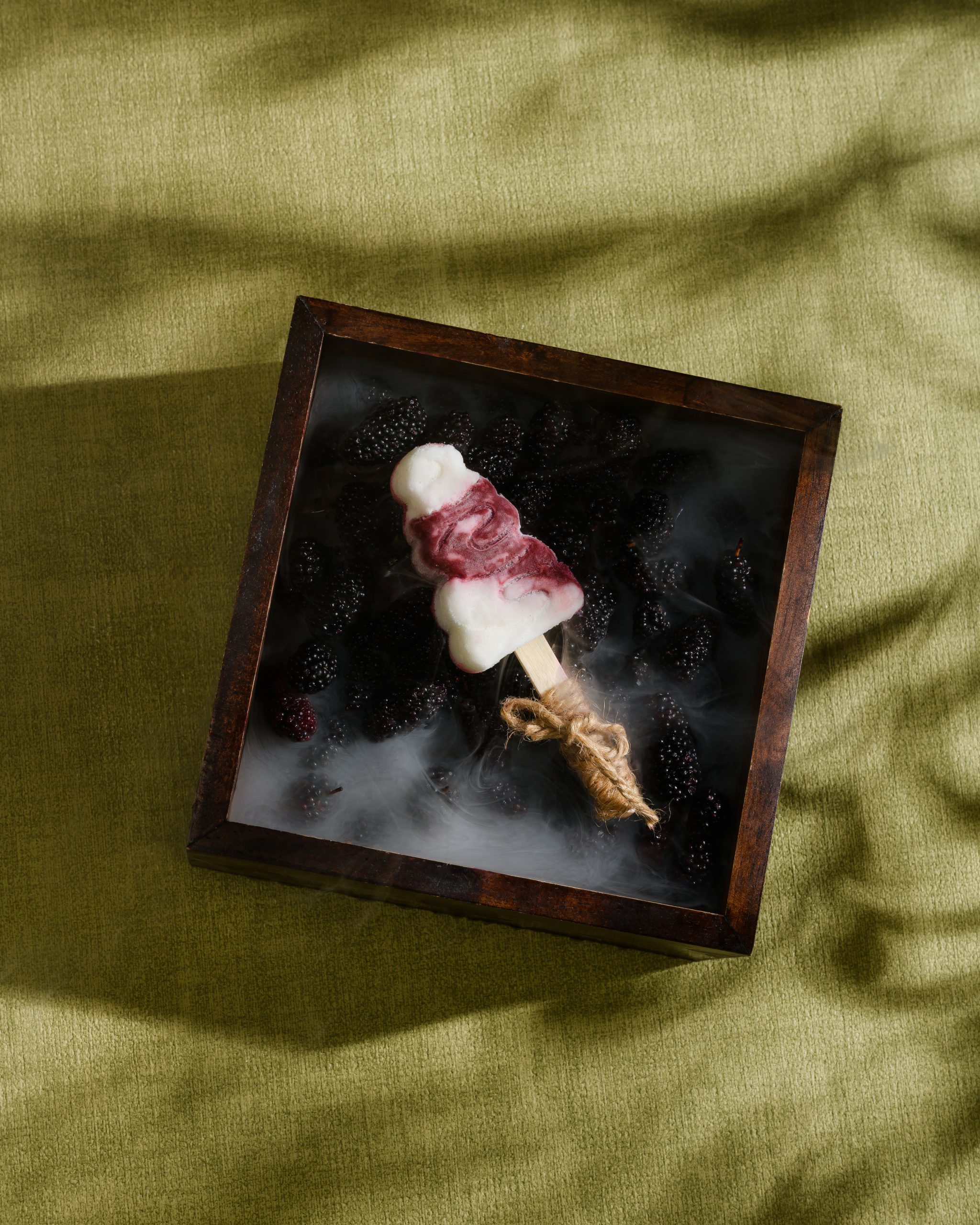
A precise portion also encourages attention. The guest notices how quickly the ice cream softens, how the acidity arrives and what remains after the spoon has left the palate. Smallness is not a lack of generosity; it is part of the menu’s pacing.
Eating with the seasons through a Vietnamese lens
In traditional food thought, Yin and Yang do not mean that every dish must be divided into two visible halves. They describe complementary qualities that become meaningful through their relationship: cool and warm, light and rich, soft and crisp, sour and sweet.
The opening ice cream leans intentionally towards coolness, softness and brightness. That choice answers the heat of early summer and leaves space for smoke, fermentation, seafood and richer flavours to emerge later in Lucent. Balance belongs to the complete sequence, not only to one spoonful.
In this dish, creamy yogurt provides body, mulberry brings colour and acidity, and frozen temperature creates the immediate sensation around which the course is organised. The composition is brief, but each element has a distinct role.
Inside Chapter’s yogurt and mulberry ice cream
The opening uses only a few ideas, but simplicity places greater pressure on ingredient quality and balance. Yogurt must remain creamy without becoming heavy. Mulberry needs enough ripeness to offer sweetness while retaining the acidity that gives the dish momentum. The frozen texture must be smooth, yet able to melt quickly enough for the flavours to open.
Yogurt: creaminess with a clean, tart edge
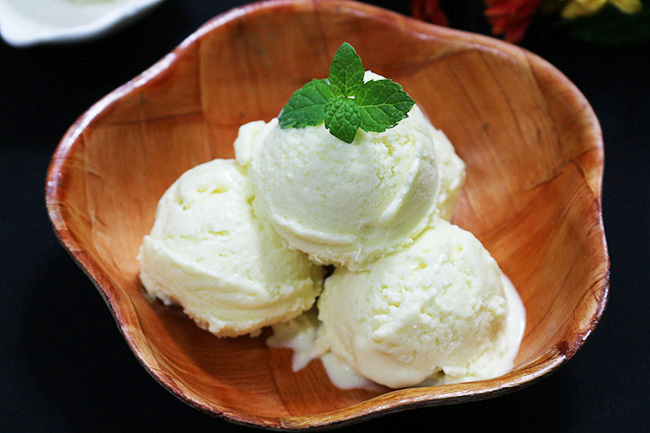
Yogurt gives the ice cream structure and familiarity. Its lactic acidity prevents the first taste from feeling like a conventional sweet dessert, while its creaminess softens the sharper edge of the fruit.
This combination creates an important tension. The palate recognises something comforting, but the serving position makes it unfamiliar. Yogurt becomes a bridge between welcome and appetite: gentle enough for the first spoon, bright enough to prepare the senses for the next course.
Early-season mulberries: a brief sign of Hanoi’s changing weather
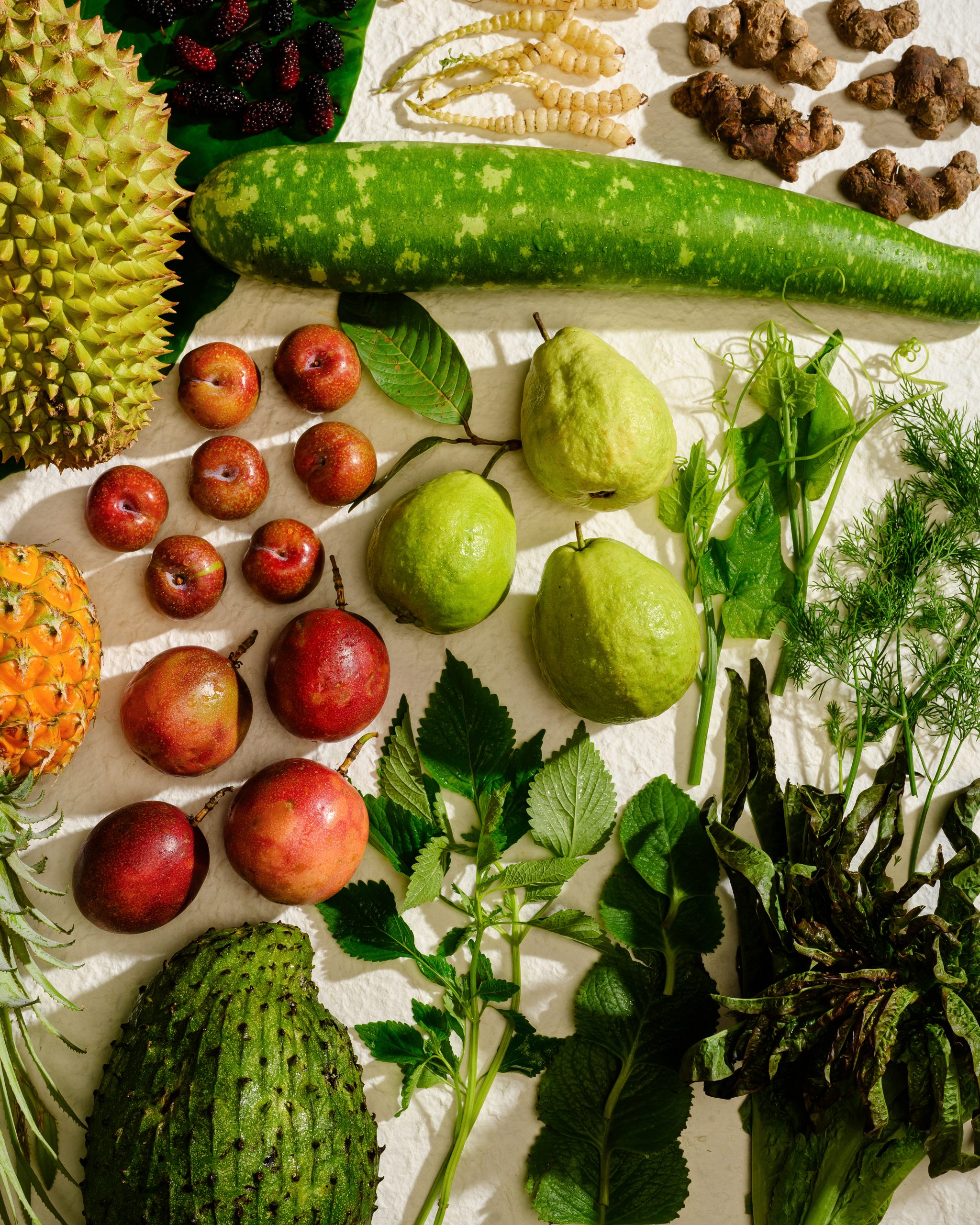
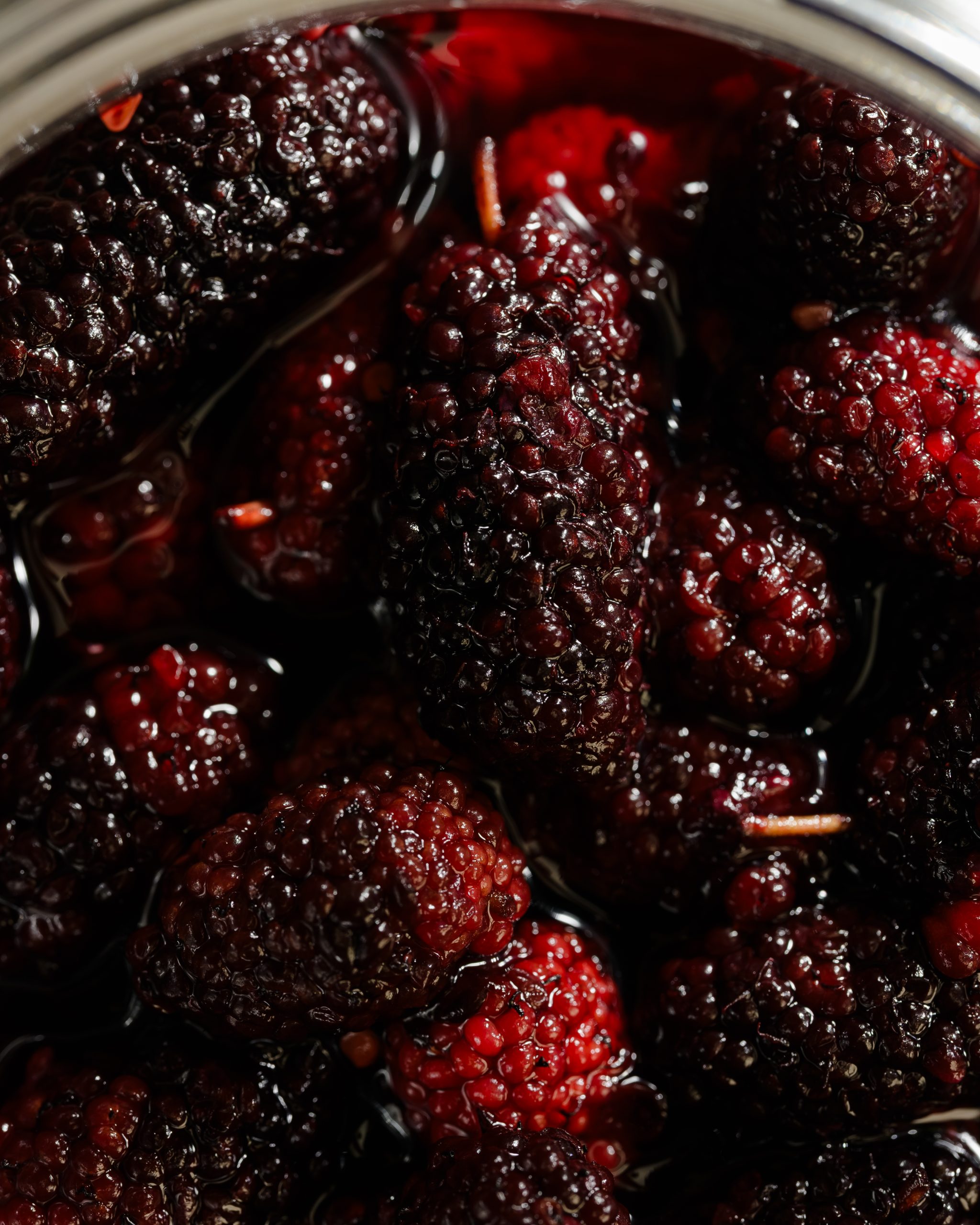
In Northern Vietnam, mulberries arrive quickly around the transition into summer. The main harvest is commonly associated with late March and April, and the fruit’s season may last only a few weeks. Mulberries ripen and bruise easily, so their presence carries a natural sense of urgency.
The flavour changes as the fruit darkens. Less-ripe berries can feel distinctly tart; deeper purple fruit becomes juicier and sweeter while retaining brightness. Using early-season mulberries allows the kitchen to capture that tension between acidity and ripeness rather than seeking sweetness alone. For travellers, the ingredient offers a glimpse of Hanoi beyond permanent menus and year-round produce. It represents a short agricultural moment—one that may disappear before the hottest part of summer fully arrives.
Cold temperature: an ingredient in its own right
Temperature does more than make the course refreshing. Cold can quiet sweetness, tighten texture and delay aroma. As the ice cream melts on the tongue, yogurt and mulberry become gradually more expressive.
This creates a miniature progression within a single spoonful:
- Immediate coolness
- Smooth, restrained creaminess
- Bright berry acidity
- Gentle sweetness as the ice cream softens
- A clean finish that invites the next course
The course lasts only moments, but its structure mirrors the wider tasting menu: an experience designed to unfold rather than arrive all at once.
What does the first spoonful taste like?
Expect a flavour closer to chilled cultured dairy and fresh fruit than to a rich scoop from a dessert shop. Yogurt provides a soft lactic tang, while mulberry introduces juicy sweet-sour notes and a faint berry depth. Neither should erase the other.
The opening sensation is cold and calming. Acidity then begins to sharpen the palate, followed by a small amount of sweetness that rounds the finish. Because the portion is intentionally concise, it should leave curiosity rather than fullness.
Guests who usually avoid sweet beginnings may find the dish more restrained than expected. Its role is not to deliver dessert-level richness; it uses the language of ice cream to create a fresh start.
Why mulberry season matters to the experience
Seasonality is easy to celebrate in theory and more demanding in practice. A short-lived fruit can vary with rainfall, temperature, transport and the speed of ripening. Choosing it means accepting that flavour and supply may shift—and that the menu may eventually need to move on.
This is precisely what gives the course meaning. If mulberry ice cream were available unchanged throughout the year, it would lose part of its connection to early summer. Its appeal comes from timing: guests encounter it when the fruit and weather make sense together. For Chapter, eating with the seasons therefore involves more than adding a seasonal garnish. The ingredient determines the idea, and its availability helps determine the lifespan of the course.
Where to experience this fine dining first course in Hanoi
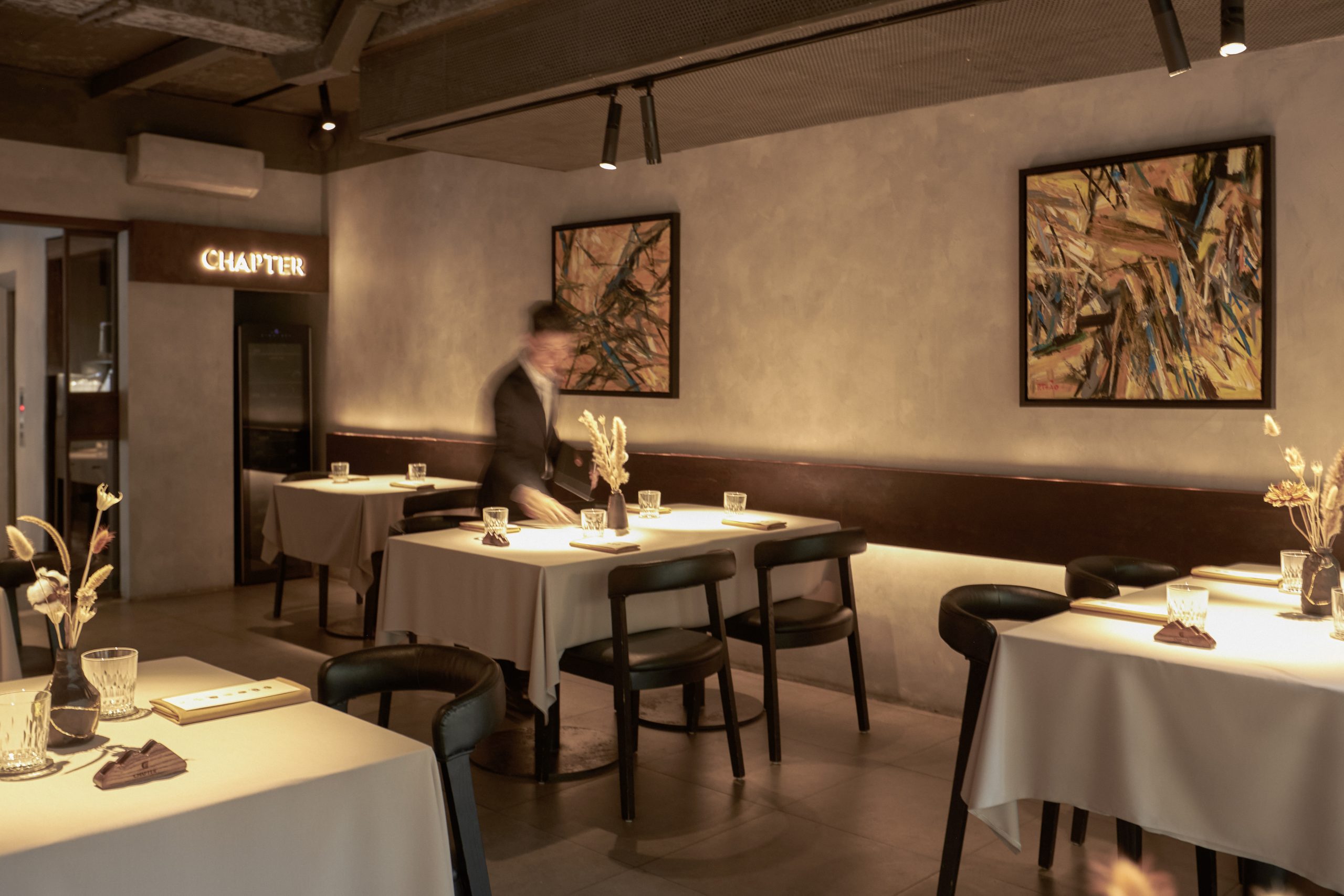
The yogurt and early-season mulberry ice cream welcomes guests to Lucent, Chapter Dining’s summer tasting menu. Chapter serves one seasonal tasting journey rather than an à la carte selection, allowing the kitchen to control pacing and build relationships between courses.
Menus evolve with produce and weather. Review the current Chapter menu and communicate allergies when booking. A memorable fine dining first course does not need to be elaborate or imposing. It needs to arrive with purpose. Chapter’s yogurt and early-season mulberry ice cream uses coldness, creaminess and gentle tartness to welcome guests out of Hanoi’s heat and into the rhythm of Lucent.
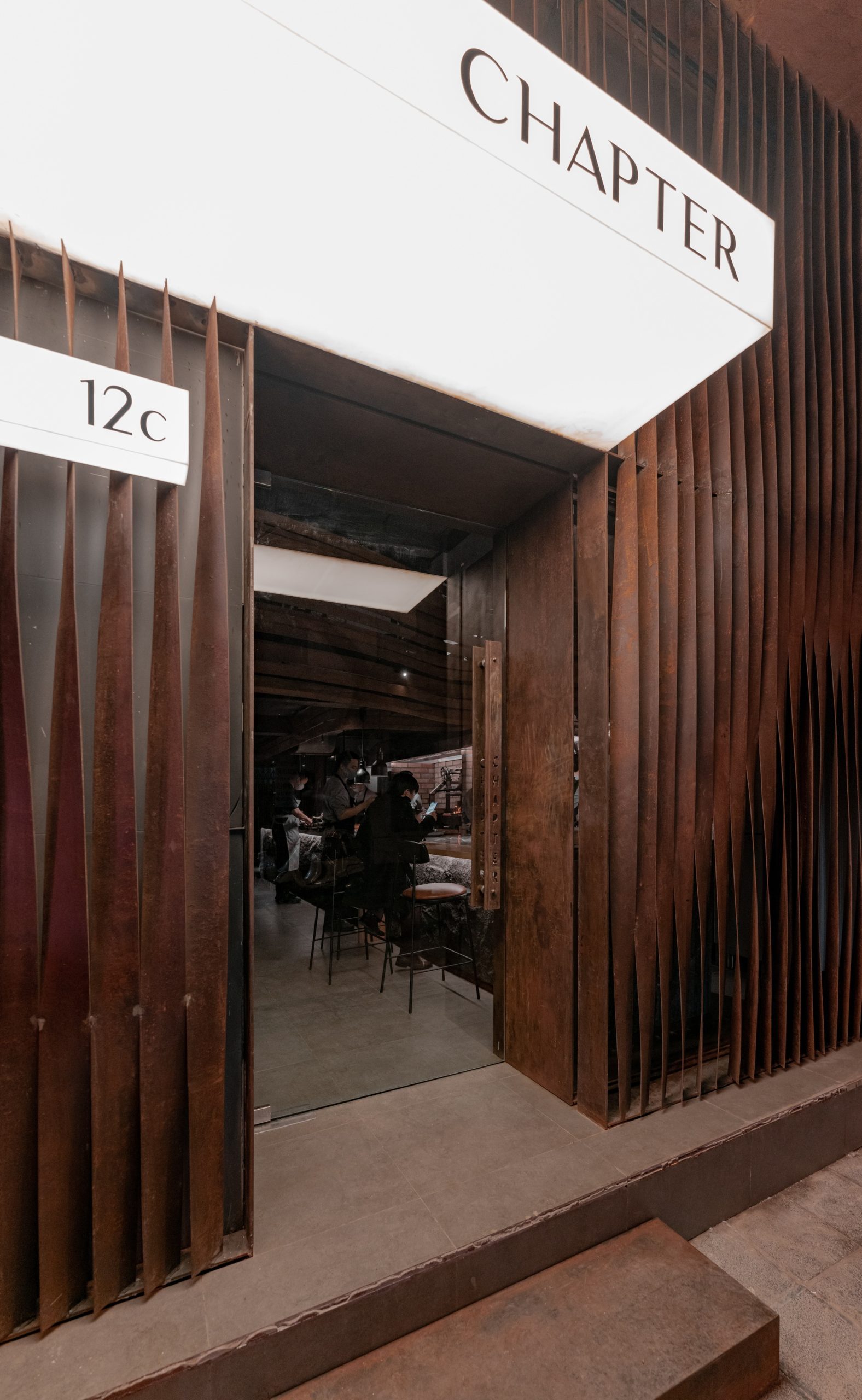
The course lasts only a few spoonfuls, yet it introduces an entire way of dining: attentive to harvest, weather, balance and change. Book your table at Chapter Dining to taste this fleeting beginning while mulberry season still shapes the menu.
_________
Chapter Dining
12C Chan Cam, Hoan Kiem, Hanoi
Mon – Sat from 18:00 – 23:00
Tel: +84 333 201 221 – Reserve a table
Email: reservation@chapter.vn