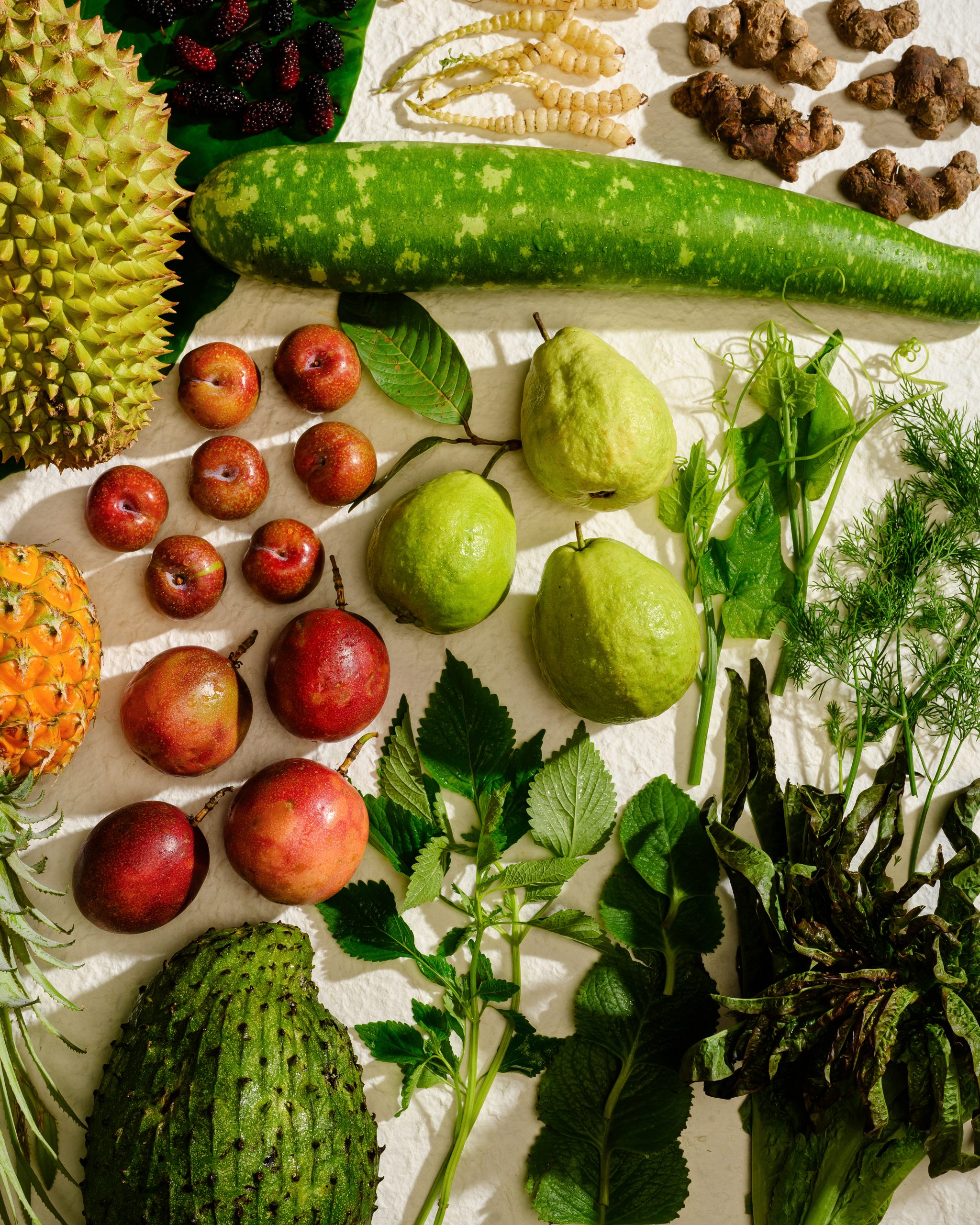
Summer in Vietnam is not defined by one flavour. It moves between the sweetness of crab, the tenderness of roe-filled baby squid, the clean richness of deep-sea fish and whatever the day’s coastal catch is ready to offer. For travellers, these ingredients reveal a side of Vietnamese food that is lighter, more seasonal and closely connected to the sea. At Chapter Dining, four seafood courses give that summer landscape a contemporary Northern Vietnamese form: Swimmer Crab – Bottle Gourd – Caviar; Kinmedai – Fermented Rice; Baby Squid – Pig’s Ear – Black Ginger; and Seasonal Fish – Tomato – Lettuce. Read on to discover what makes these Vietnamese summer seafood ingredients worth seeking—and why their fleeting character belongs in a tasting menu.
Table of Contents
Why seafood belongs to the rhythm of Vietnamese summer
Vietnam’s coastline stretches through changing currents, climates and fishing communities. There is no single national “seafood season”, and availability varies by species and location. Yet warmer months bring ingredients that have long shaped seaside meals: swimming crab landed nearshore, small squid carrying delicate roe and fish chosen according to the day’s catch.
Summer also changes what diners want from a meal. In Hanoi’s heat, weight and intensity can quickly exhaust the palate. Seafood allows a menu to move through sweetness, salinity and umami without depending on heavy sauces. Gourds, tomatoes, lettuce, fermented rice and aromatic roots provide acidity, moisture and contrast.
This is where seasonality becomes more than a sourcing statement. The right ingredient is selected at the right moment, then paired with elements that help it feel appropriate to the weather. For first-time visitors, tasting seafood this way offers a connection between Vietnam’s coast and the dining culture of its capital.
Four Vietnamese summer seafood ingredients worth seeking
Swimmer crab: sweet, delicate and unmistakably coastal
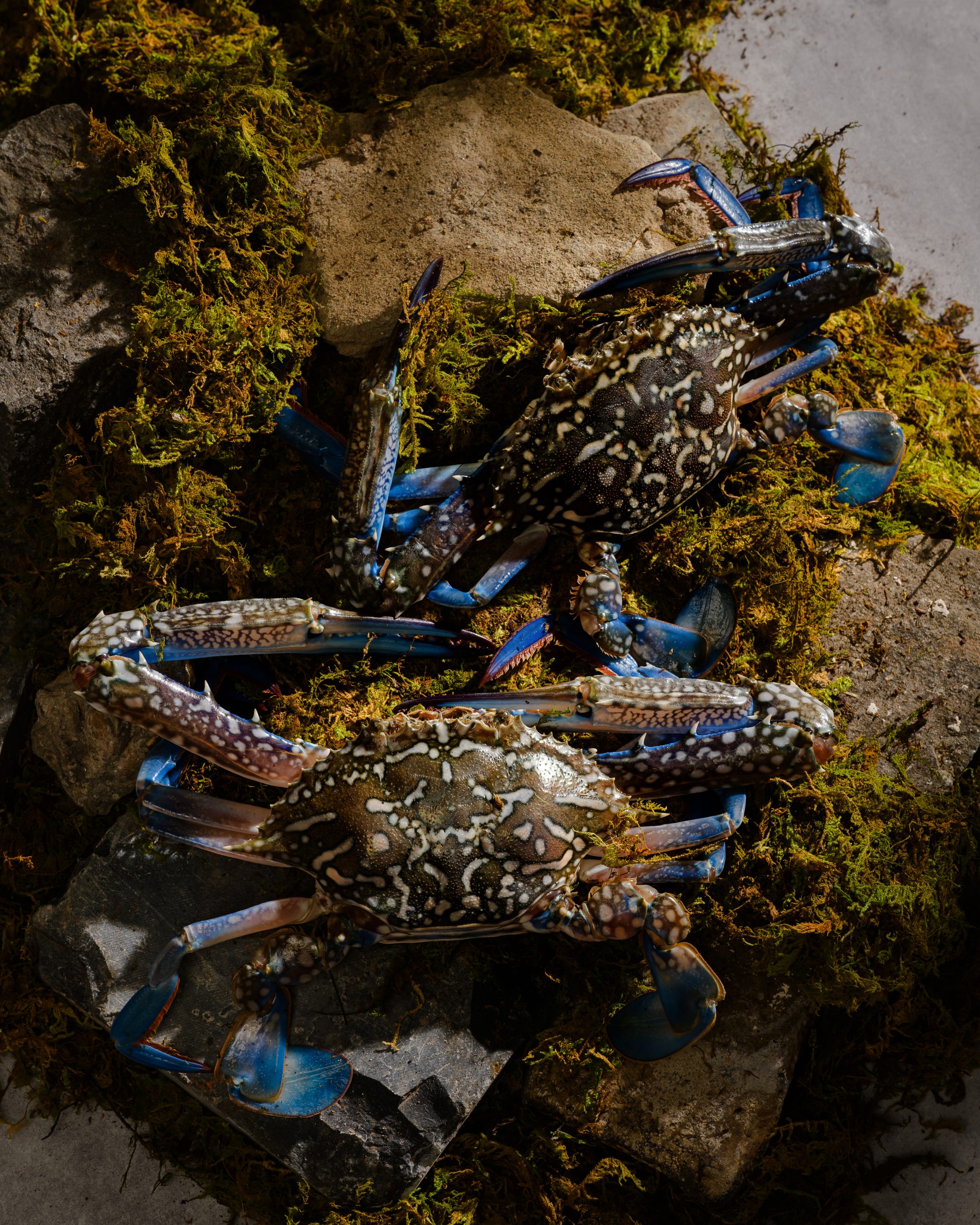
Swimming crabs are an important part of Vietnam’s coastal catch. Their flesh is fine, naturally sweet and expressive enough to remain recognisable even in a composed fine-dining course. Unlike a large piece of rich shellfish, picked crab meat can feel almost weightless while still carrying a clear taste of the sea.
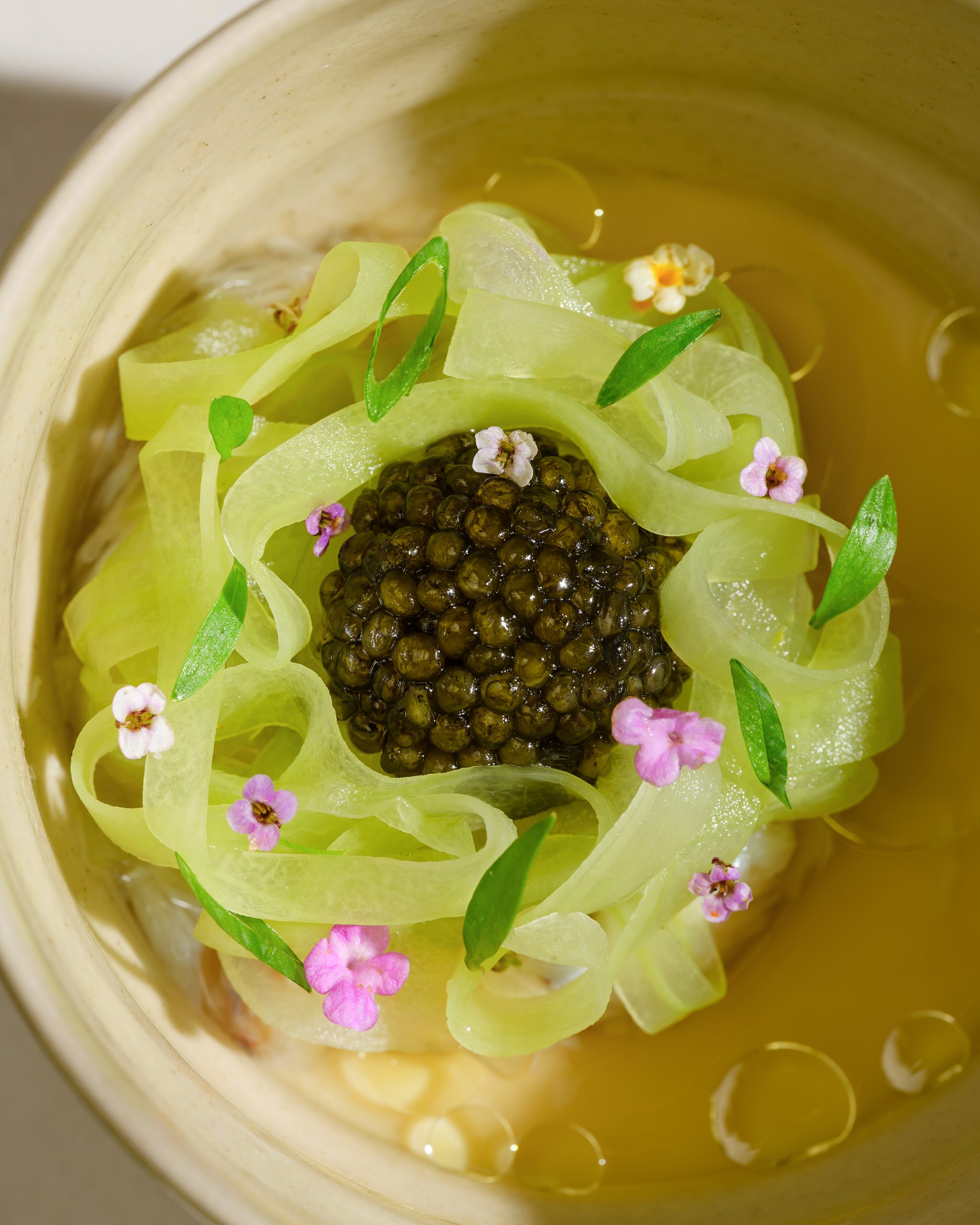
At Chapter, Swimmer Crab – Bottle Gourd – Caviar begins with that gentle sweetness. Bottle gourd gives the dish a cooling, vegetal quality familiar to Vietnamese summer cooking, while caviar adds small bursts of salinity and depth. The pairing is deliberately restrained: the crab remains the centre rather than a base for an overpowering sauce.
The pleasure comes through contrast:
- Soft, naturally sweet swimmer crab
- Light and refreshing bottle gourd
- Concentrated salinity from caviar
- A clean finish suited to warm weather
For travellers who have only encountered Vietnamese crab in noodle soup, hotpot or tamarind sauce, this course offers a quieter perspective. The ingredient remains familiar, but its texture and sweetness are given more room to speak.
Kinmedai: deep-sea richness balanced by fermented rice
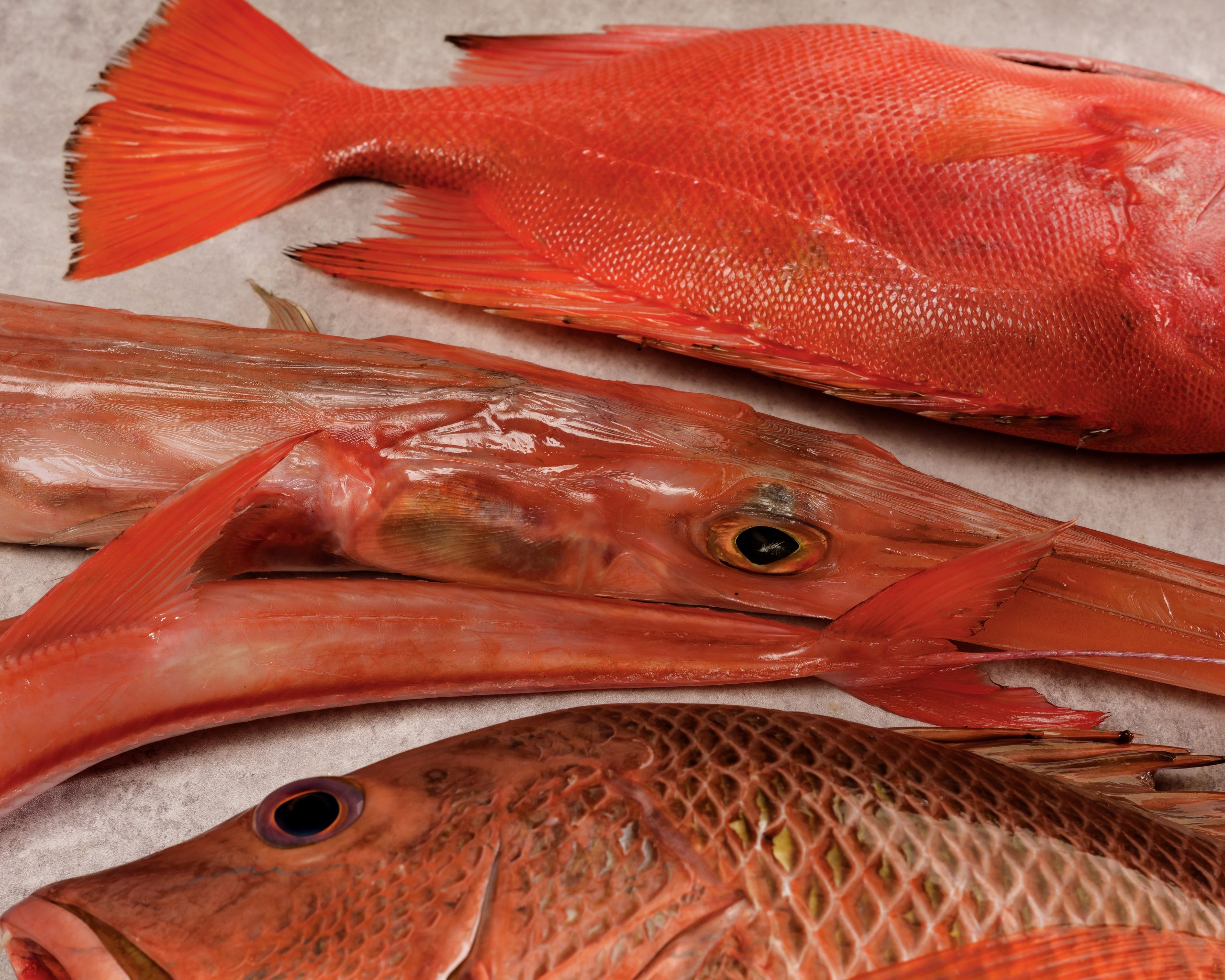
Kinmedai is the Japanese name commonly used for splendid alfonsino, a deep-sea fish recognised by its vivid red skin and large golden eyes. The species is found across several oceans rather than belonging exclusively to Vietnam. For Chapter’s summer course, however, the restaurant states that its fish is sourced from the coastal waters of Bình Định and Phú Yên.
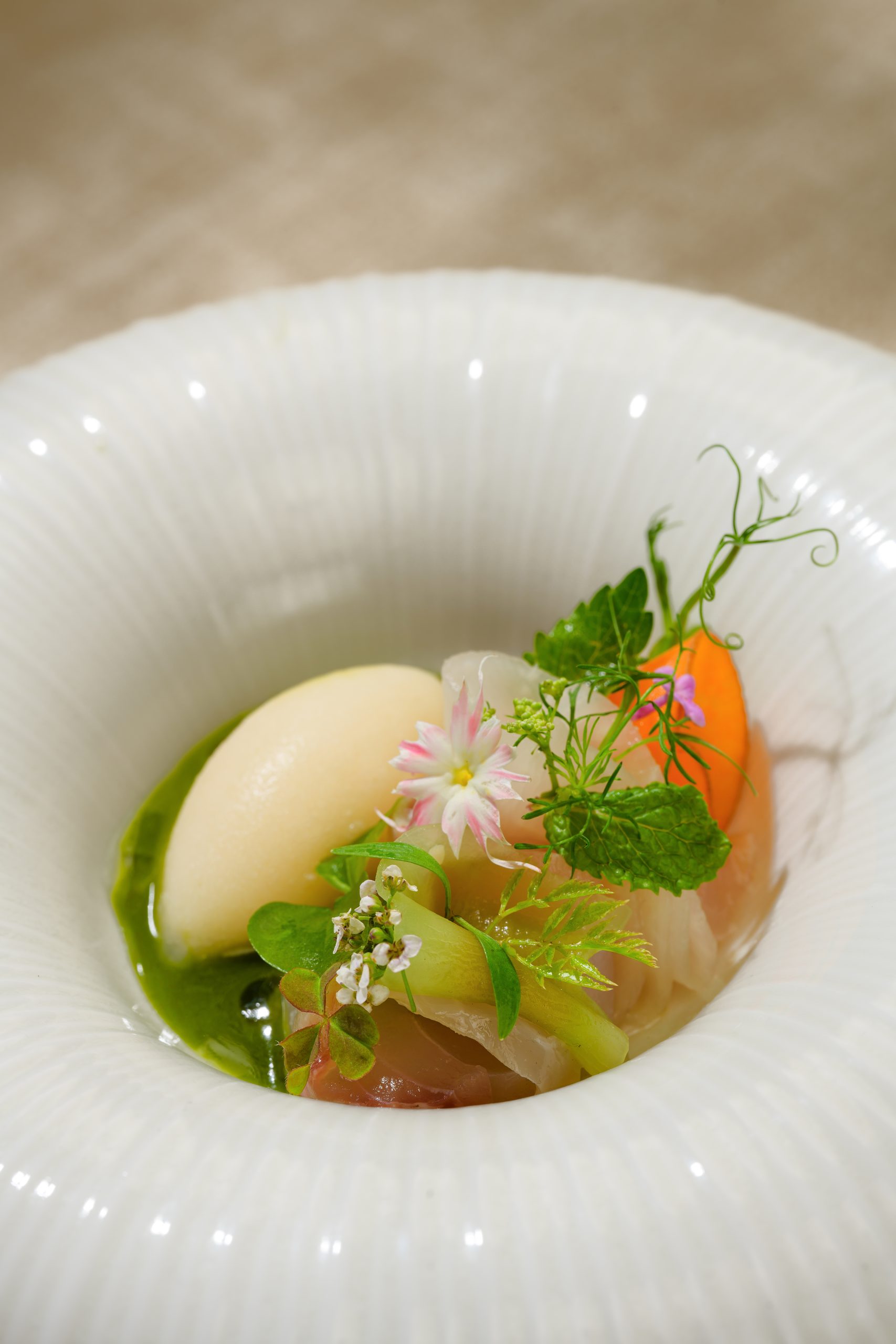
Its flesh offers an unusual balance. There is enough natural richness to create depth, yet the flavour remains clean and delicately sweet. Chapter prepares it using kombujime, curing the fish gently with kombu to remove excess moisture, refine its texture and concentrate umami.
The fish is paired with fermented rice in a chilled sorbet containing a subtle savoury note from fish sauce. Fermentation contributes acidity; the cold temperature refreshes the palate; the fish sauce connects the composition to a flavour foundation deeply familiar in Vietnamese cooking.
The dish unfolds in three stages:
- Clean sweetness and gentle richness from kinmedai
- Firmer texture and deeper umami from kombu curing
- Cool acidity and a light savoury finish from fermented rice
This is not an attempt to present kinmedai as a purely Vietnamese ingredient. Its significance lies in the meeting of a fish known across global and Japanese seafood traditions with Vietnamese fermentation, fish sauce and a summer-focused sense of balance.
Baby squid: the brief sweetness of the early coastal summer
Baby squid has the clearest seasonal story among the four ingredients. Chapter identifies April to June as its preferred period, when small squid from Vietnamese coastal regions may be tender, naturally sweet and filled with delicate roe. That brief window gives the ingredient its emotional weight: it cannot be separated from the time in which it appears.
In traditional seaside settings, squid often meets direct heat—charcoal, a hot grill or a fast stir-fry. Chapter keeps the memory of smoke but builds a more layered course in Baby Squid – Pig’s Ear – Black Ginger.
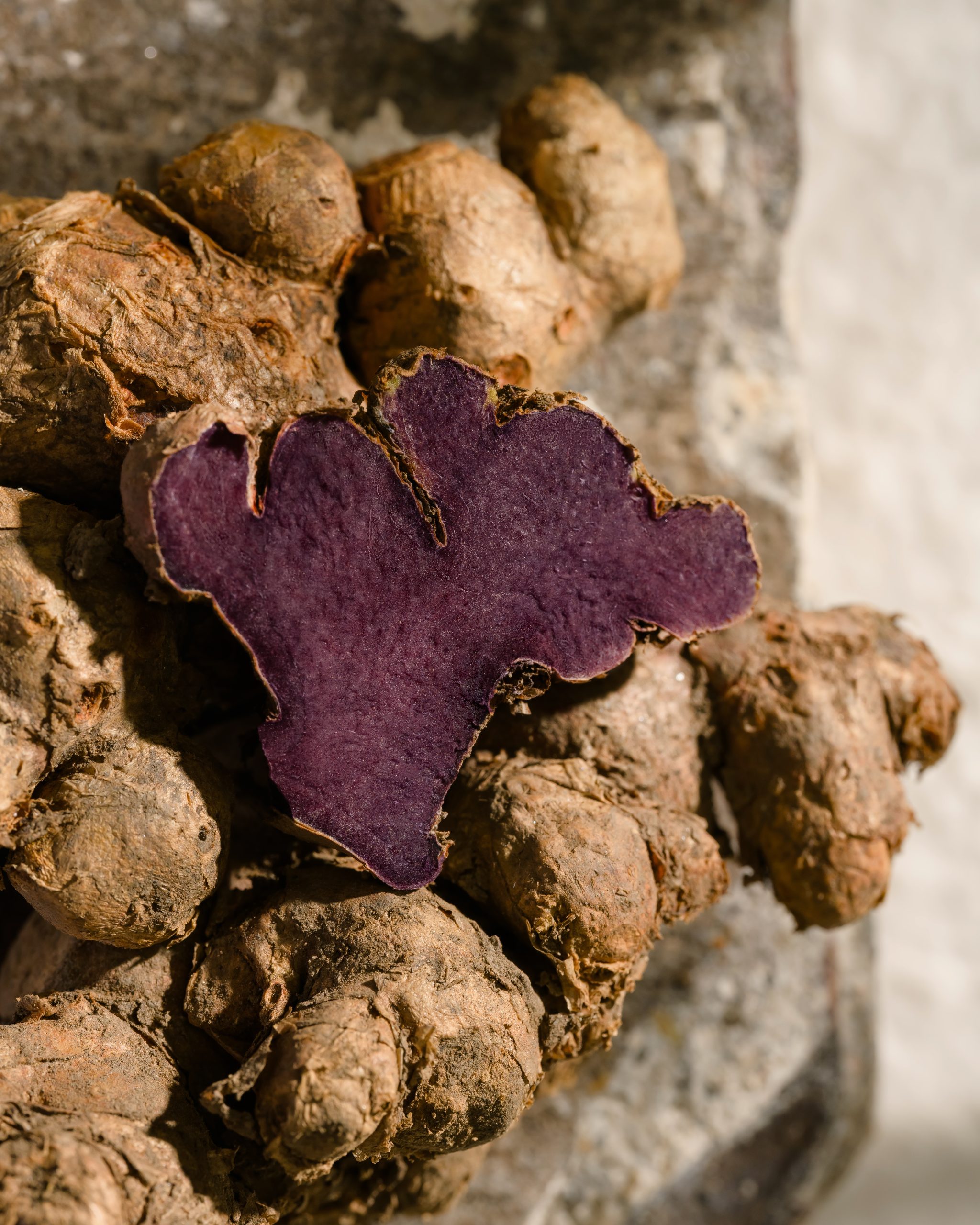
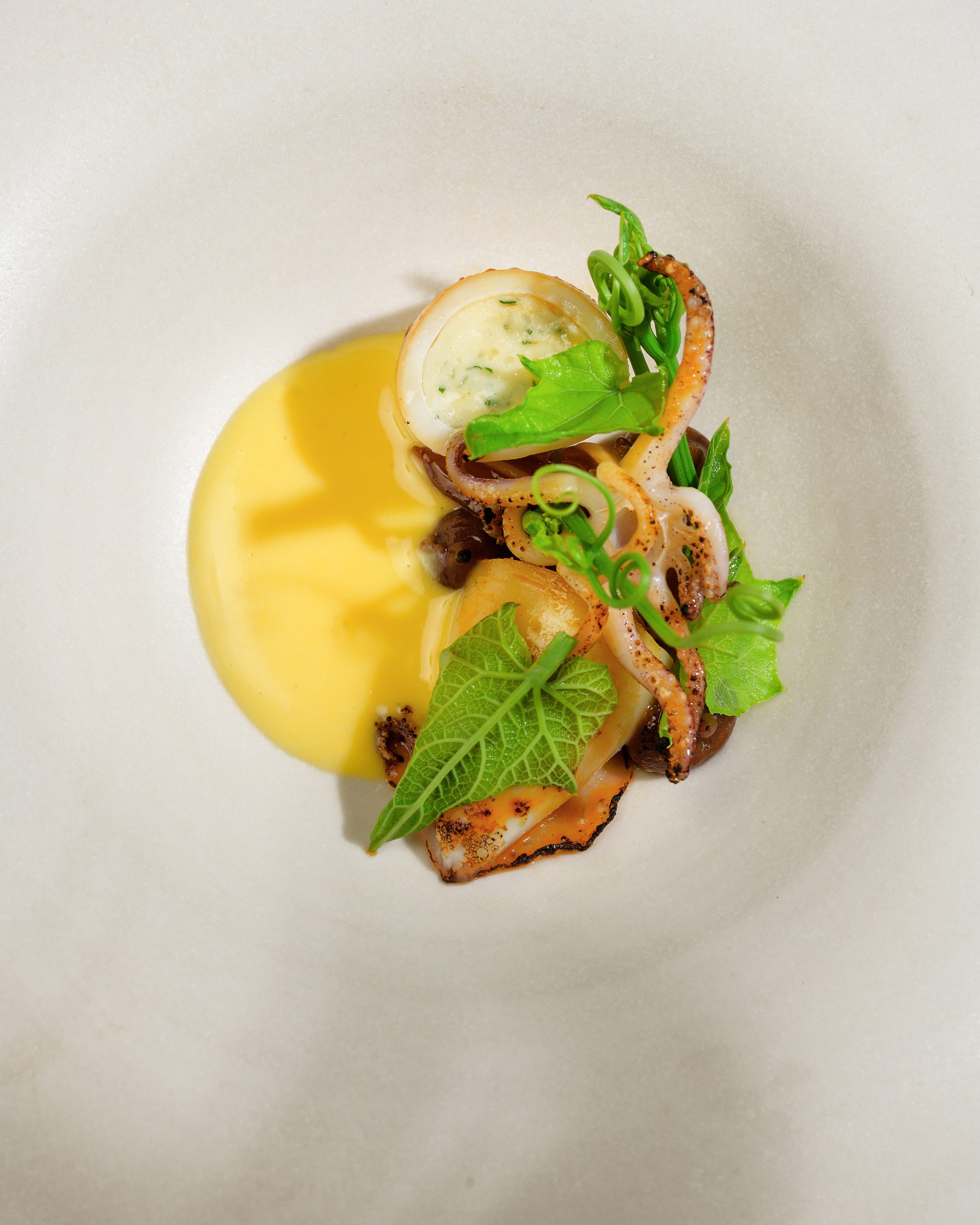
The baby squid introduces ocean sweetness and a soft, yielding texture. Fish sauce-simmered pig’s ear adds chew and savoury depth, while black ginger purée brings earthy warmth and a gently spicy finish. Each element pulls the dish in a different direction without erasing the squid’s delicacy.
Expect a progression of:
- Tender squid and lightly rich roe
- A restrained smoky note from grilling
- Elastic contrast from pig’s ear
- Earthy warmth from black ginger
- A lingering savoury finish
For international visitors, the pairing may sound unexpected. That is precisely why it matters. Rather than treating seafood as a luxury ingredient isolated from everyday food culture, the dish places it beside textures, seasonings and cooking memories familiar to Vietnamese tables.
Seasonal fish: allowing the coast to decide
“Seasonal fish” may appear less specific than a named species, but that openness is the point. The kitchen can select fish according to freshness, quality and current coastal supply rather than forcing the same ingredient onto the menu throughout the year. Chapter notes that its seafood may come from coastal regions such as Nha Trang, Phú Yên and Quảng Ninh as the season changes.
In Seasonal Fish – Tomato – Lettuce, the fish is supported rather than disguised. Tomato adds juicy acidity and a familiar summer ripeness. Lettuce contributes crispness, moisture and a clean vegetal finish. Together, they allow the seafood to feel complete without becoming dense.
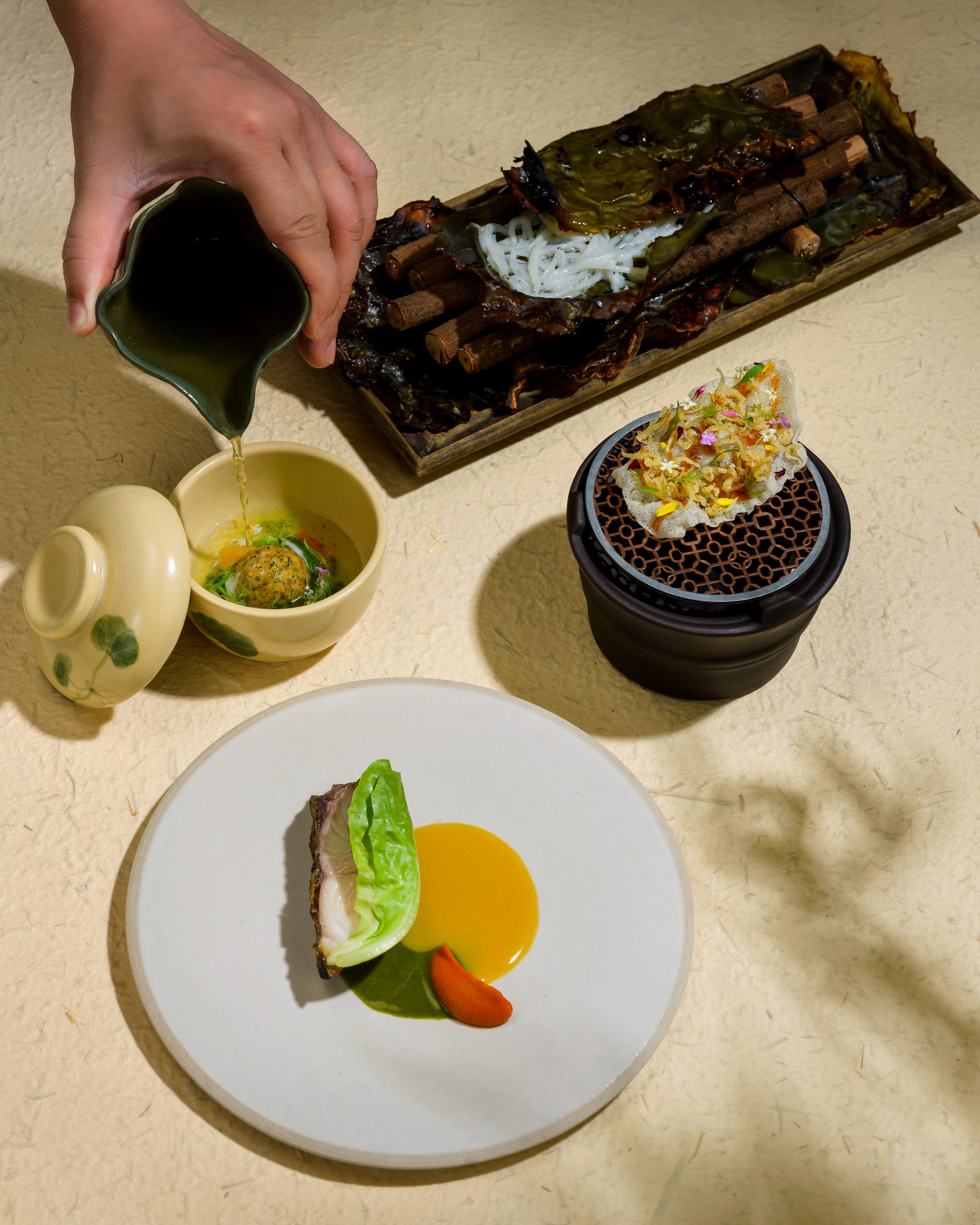
Because the fish may change, the experience can change too. One variety may be lean and mineral; another may have a softer texture or slightly richer finish. This variation is not inconsistency. It is a more honest response to seasonal supply.
Why fine dining can reveal seasonal seafood differently
Travellers should still eat seafood beside the coast. A simply grilled squid, steaming crab or fish chosen at a morning market offers immediacy that a restaurant in Hanoi should not try to imitate.
Fine dining provides a different experience. It can place one coastal ingredient in conversation with produce, fermentation and culinary techniques from elsewhere. It can slow a familiar flavour down, separate its textures and show how temperature changes perception. The purpose is not to make seafood “better” than its traditional form, but to reveal another possibility within it.
At Chapter, this means swimmer crab meeting a Vietnamese summer gourd, deep-sea fish meeting fermented rice, baby squid meeting pig’s ear and black ginger, and a changing fish meeting tomato and lettuce. Each combination gives visitors a way to understand Vietnamese ingredients through relationships rather than a checklist.
A must-try food experience for first-time visitors to Vietnam
For a first visit, Vietnam’s seafood culture can feel almost too abundant. Restaurant tanks, street grills, shellfish stalls and coastal markets offer countless choices, while names can change between regions and translations.
A seasonal tasting menu offers a focused introduction. Instead of ordering several large dishes without knowing portion sizes or preparation styles, guests can experience a sequence selected by the kitchen. Service also provides context: what the ingredient is, where it came from and why it appears with a particular accompaniment.
This makes the experience especially suitable for:
- Travellers visiting Hanoi during the warmer months
- Diners curious about Vietnamese seafood beyond street food
- Couples seeking a quiet, destination-worthy evening
- Guests interested in seasonality, fermentation and modern technique
- Returning visitors looking for a new perspective on Northern Vietnamese cuisine
It is equally important to set expectations. Chapter is a tasting-menu restaurant, not a traditional seafood restaurant or an à la carte venue. The experience is paced over multiple courses, and seafood is part of a wider seasonal narrative rather than the only subject of dinner.
Where to try Vietnamese summer seafood in Hanoi
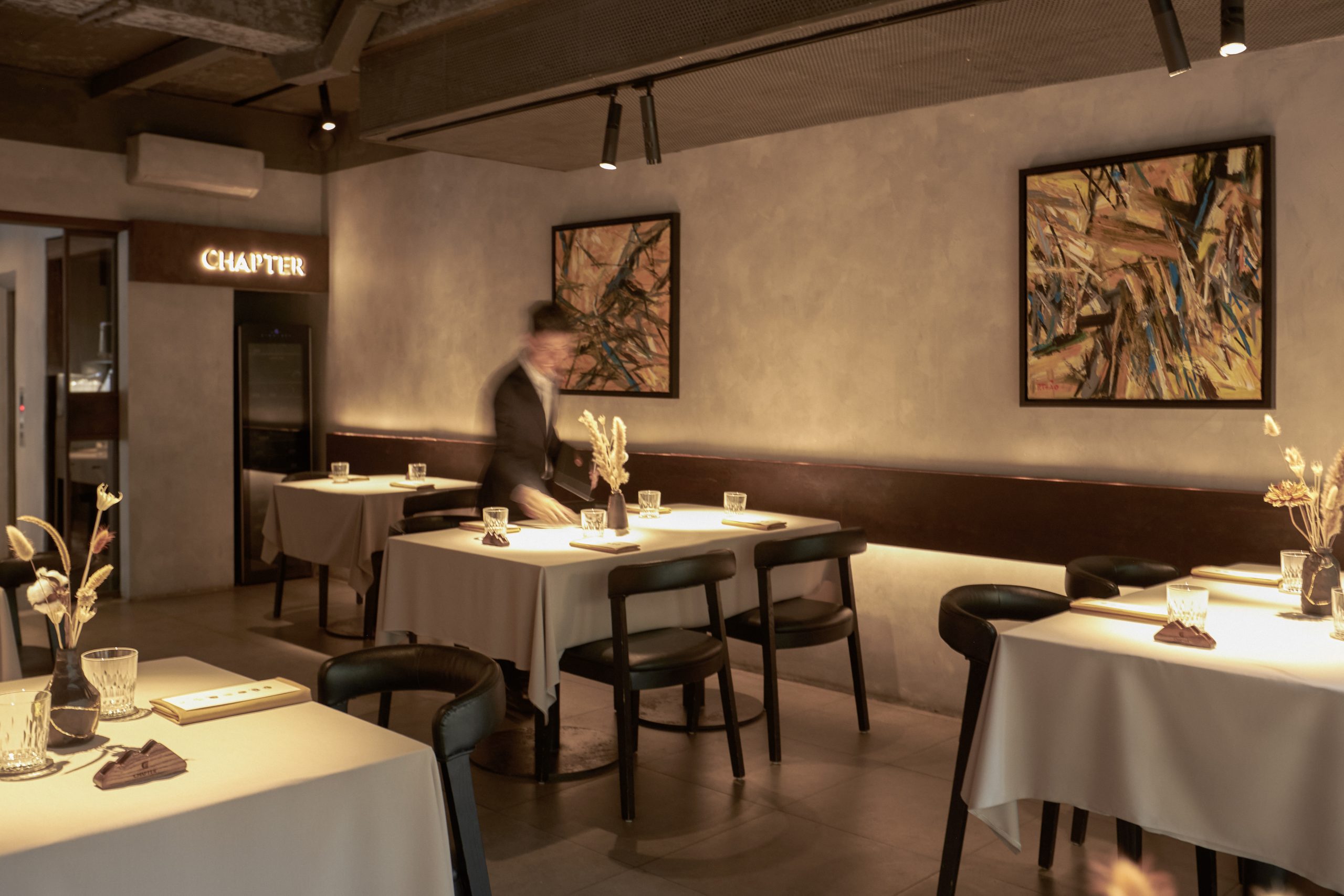
The four courses appear in Lucent, Chapter Dining’s current summer tasting menu. The restaurant interprets Northern Vietnamese food through seasonality, charcoal, fermentation and contemporary technique, creating an experience designed to unfold gradually rather than around a single signature plate.

Because ingredients depend on season and supply, individual courses may evolve. Check the current menu and communicate allergies or dietary restrictions when making the reservation, particularly for shellfish, fish, pork and fermented ingredients.
Vietnamese summer seafood is memorable because it refuses to stand still. Baby squid passes through a short window. The day’s fish changes with the coast. Crab sweetness depends on freshness, while fermentation and seasonal vegetables reshape how each ingredient feels on the palate. At Chapter Dining, these movements become a tasting journey through swimmer crab, kinmedai, baby squid and seasonal fish. If your summer travels bring you to Hanoi, experience the ingredients at the moment the menu was designed to express them. Book your table at Chapter Dining and discover how the sea enters Lucent, one course at a time.
_________
Chapter Dining
12C Chan Cam, Hoan Kiem, Hanoi
Mon – Sat from 18:00 – 23:00
Tel: +84 333 201 221 – Reserve a table
Email: reservation@chapter.vn