A Vietnamese mooncake is not simply a sweet pastry to eat on the move. Its shape, filling and presentation reflect the rituals of Tết Trung Thu, when families prepare fruit trays, children carry lanterns and Hanoi’s streets fill with lion-dance drums. Yet choosing a mooncake can be confusing for a first-time visitor. This guide explains seven important Vietnamese mooncake fillings, what each one tastes like and where to buy a reliable version in Hanoi. Use it to choose a cake for yourself, assemble a thoughtful gift or understand one of Vietnam’s most anticipated autumn traditions.
Table of Contents
- 1 Why mooncakes matter during the Vietnamese Mid-Autumn Festival
- 2 Bánh nướng or bánh dẻo: which Vietnamese mooncake should you choose?
- 3 Seven Vietnamese mooncake fillings at a glance
- 3.1 Thập cẩm (Mixed): the traditional savoury-sweet mixture
- 3.2 Mung bean: the most approachable first mooncake
- 3.3 Lotus seed: smooth, subtle and made for tea
- 3.4 Salted egg yolk: the moon inside the cake
- 3.5 Cốm: a mooncake connected to Hanoi’s autumn
- 3.6 Black sesame: roasted, nutty and less conventional
- 3.7 Coconut: fragrant, sweet and slightly chewy
- 4 Four reliable places to buy Vietnamese mooncakes in Hanoi
- 5 How to taste a Vietnamese mooncake properly
- 6 A practical Mid-Autumn food route through Hanoi
- 7 Continue the story of Hanoi’s seasons at Chapter Dining
Why mooncakes matter during the Vietnamese Mid-Autumn Festival
Known locally as bánh trung thu, meaning “Mid-Autumn cake,” mooncakes are eaten during Tết Trung Thu on the fifteenth day of the eighth lunar month. In 2026, the festival falls on 25 September.
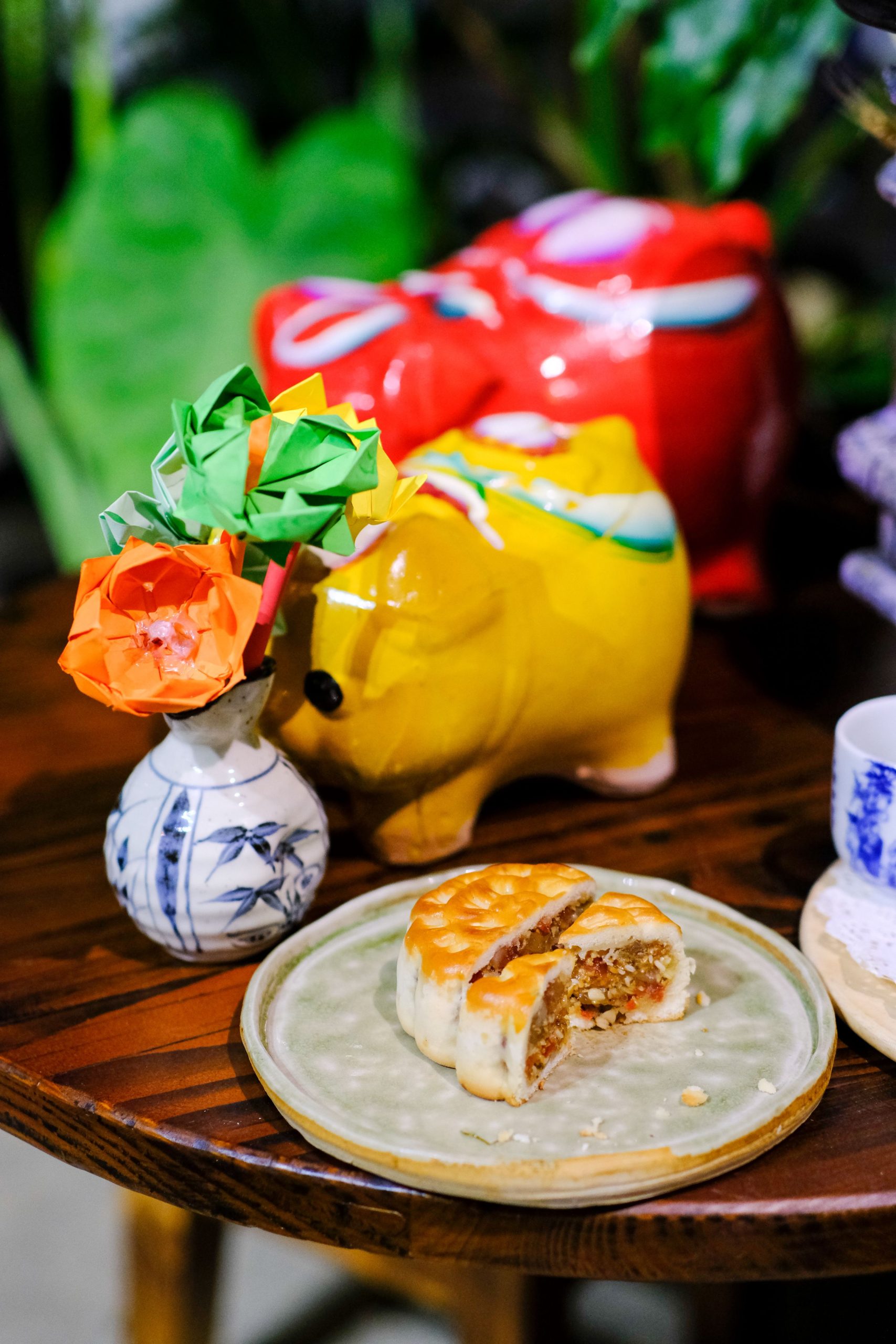
The celebration belongs to a wider East Asian full-moon tradition, but Vietnam gives it a particularly strong connection to children. Lantern processions, traditional toys and lion dances become as important as moon-gazing. Families also arrange mooncakes, pomelo, persimmons, bananas and other autumn fruit on a festival tray before sharing the food later in the evening.
Mooncakes may be placed on an ancestral altar, brought to a family gathering or presented to friends and business partners. Their round form evokes the full moon and reunion, while the sharing of one dense cake reinforces the sense that it belongs to the table rather than to one person.
Bánh nướng or bánh dẻo: which Vietnamese mooncake should you choose?
Before comparing fillings, first look at the crust. Traditional Vietnamese mooncakes come in two principal forms.
| Type | How it is made | Texture | Best for |
| Bánh nướng | Wheat-flour dough is filled, moulded, brushed with egg wash and baked | Firm, tender and lightly caramelised | Savoury mixed fillings, salted egg yolk and nut pastes |
| Bánh dẻo | Roasted glutinous-rice flour is mixed with syrup and often pomelo-blossom water, then moulded without baking | Soft, white, dense and slightly chewy | Mung bean, lotus seed, cốm and other smooth fillings |
Bánh nướng is the golden-brown cake most visitors recognise. Its thin crust develops a deeper flavour after baking and works well with rich, savoury-sweet fillings.
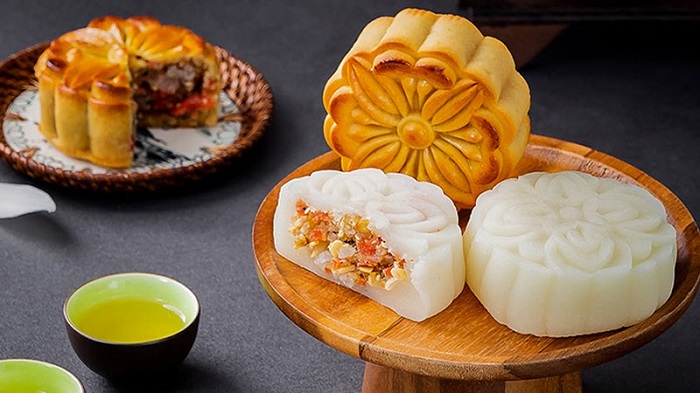
Traditional bánh dẻo has a white sticky-rice exterior and a more noticeable sweetness. Although it is sometimes translated as “snow-skin mooncake,” it should not automatically be treated as identical to modern refrigerated snow-skin cakes.
Seven Vietnamese mooncake fillings at a glance
Vietnamese mooncake fillings range from smooth, gently sweet pastes to complex combinations of meat, nuts and candied fruit. The best choice depends on whether you prefer familiar flavours or want to explore the festival’s more traditional savoury-sweet character.
Thập cẩm (Mixed): the traditional savoury-sweet mixture
Thập cẩm means “assorted,” reflecting a filling that brings several contrasting ingredients together rather than following one fixed recipe. A traditional version may combine roasted melon seeds, sesame, cashews, candied winter melon and finely sliced lime leaves with savoury ingredients such as Chinese sausage, ham or roast chicken. Some recipes also use sugared pork fat and Mai Quế Lộ, a spiced cooking liquor that adds warmth and aroma.
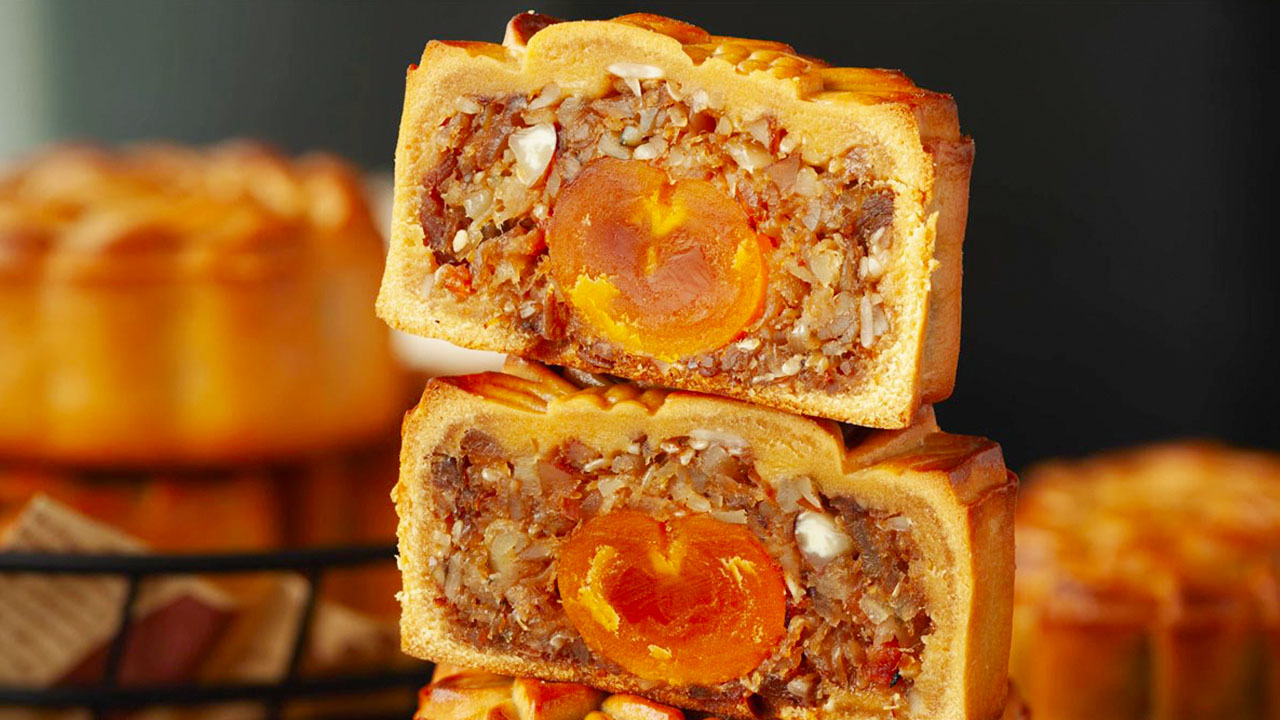
The result is denser and more complex than a typical dessert. Candied fruit provides sweetness, meat adds saltiness and richness, while nuts and seeds create layers of crunch. Lime leaves bring a fresh citrus note that keeps the filling from becoming too heavy.
To try a traditional version, visit Bảo Phương, one of Hanoi’s long-established mooncake bakeries. Its thập cẩm mooncakes are a suitable choice for travellers who want to experience the classic savoury-sweet character of Vietnamese mooncake culture.
Mung bean: the most approachable first mooncake
Mung bean paste (nhân đậu xanh), is made by cooking peeled mung beans and blending them with sugar and oil until smooth. Its mild, creamy flavour makes it an approachable choice for visitors who prefer a simpler alternative to thập cẩm.
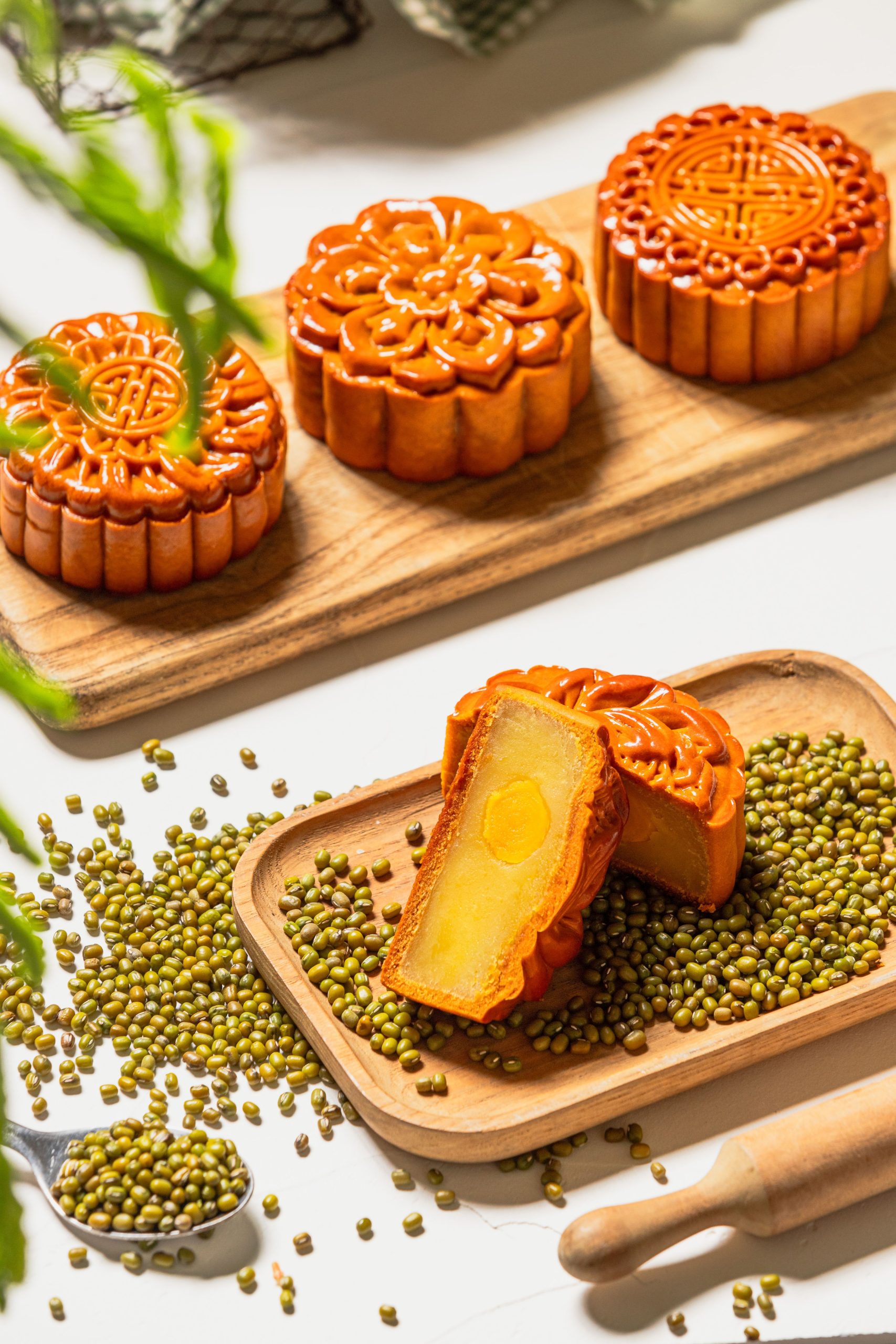
However, a mung-bean mooncake is not automatically vegetarian or vegan. The crust or filling may still contain egg wash, butter, animal fat or salted egg yolk, so check the ingredients before buying.
For a traditional mung-bean mooncake, visit Bảo Phương, a long-established bakery on Thụy Khuê Street. Travellers staying in the Old Quarter can also try Ninh Hương, known for its seasonal mooncakes, lotus products and tea.
Lotus seed: smooth, subtle and made for tea
Lotus-seed filling (nhân hạt sen), is prepared by cooking and finely blending lotus seeds into a pale, silky paste. Its flavour is gentle, lightly nutty and less earthy than red bean. The quality depends on balance. Too much sugar can hide the lotus completely, while a well-made filling retains a quiet seed-like fragrance. Because the flavour is restrained, lotus mooncake pairs particularly well with unsweetened lotus, jasmine or green tea.
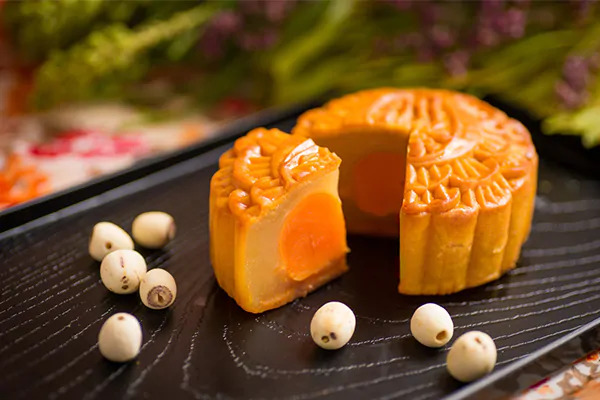
For a traditional buying experience, ask Ninh Hương at 22 Hàng Điếu about the season’s nhân sen selection. For a premium contemporary version, the Metropole Legendary Mooncake Collection 2026 includes lotus seed with macadamia nuts. This version is available as either a baked or soft-skin cake.
Salted egg yolk: the moon inside the cake
Salted egg yolk is usually an addition to another filling rather than a paste served alone. When the mooncake is cut open, the orange-yellow centre resembles a full moon. Its saltiness also has a practical purpose: it breaks through the sugar and oil of mung bean, lotus, taro or coconut paste. A good yolk should taste savoury and rich without being unpleasantly dry or overwhelmingly salty.
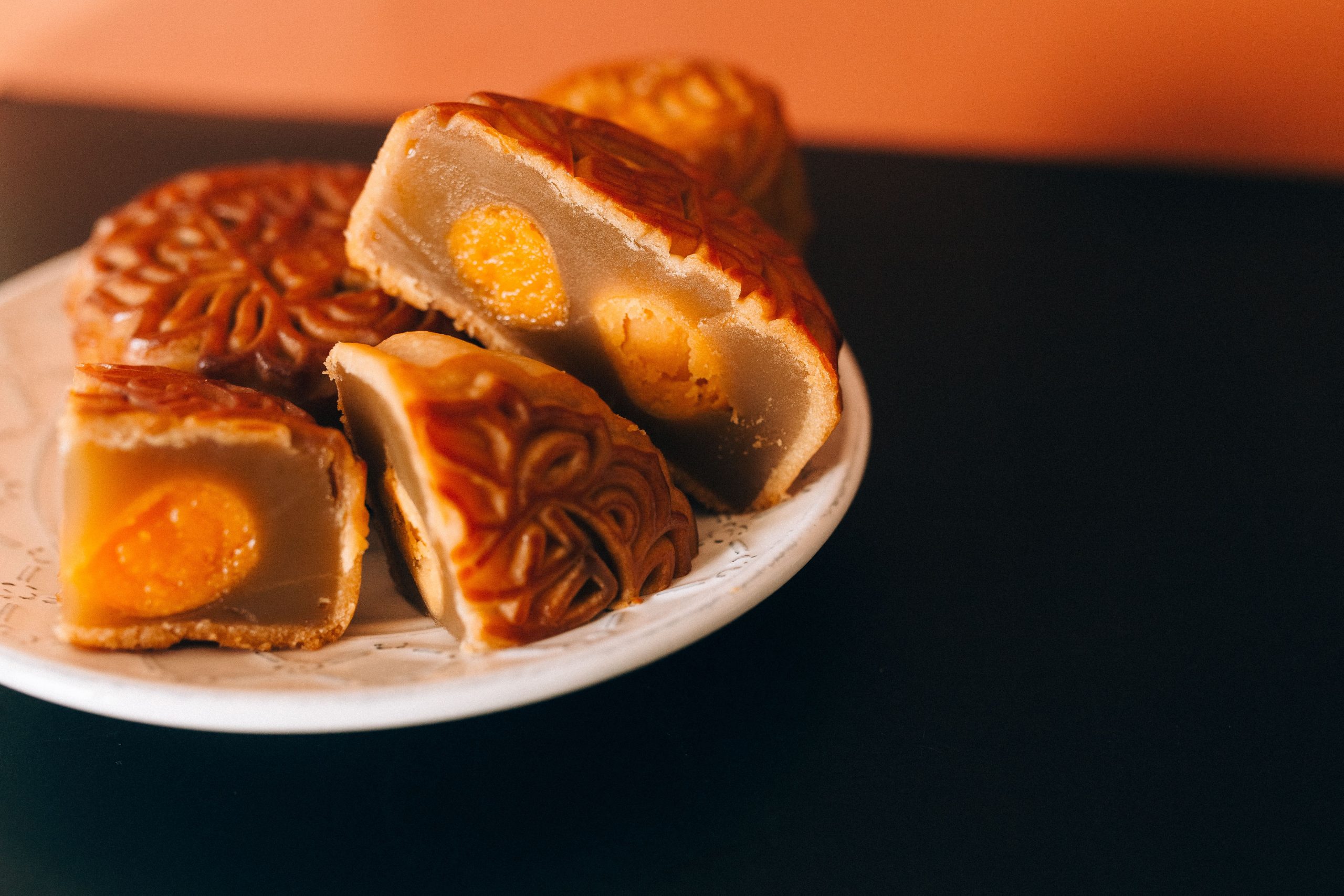
InterContinental Hanoi Landmark72 offers several 2026 options built around salted egg yolk, including mung bean, taro, coconut and black sesame. Its creative selection also includes lotus seed, ginger and salted egg custard. The hotel’s current collection begins at VND 950,000 for a box of four.
Cốm: a mooncake connected to Hanoi’s autumn
Cốm is young glutinous rice harvested before maturity, then roasted, pounded and sifted into thin green flakes. In mooncakes, it becomes a soft, lightly chewy filling, sometimes combined with coconut, mung bean or lotus seeds. Its gentle grassy flavour connects Tết Trung Thu with Hanoi’s autumn rice harvest.
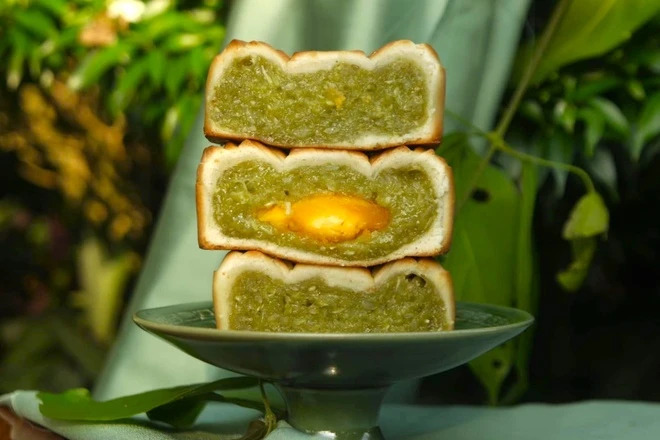
To try this seasonal variation, visit Gia Trịnh Bakery, which offers both baked and sticky-rice mooncakes filled with young green rice.
Black sesame: roasted, nutty and less conventional
Black sesame paste has a deep roasted aroma and an earthy finish. It is still sweet, but the seed’s natural bitterness can make it feel less sugary than mung bean or lotus paste. The texture ranges from completely smooth to slightly grainy, depending on how finely the seeds are ground. Some bakers add sunflower seeds for crunch or a salted egg yolk for contrast.
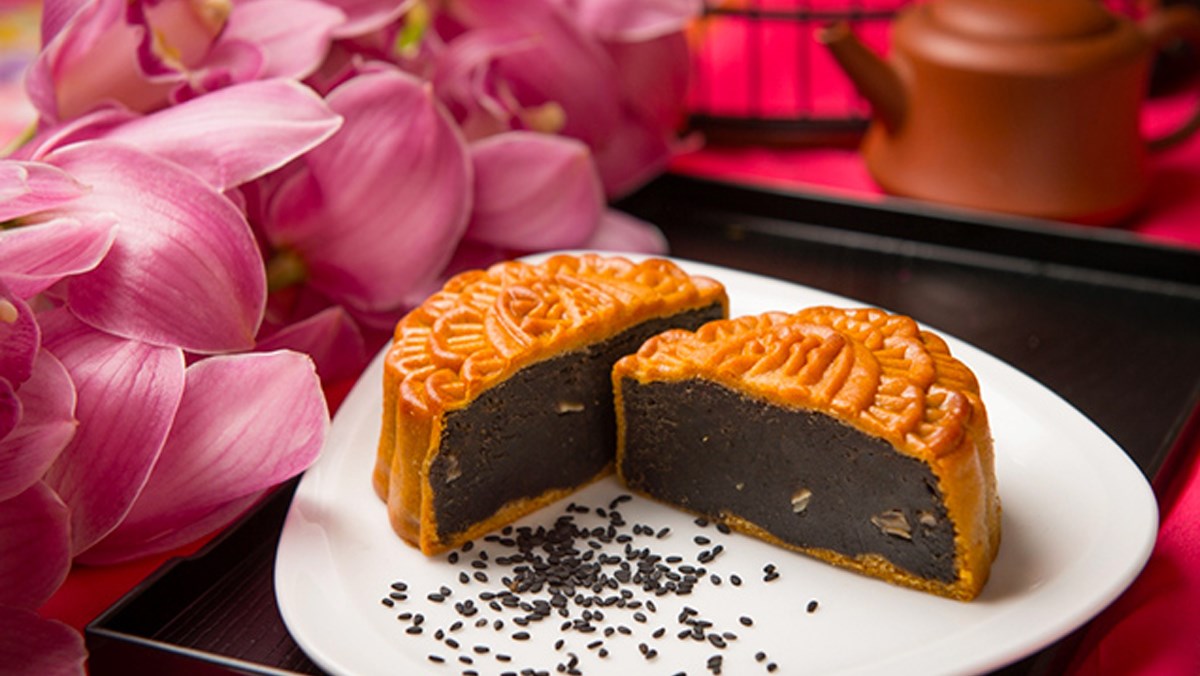
The Metropole’s 2026 collection includes a baked black sesame and sunflower seed mooncake. InterContinental Hanoi Landmark72 also lists black sesame and salted egg yolk among its traditional baked flavours.
Coconut: fragrant, sweet and slightly chewy
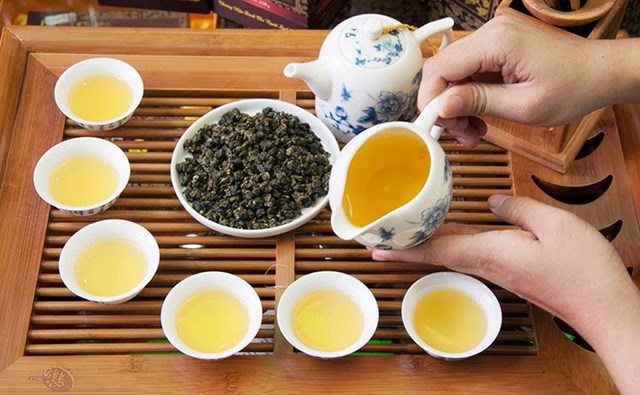
Coconut mooncake filling combines sweetened shredded coconut with sesame, seeds or smooth bean paste, creating a fragrant and gently chewy texture. It is more distinctive than plain mung bean but less complex than savoury thập cẩm, making it an approachable choice for first-time visitors. As the filling can be quite sweet, enjoy it with unsweetened green or oolong tea.
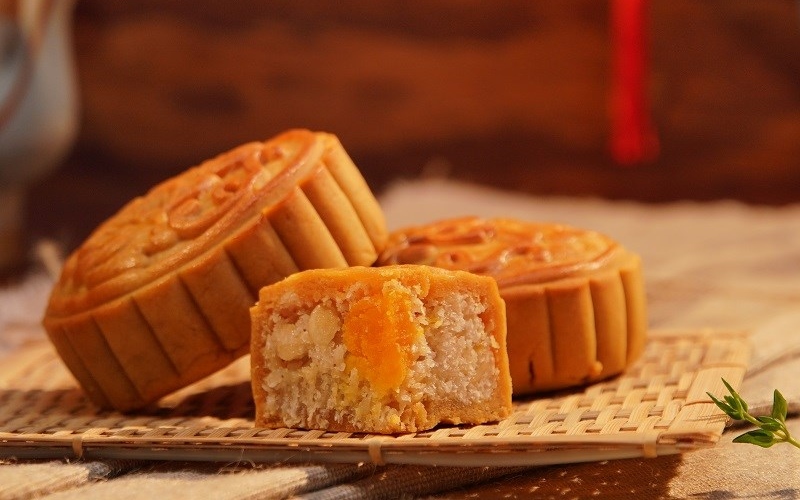
For a contemporary version, the 2026 collection from InterContinental Hanoi Landmark72 includes a baked coconut mooncake with salted egg yolk.
Four reliable places to buy Vietnamese mooncakes in Hanoi
The best place to buy a Vietnamese mooncake depends on whether you want a traditional recipe, a Hanoi-specific filling or a premium gift box. The following bakeries offer distinct styles, price points and locations, making it easier to choose an option that suits your taste and itinerary. As mooncakes are seasonal, confirm your preferred filling before visiting.
| Bakery | Best for | Address | Reference price |
| Bảo Phương | Traditional thập cẩm and mung bean | 183 Thụy Khuê | VND 50,000–70,000 per cake |
| Ninh Hương | Traditional cakes and tea in the Old Quarter | 22 Hàng Điếu | Confirm the seasonal menu |
| Gia Trịnh Bakery | Baked and sticky-rice cốm mooncakes | 16A Lý Nam Đế | VND 65,000 per cốm cake |
| Sofitel Legend Metropole Hanoi | Premium and contemporary fillings | 15 Ngô Quyền | VND 590,000 per 100-gram cake |
| InterContinental Hanoi Landmark72 | Large gift boxes and a broad flavour selection | Keangnam Landmark Tower | From VND 950,000 per box |
How to taste a Vietnamese mooncake properly
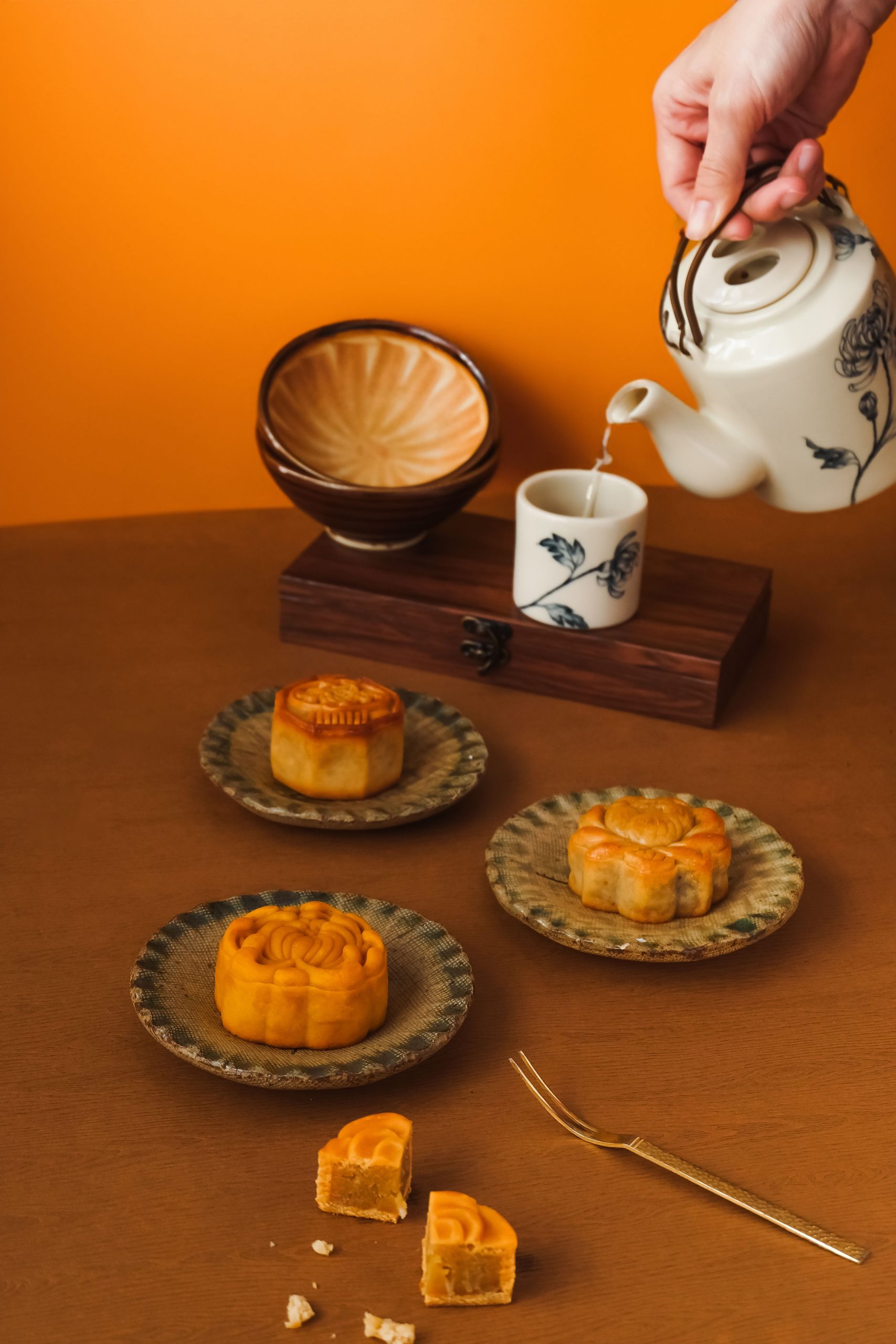
A mooncake is dense and intended for sharing. Eating an entire large cake alone can make even a balanced filling feel excessively sweet or heavy. For a more enjoyable tasting:
- Cut the cake through the centre so that every person receives part of the filling and salted yolk.
- Divide a standard cake into six or eight small wedges.
- Taste the first bite without tea to understand the filling.
- Follow it with unsweetened lotus, green or oolong tea.
- Compare only two or three flavours at once.
A practical Mid-Autumn food route through Hanoi
Start at Ninh Hương on Hàng Điếu to compare traditional cakes and choose tea. From there, explore Hàng Mã Street to see the lantern displays and traditional festival toys. Visit before dusk if you want to shop comfortably; return later only if you are prepared for heavier crowds.
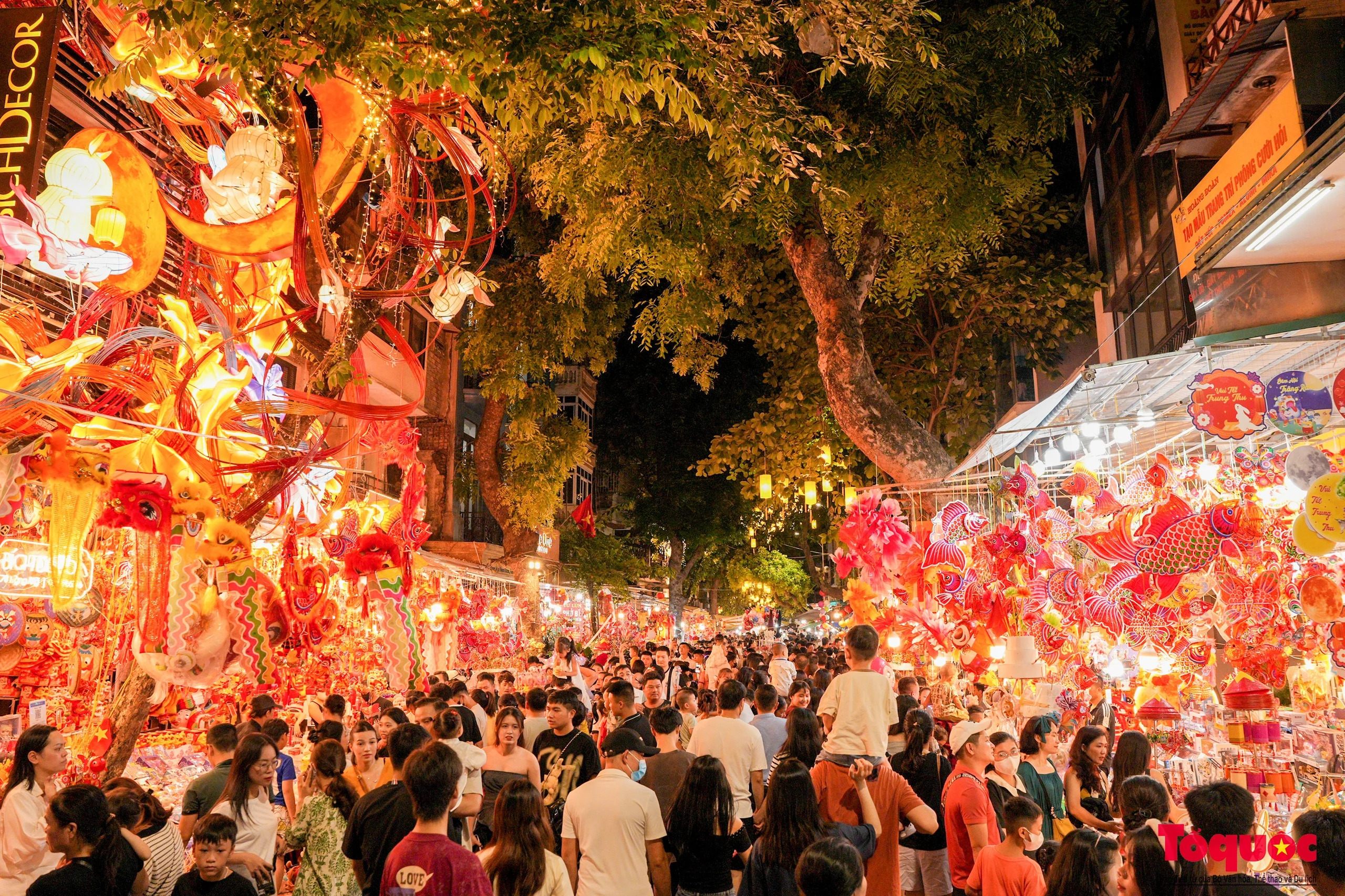
Continue towards Gia Trịnh Bakery on Lý Nam Đế for a cốm mooncake. The two shops provide a useful contrast between established festival flavours and a cake connected more directly to Hanoi’s young-rice season.
Do not attempt to add Bảo Phương to the same walking route. Thụy Khuê lies outside the Old Quarter and is better reached separately by taxi or ride-hailing car.
Continue the story of Hanoi’s seasons at Chapter Dining
Mooncakes reveal Hanoi’s autumn through family ritual, traditional confectionery and ingredients such as lotus seed and young rice. A seasonal tasting menu offers another way to understand how northern produce and food memories can be expressed in contemporary dining.
At Chapter Dining, the menu evolves with the season and explores Northern Vietnamese ingredients through fermentation, fire and modern technique. Chapter is not a mooncake shop, and its courses do not attempt to reproduce every traditional festival food. Instead, the experience provides a different perspective on the same relationship between ingredient, season and memory.
After exploring Vietnamese mooncake culture across Hanoi’s bakeries, reserve a table at Chapter Dining and continue the evening through a contemporary interpretation of Northern Vietnamese cuisine.
_________
Chapter Dining
12C Chan Cam, Hoan Kiem, Hanoi
Mon – Sat from 18:00 – 23:00
Tel: +84 333 201 221 – Reserve a table
Email: reservation@chapter.vn