A parcel of young green rice, a crisp persimmon or the fragrance of tangerine peel can introduce you to Hanoi’s autumn. Yet discovering the season does not have to end with tasting its familiar specialities. Exploring Hanoi autumn flavours through both traditional and contemporary food offers a deeper understanding of the city. You can recognise what remains familiar while discovering how preparation changes your experience. Explore how those connections continue through seasonal dining, including Chapter Dining’s autumn menu.
Table of Contents
What connects traditional and contemporary Vietnamese food?
A dish can change its appearance while retaining a recognisable flavour. However, contemporary cooking becomes more interesting when you understand the reference behind it. Knowing how an ingredient tastes in a simple preparation helps you appreciate another interpretation.
Cốm: begin with the autumn ingredient itself
Cốm (young green rice flakes) is one of Hanoi’s signature autumn flavours. Made by roasting and pounding immature glutinous rice, it has a tender chew and a delicate cereal fragrance. Try it plain first, then with ripe banana to discover how the fruit complements its subtle flavour. For a first tasting, consider Cốm Làng Vòng Bà Cận, 19 Ngõ 85 Xuân Thủy, Hanoi. Ask when the cốm was made and confirm availability before visiting.
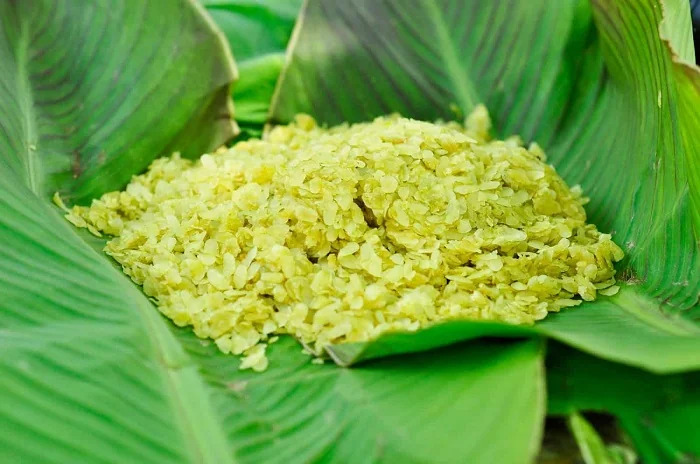
The same ingredient also appears in sticky rice, sweet soups and bánh cốm, which combines a chewy exterior with a sweet filling. Each preparation reveals a different quality of the rice. Comparing them offers a starting point for exploring contemporary cuisine: notice how a new form preserves, changes or highlights a familiar ingredient.
Persimmon: from autumn fruit to a contemporary final bite
Persimmons reach Hanoi from northern provinces such as Lạng Sơn, Cao Bằng and Lào Cai. Some varieties are eaten crisp, while others need to soften. Ask the seller whether the fruit is ready, then taste it fresh to appreciate its sweetness and texture.
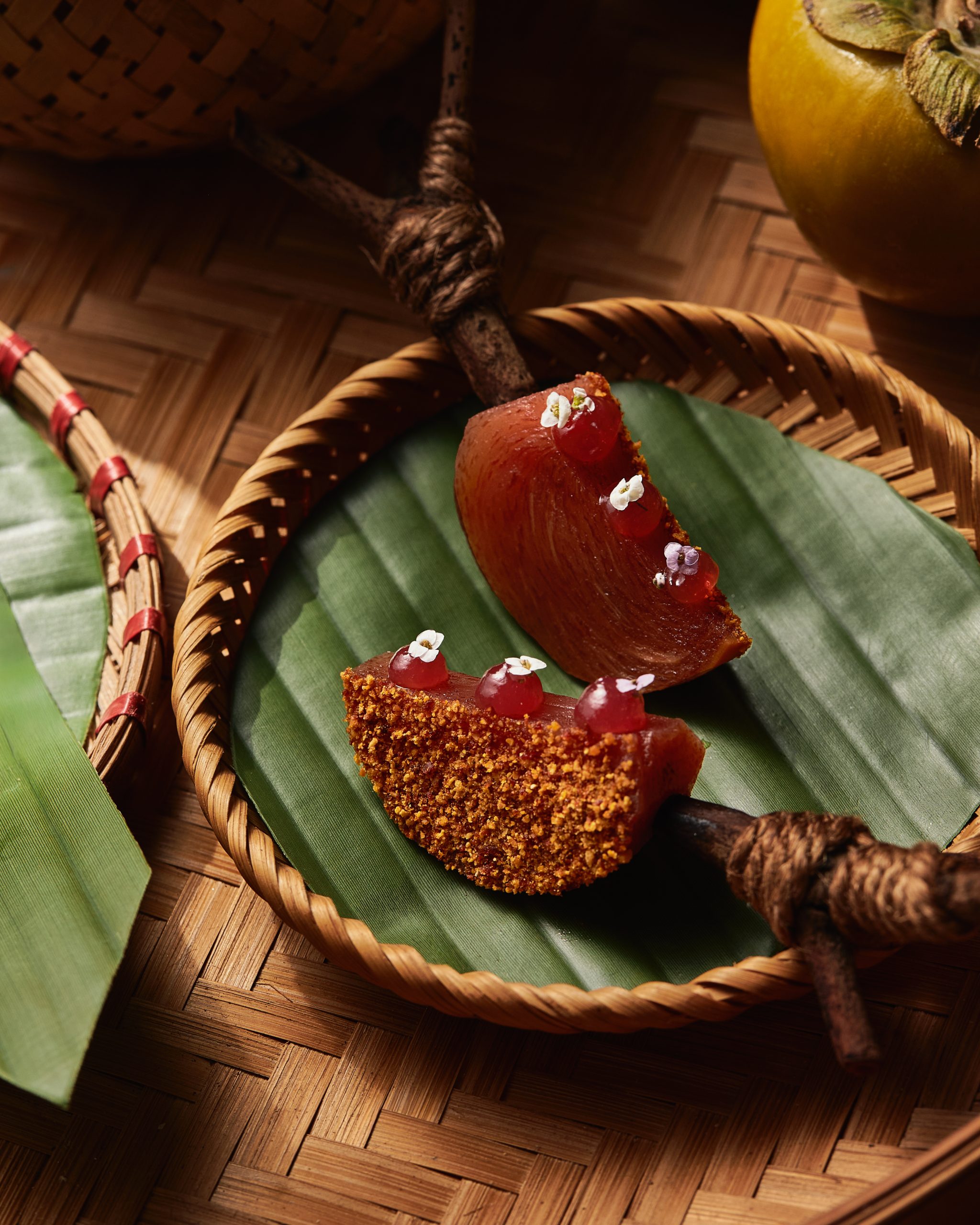
At Chapter Dining, wine-soaked persimmon joins the autumn petit fours alongside a jasmine-and-pomelo macaron and bánh gai with banana. This preparation brings a familiar seasonal fruit into a contemporary tasting menu, inviting you to discover how wine changes its character. Explore Chapter’s autumn petit fours for the story behind these final bites.
Chả rươi: how an aroma gives a seasonal speciality its identity
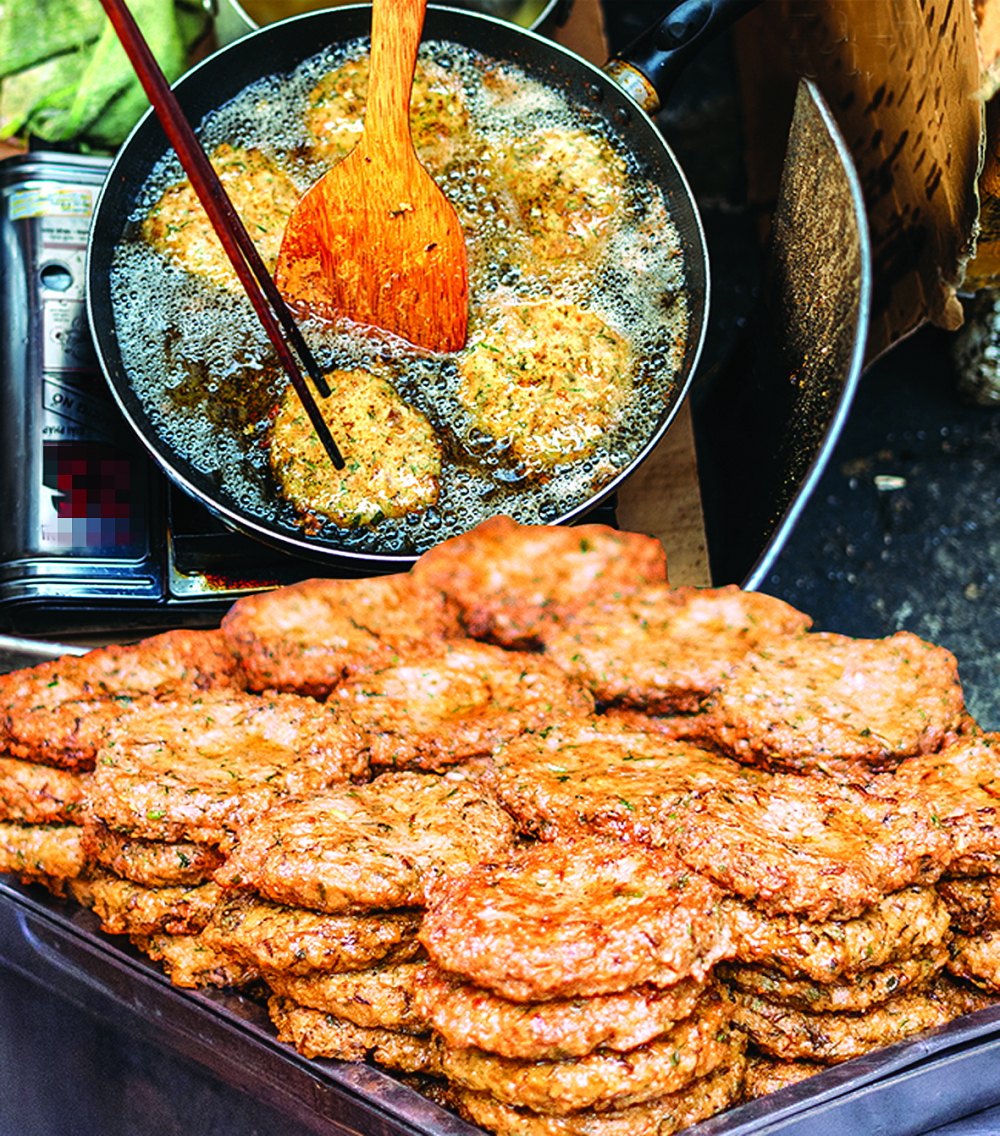
Autumn food culture is also shaped by ingredients that may feel unfamiliar to international visitors. Chả rươi is one example. Chả rươi combines aquatic worms with pork, egg, dill and chopped tangerine peel in a savoury fried patty. Its unfamiliar main ingredient may invite hesitation, but the herbs, citrus fragrance and golden exterior offer an approachable introduction.
Try a small portion at Chả Rươi Hưng Thịnh, 1 Hàng Chiếu, Hanoi, near Ô Quan Chưởng. Taste it before adding much sauce to appreciate its distinctive aromas. Preservation allows year-round service, so ask about fresh seasonal availability.
The dish also offers a useful perspective on contemporary Vietnamese cuisine: familiar herbs and aromatics can preserve a regional connection, even when a dish takes an unfamiliar form.
Chapter’s published autumn menu brings local flavours into conversation with international ingredients. Its seasonal approach includes smoke, fermentation and Northern Vietnamese aromatics. For diners, two familiar relationships offer especially approachable points of comparison.
Fish, tomato and dill: recognising the combination
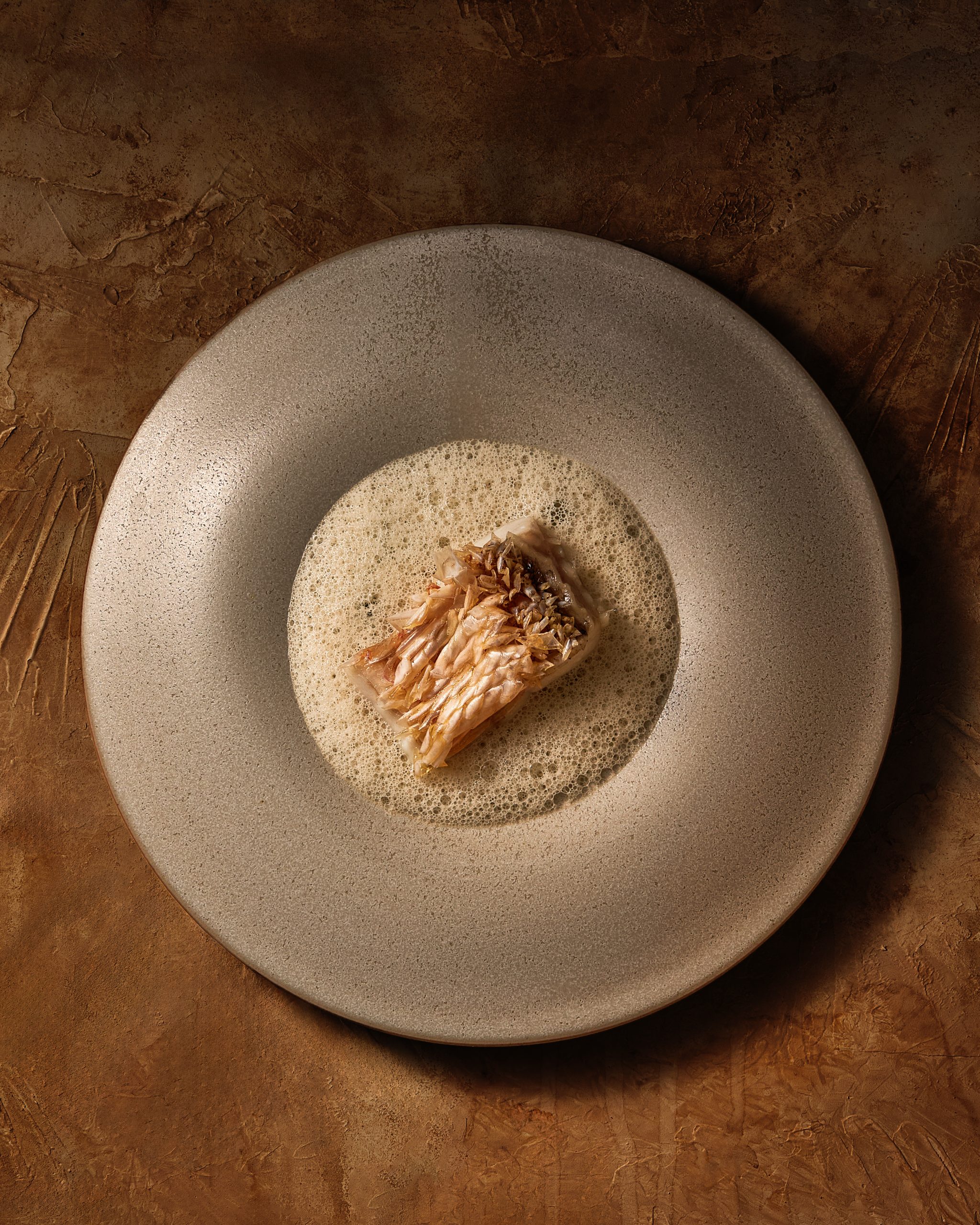
Chapter’s Seasonal Fish – Tomato – Dill draws on a combination associated with Northern Vietnamese food memories. The interest lies in the relationship between the ingredients. Rather than looking only at the fish, notice how the tomato and dill influence each bite. These observations help you engage with the dish beyond its appearance. The course also demonstrates how a contemporary interpretation can preserve a recognisable reference without recreating an entire family meal.
A5 Wagyu and mẻ: discovering a Vietnamese reference
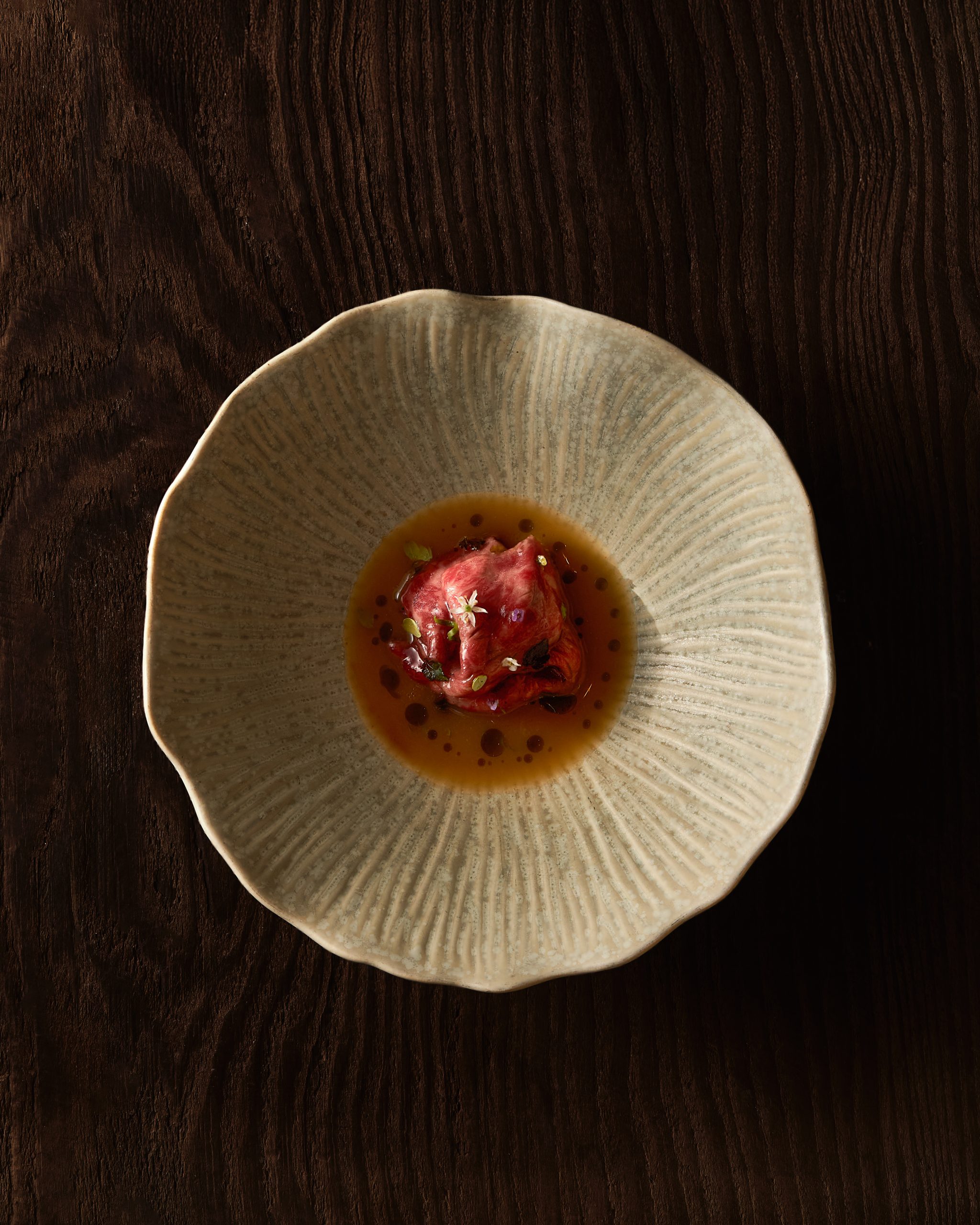
Take a bite of the A5 Wagyu with the fermented rice sauce, and notice how its gentle acidity meets the beef’s richness. At Chapter Dining, A5 Wagyu and fermented rice draws inspiration from bò nhúng mẻ, a familiar Vietnamese pairing.
If mẻ is new to you, taste a little sauce on its own before trying the combination. Its distinctive aroma gives you something to explore beyond the beef’s tenderness. For those who know bò nhúng mẻ, the pleasure lies in recognising a familiar flavour through a different preparation.
How to explore Hanoi autumn flavours through both experiences
A thoughtful food itinerary does not require trying every speciality in one day. Choose one ingredient you want to understand, then leave room for comparison.
Fresh cốm can introduce you to young rice. Persimmon offers a direct seasonal connection. Chả rươi provides another perspective for diners comfortable exploring its ingredients. Later, a contemporary meal gives you different questions to ask. What remains recognisable? Which texture has changed? Does the preparation reveal something you missed before?
Keep the traditional tasting simple
Buy modest portions and avoid combining too many strong flavours at once. If you are curious about an ingredient, taste it before adding condiments whenever practical. Ask vendors how they recommend eating it. A brief conversation can clarify ripeness, preparation and serving suggestions. For additional stops, consult this guide to autumn foods in Hanoi.
Give a seasonal dinner enough space
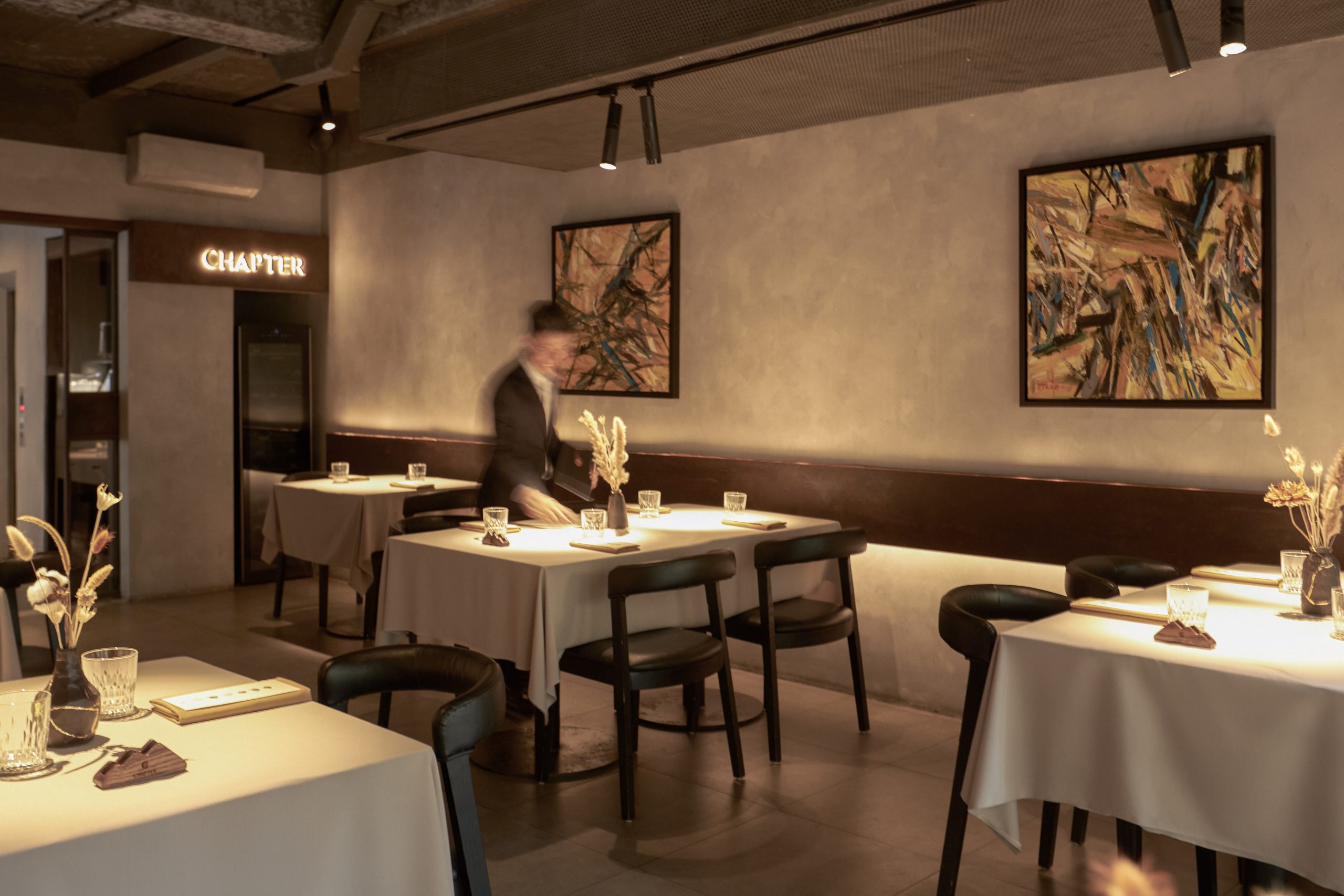
If you plan to visit Chapter, spread your discoveries across separate meals or days. The restaurant exclusively serves a seasonal tasting menu, so arrive ready to enjoy its complete sequence. Check the current menu and discuss dietary requirements before confirming your reservation. Tell the team which ingredients interested you during your earlier tastings. That gives you a natural starting point for questions during dinner.
Let familiar flavours lead you somewhere new
The most rewarding way to explore Hanoi autumn flavours is to begin with curiosity.
Taste young rice before comparing its preparations. Ask which persimmon is ready. Learn what gives an unfamiliar speciality its aroma.
Then bring those discoveries to another table.
At Chapter, seasonal fruit and familiar Northern Vietnamese combinations offer new points of comparison. Explore the current menu and reserve a table to discover how tradition continues through contemporary Vietnamese cuisine.
________
Chapter Dining
12C Chan Cam, Hoan Kiem, Hanoi
Mon – Sat from 18:00 – 23:00
Tel: +84 333 201 221 – Reserve a table
Email: reservation@chapter.vn