Cut a finger lime open and the pulp does not spill. It falls out in tiny, bright beads that burst cold and sour against the tongue. Often called “citrus caviar”, the finger lime is one of the most curious fruits a kitchen can use, and here is how it works on a plate.
Table of Contents
- 1 What is a Finger Lime? The Australian fruit behind “Citrus Caviar”
- 2 What does a Finger Lime look and taste like?
- 3 Finger Lime varieties and the Faustrime Hybrid: What to know before you search
- 4 How chefs use Finger Lime on a plate – Acidity, texture and seafood
- 5 Finger Lime at Chapter Hanoi: Amaebi – Oyster – Finger Lime on our Autumn menu
What is a Finger Lime? The Australian fruit behind “Citrus Caviar”
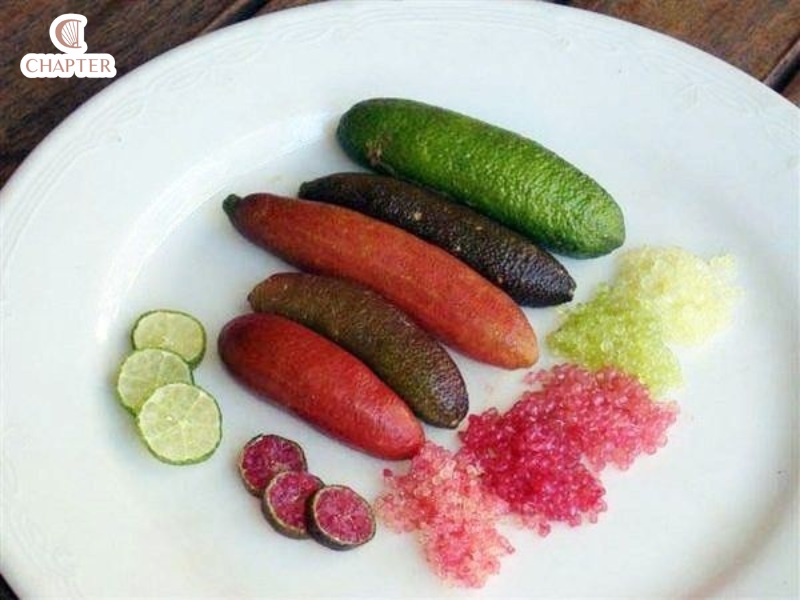
A finger lime is a small, finger-shaped citrus fruit from Australia. Inside, instead of segments, it holds tiny round beads of juice that stay separate and burst when you bite them.
The finger lime, Citrus australasica, grows as a thorny shrub beneath the canopy of subtropical rainforest in eastern Australia. The first settlers ate the fruit and kept the plants standing when they cleared the land. For a time botanists placed it in a genus of its own, Microcitrus, before it returned to the genus Citrus.
The name comes from the fruit’s place in the kitchen. It is treated as a premium ingredient, used sparingly to finish a plate, and its small glossy beads are a little like roe.
What does a Finger Lime look and taste like?
Start with the skin, a slim, slightly curved shape that is easy to mistake for a small gherkin. Then squeeze the end, and the inside slides out.
The Pearls inside a Finger Lime
The flesh is made of small translucent pearls that sit almost loose from one another. They are nothing like the long, narrow strands of other citrus. Put a few on your tongue and they are cold first, then they give way, and the sourness arrives bright and clean, with a faint fizz as you chew. No other citrus makes the mouth work in quite this way.
Finger Lime colours and flavour
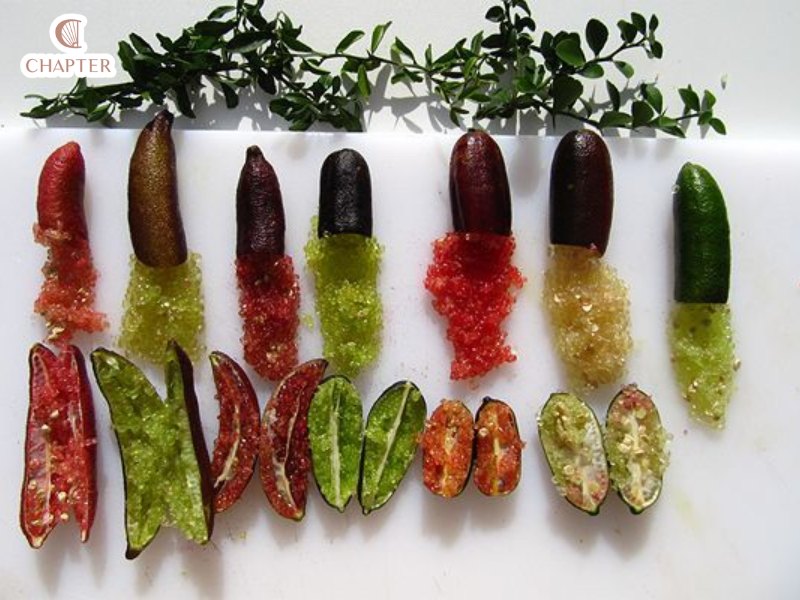
The colours run wide: green, yellow, orange, red, purple, black and brown. The juice is sharp and sour, close to a lime, and the beads of different colours give a plate a small jewel-like finish.
Finger Lime varieties and the Faustrime Hybrid: What to know before you search
Most people who search for “faustrime finger lime” want to know whether it is the same fruit. It is not, though the two are closely related.
Faustrime is a hybrid of three genera: C. australasica, C. aurantiifolia and Fortunella japonica. Another source describes it as a finger lime crossed with a limequat, bred in Europe for better quality and size. The two descriptions agree, because a limequat is itself a cross of lime and kumquat. In short, a finger lime is the original Australian fruit, while Faustrime is a cultivated cross built from it.
Do not confuse Faustrime with Faustrimedin. Faustrimedin is a different fruit, a cross between a finger lime and a mandarin.
How chefs use Finger Lime on a plate – Acidity, texture and seafood
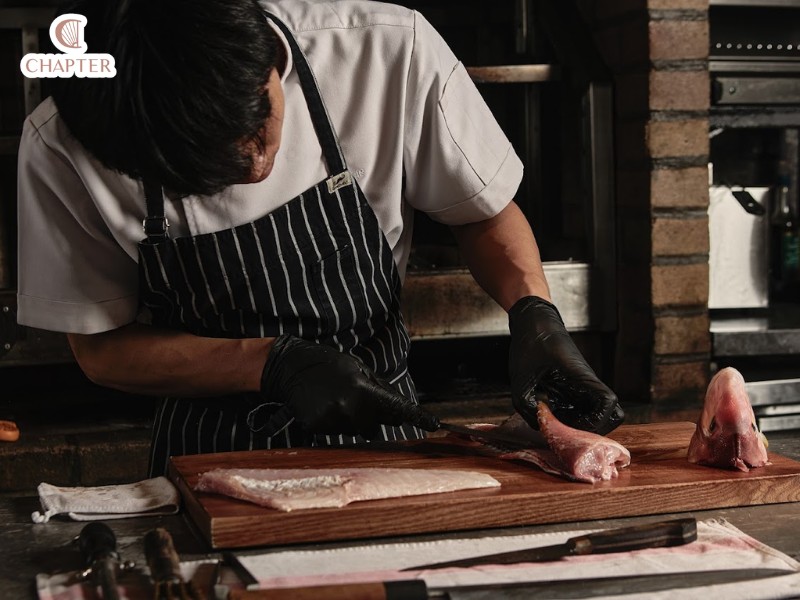
Restaurant kitchens began to use finger lime around the year 2000, and it has slowly drawn more attention from cooks since. What they find in it is simple: sourness and texture in one small ingredient.
- Finger Lime for Acidity Without Extra Liquid
A squeeze of lime juice brings acid, but it also brings liquid, which can loosen a sauce or soften a crisp edge. Finger lime gives the same clean sourness in a dry form. The beads sit on top of the dish and keep their shape until you bite them.
- Finger Lime for Texture and Contrast
The small pop in the mouth is a texture in its own right. Set against something soft or silky, it gives the bite a second movement, and the contrast is the point.
- Finger Lime With Seafood
Fresh acidity has long been a partner for seafood, and finger lime is a natural extension of that. Prawn, oyster and fish are all soft, delicate and a little sweet or briny, and a bright, cold burst of sourness lifts them without covering their flavour.
That balance of acid and texture is what we look for in our autumn menu, and it is where finger lime comes into our kitchen.
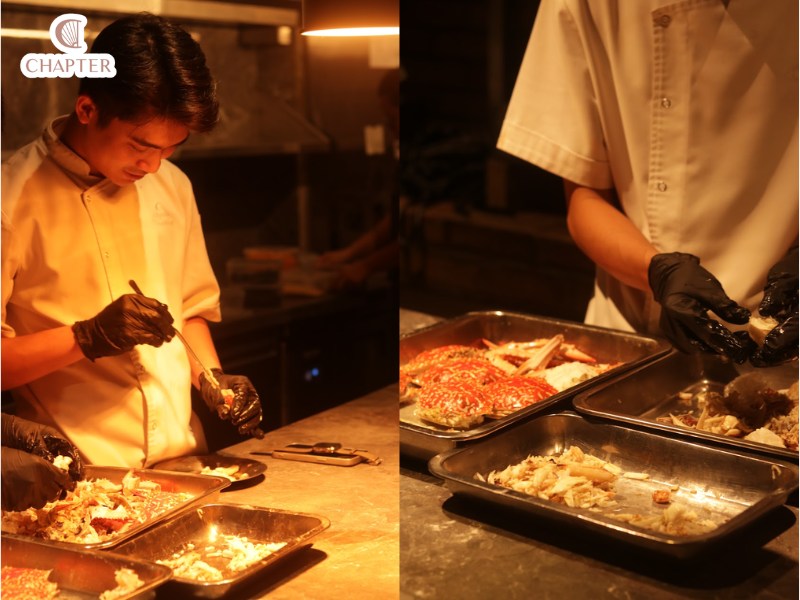
At Chapter Hanoi, finger lime appears on our autumn menu in the dish Amaebi – Oyster – Finger lime. Like much of the menu, the dish is named by its three ingredients, and each one is meant to speak for itself. In this plate, finger lime brings fresh acidity and a small burst of texture to the table.
If you would like to know more about the dish, read our journal on Amaebi, Oyster, Finger Lime. If you find yourself in Hanoi this autumn, we would be glad to welcome you to Chapter Hanoi and share the table with you.
________
Chapter Dining
12C Chan Cam, Hoan Kiem, Hanoi
Mon – Sat from 18:00 – 23:00
Tel: +84 333 201 221 – Reserve a table
Email: reservation@chapter.vn