When the dry summer heat finally yields to the gentle, crisp breeze of October, the culinary soul of Vietnam’s capital shifts entirely. For locals, the change in weather is an invitation to slow down and savor a deeply comforting bowl of banh duc nong. This is a delicious, piping hot, and slightly spicy snack with a unique flavor. It is light enough not to be overly filling, yet it is something many people eagerly look forward to enjoying during autumn in Hanoi. Exploring the narrative of local ingredients and dishes allows us to understand why this traditional Vietnamese rice cake remains the undisputed king of seasonal comfort during autumn in Hanoi.
Table of Contents
The cultural heritage and philosophy of Bánh Đúc
In Vietnamese folklore, there is a famous proverb: “vợ chồng ta bánh đa bánh đúc” (us husband and wife are like girdle cake and steamed rice cake). Both bánh đúc and bánh đa are rustic, inexpensive countryside staples that symbolize a genuine, tight-knit relationship weathering the test of time.
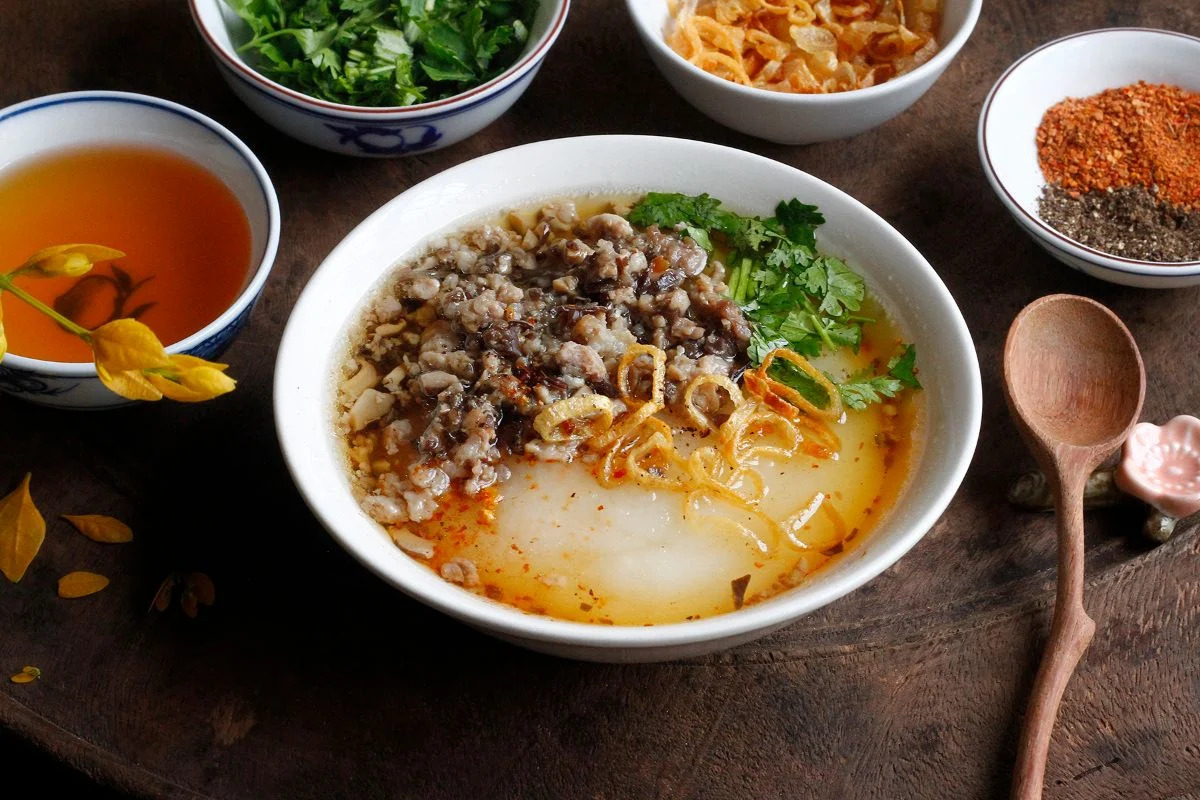
Originating from rural Vietnamese villages, bánh đúc is traditionally made from non-glutinous rice flour. Over generations, it evolved into distinct regional variations across all three regions of Vietnam:
- Southern Variations: Known for a soft, gelatinous block texture, featuring sweet options like bánh đúc lá dứa (green pandan rice cake infused with coconut milk and sesame seeds) or savory versions with shrimp floss.
- The Traditional Root (Bánh Đúc Chấm Tương): The predecessor of all variants, featuring a plain, gelatinous block embedded with peanuts and dipped in rich, fermented soybean sauce (tương).
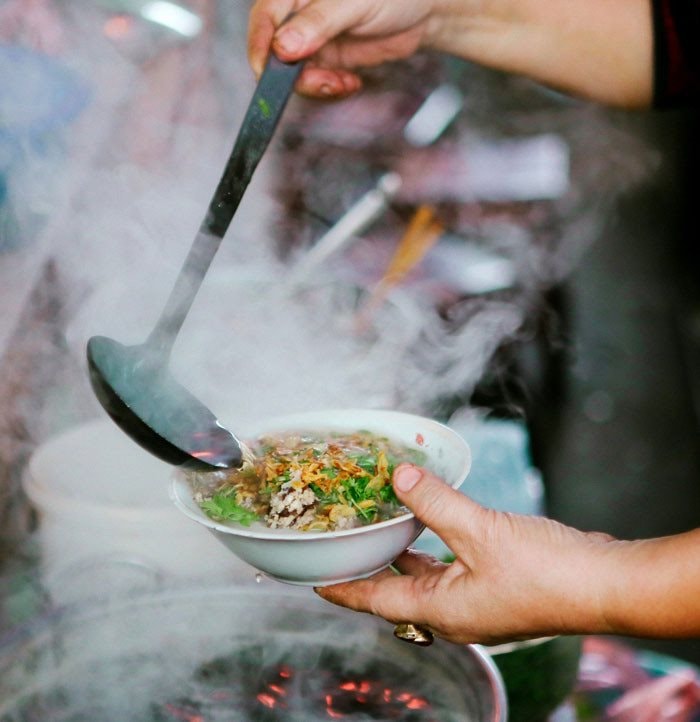
- Northern Speciality (Bánh Đúc Nóng): Always served white, soft, and gooey in texture, uniquely tailored to combat the chill of Northern seasonal shifts. When a customer orders, the cook ladles the hot batter into a bowl. Minced pork, wood-ear mushrooms, fried shallots, and fresh herbs follow, before a light fish-sauce dressing or broth brings the components together.
Why banh duc nong suits Hanoi autumn?
As the weather in Hanoi turns chilly with drizzling rain, the human body naturally craves warmth and comfort. This makes bánh đúc nóng an iconic traditional Hanoi street food.
During the first cool weeks of autumn, walking through the city becomes more comfortable. Travellers spend longer around Hoàn Kiếm Lake, the Old Quarter, and the quieter streets south of the French Quarter. By mid-afternoon, a hot bowl offers a welcome pause without the weight of a full noodle meal.
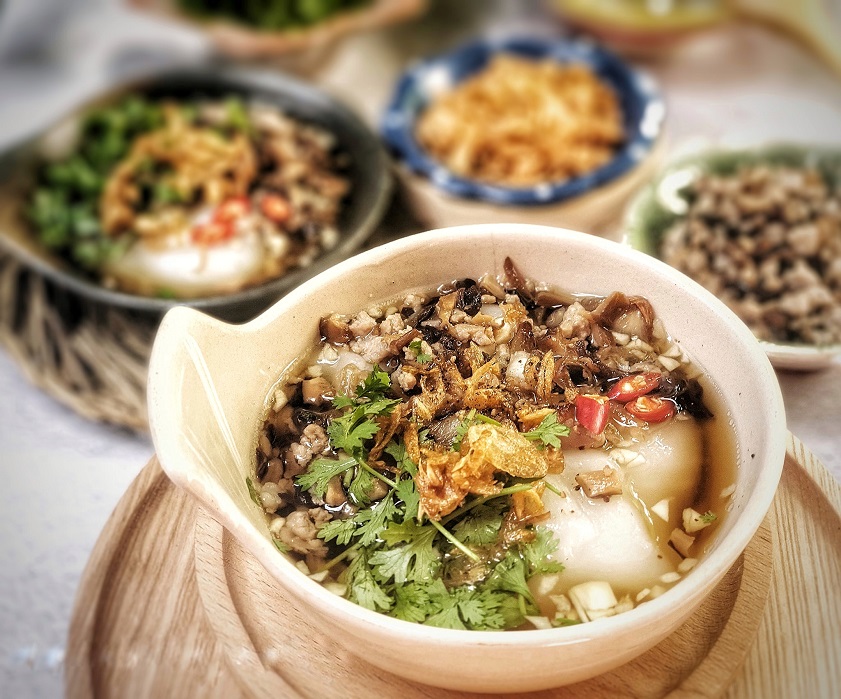
Unlike clear noodle broths, a proper bowl of hot savory rice cake offers a rich, tactile, and multi-layered culinary experience:
- The base: A smooth, glossy, and gooey blend of rice flour simmered to absolute silkiness.
- The toppings: A generous, savory mixture of minced pork, chopped wood-ear mushrooms, and aromatic fried shallots.
- The broth: Drenched in a light, fragrant fish-sauce-based dipping broth—reminiscent of classics like bánh cuốn and bún chả—balanced with acidity, sweetness, and warmth.
Discover more dishes associated with the season in Chapter’s Hanoi autumn food guide.
What does banh duc nong taste like?
The dish does not depend on one dramatic flavour. Its appeal lies in the changing textures carried by each spoonful. The first spoonful begins with warm, silky rice batter. Its flavour is quiet and slightly sweet, allowing the seasoned pork to arrive gradually rather than all at once.
Wood-ear mushrooms interrupt the softness with a gentle snap. Fried shallots add a short-lived crunch and a savory aroma that spreads through the bowl. Herbs then refresh the palate before the sauce leaves a light balance of salt, sweetness, and acidity.
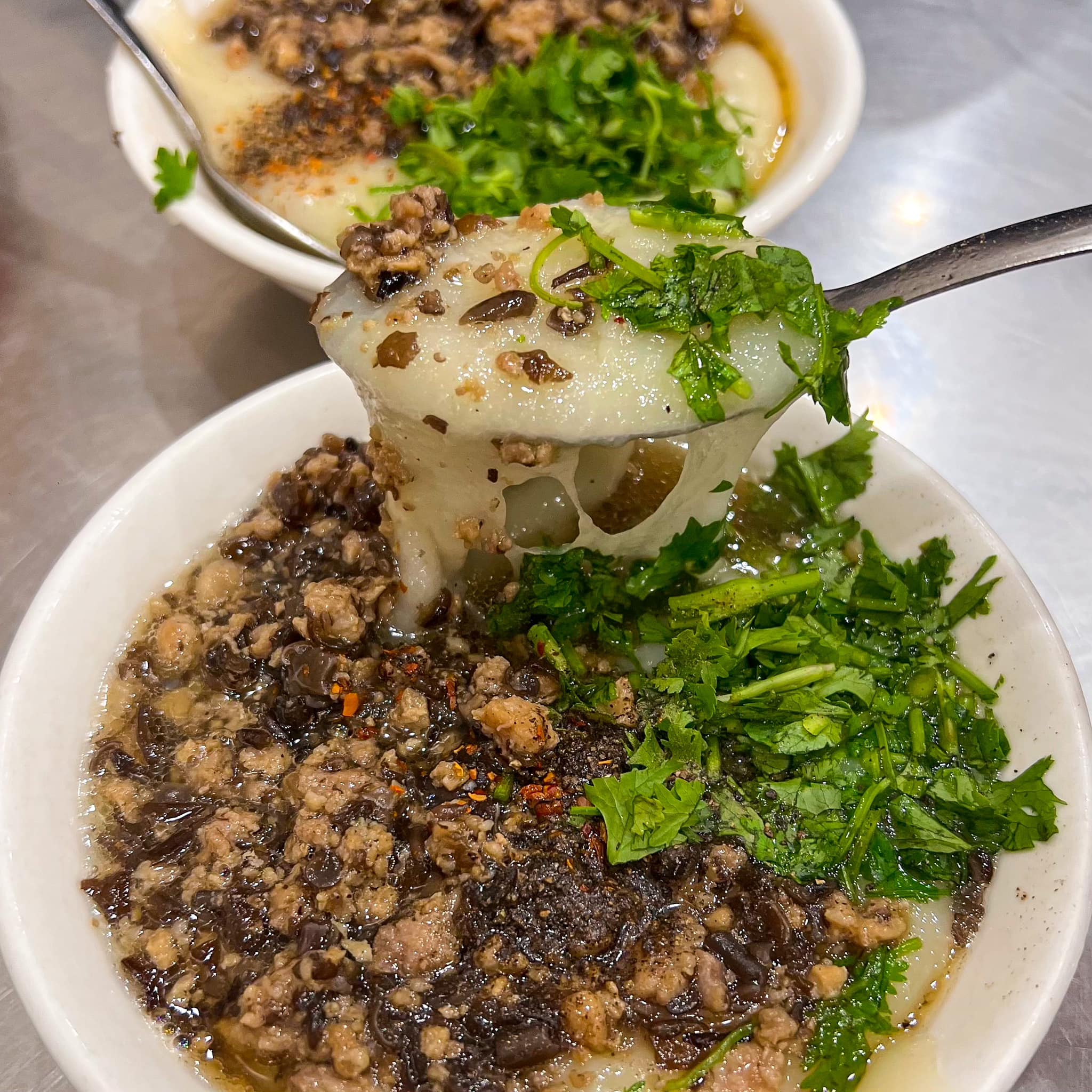
Eat it soon after serving. As the bowl cools, the rice mixture becomes thicker and the fried shallots soften. The flavour remains, but the contrast that defines good bánh đúc nóng begins to fade.
How to eat Bánh Đúc Nóng like a true local
Enjoying a hot bowl of rice cake requires a specific technique to fully appreciate its texture and flavors:
- Let it cool slightly: Served piping hot straight from the pot, you must blow gently or let it rest for a minute to avoid burning your tongue, as the dense starch retains heat exceptionally well.
- Mix gently from bottom up: Do not stir it into a uniform porridge. Instead, gently scoop from the bottom so each spoonful captures the silky rice base. Then, feeling the savory minced pork, crunchy wood-ear mushrooms, and fresh herbs simultaneously.
- Savor the broth balance: The warm, sweet-savory fish sauce should be added gradually or soaked into the layers, ensuring the rice cake absorbs the liquid without losing its thick, velvety consistency.
Where to taste the best banh duc nong in Hanoi
For travelers looking to experience authentic street food before exploring modern fine dining interpretations, these iconic local spots are unmissable:
- Bánh Đúc Nóng Hàng Bè (28 Hàng Bè): Operating for over a decade in the Old Quarter, this spot serves an exuberant menu featuring classic hot savory rice cake, bánh đúc trộn (salad style), and traditional bánh đúc chấm tương.
- Bánh Đúc Nóng Lê Ngọc Hân (Ngõ 8B Lê Ngọc Hân, Hai Bà Trưng, Hanoi—10:00–21:00): Widely regarded as the pioneer of hot savory rice cake in Hanoi, this modest alley stall is legendary for its rich, smooth texture and perfectly balanced fish sauce broth.
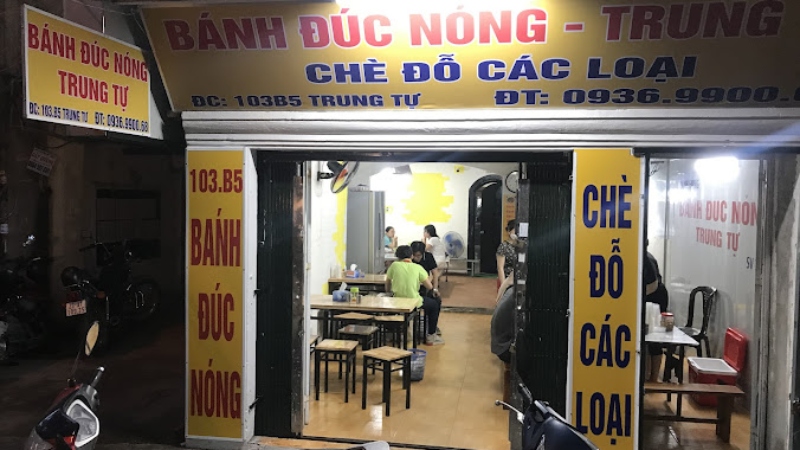
- Bánh Đúc Nóng Trung Tự (103 B5, Trung Tự residential area, Kim Liên, Hanoi—10:00–20:00 ): A beloved neighborhood classic that captures the true nostalgic flavor of old Hanoi, popular among locals seeking ultimate comfort during chilly days.
Complete your Hanoi autumn food journey at Chapter dining
To truly experience the soul of Hanoi in autumn, moving beyond traditional street corners leads us to where local heritage meets contemporary gastronomy. While a steaming bowl of bánh đúc nóng captures the rustic, comforting warmth of the streets, Chapter Dining reinterprets these seasonal memories through a refined fine-dining lens.
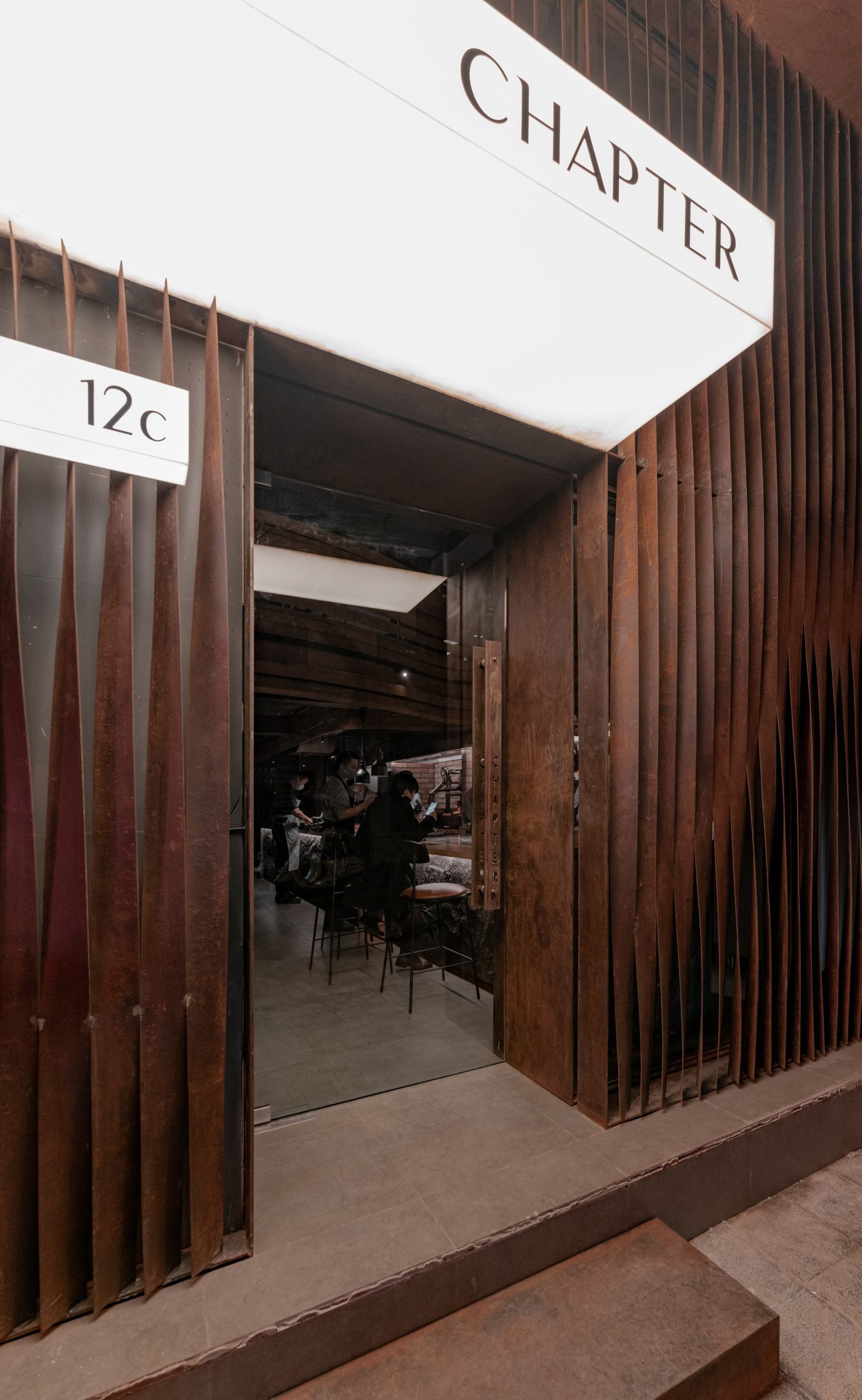
Chapter Dining’s culinary philosophy is rooted in storytelling through indigenous ingredients and seasonal transitions. We believe that modern dining should not detach itself from local identity but rather elevate it. By exploring our seasonal autumn menu, every dish transforms nostalgic street flavors into an artistic expression of Hanoi’s culture. It is offering guests a sophisticated yet deeply soulful journey through the capital’s most poetic season.
The essence of bánh đúc nóng remains untouched. it is a warm embrace in a bowl that soothes both the chilly weather and the soul. Come experience how traditional flavors inspire modern culinary artistry at Chapter Dining this season. Reserve your table at Chapter Dining and let Hanoi’s autumn flavors carry you from a neighborhood food stall into a carefully paced tasting menu.
________
Chapter Dining
12C Chan Cam, Hoan Kiem, Hanoi
Mon – Sat from 18:00 – 23:00
Tel: +84 333 201 221 – Reserve a table
Email: reservation@chapter.vn